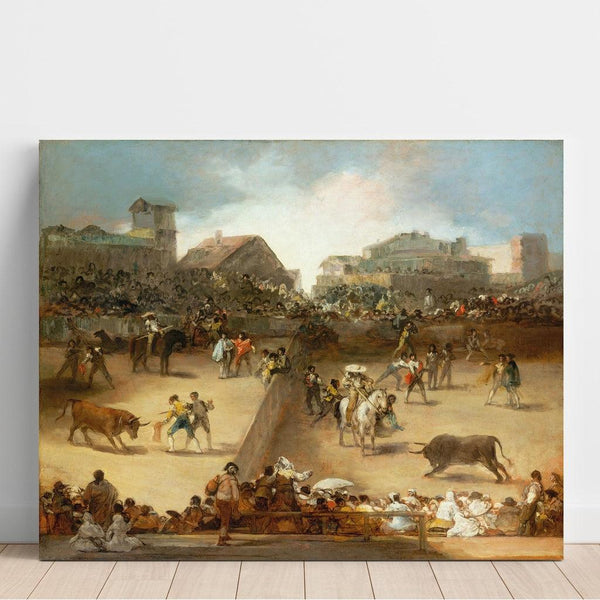
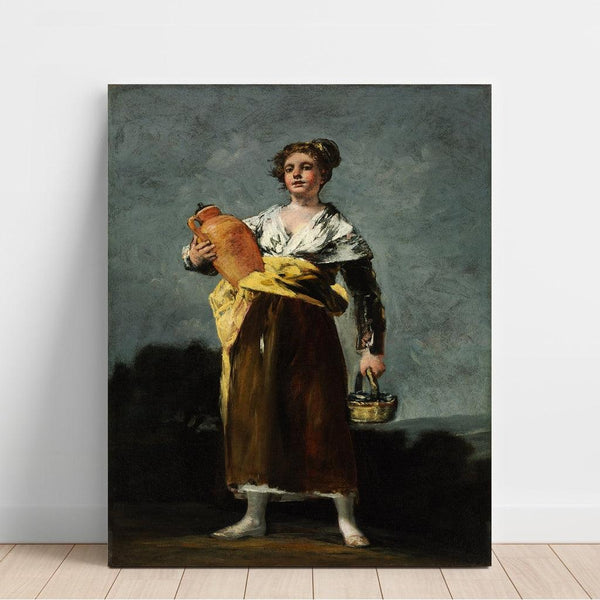
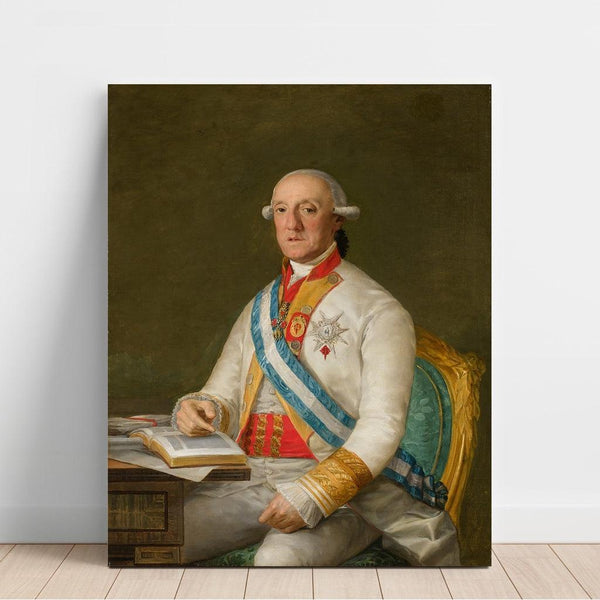
Few artists sum up Europe's shift into the modern age as fully as Francisco de Goya. A Spanish painter and engraver born in the middle of the eighteenth century, he lived through the reign of the Bourbons, the Napoleonic invasion and the first decades of Romanticism, as both a clear-eyed observer and an active player at court. An official portraitist, he was also an explorer of the shadowy corners of the conscience, able to move from the grace of tapestry cartoons to the most abrupt darkness. This article offers a measured journey through his life, his major works and the mark he left on the history of art.
The origins of a Spanish master
Francisco de Goya y Lucientes was born on 30 March 1746 in Fuendetodos, a modest village in Aragon, before his family settled in Zaragoza. It was there that he received his first training, notably under the painter José Luzán, and then drew closer to the local artistic scene. His alliance with the Bayeu family, through his marriage to Josefa Bayeu, sister of the painter Francisco Bayeu, helped him enter the circles that mattered. Like many artists of his generation, Goya looked towards Italy, where he stayed at the end of the 1760s, before returning to consolidate his reputation in Spain.
His beginnings were rooted in patient, collective work: the Royal Tapestry Factory of Santa Bárbara commissioned cartoons from him to decorate the royal residences. These compositions, often luminous and enlivened by scenes of everyday life, already revealed a keen sense of observation and an ability to capture social nuance. They also opened the doors of the court to Goya, where his rise would be steady.

From the royal court to inner shadow
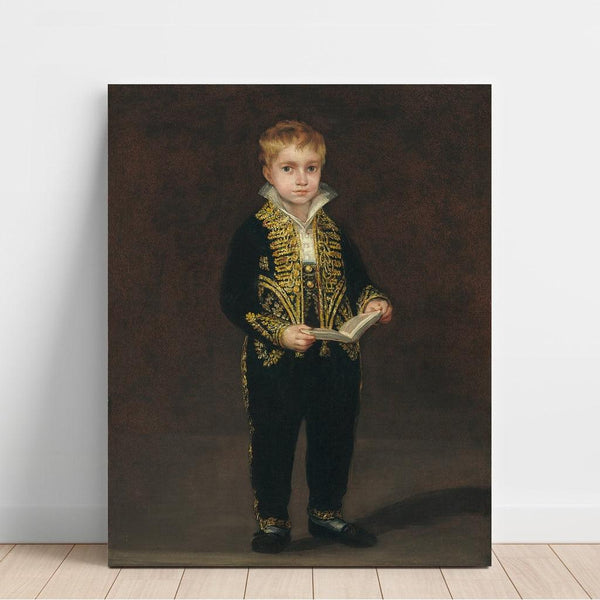
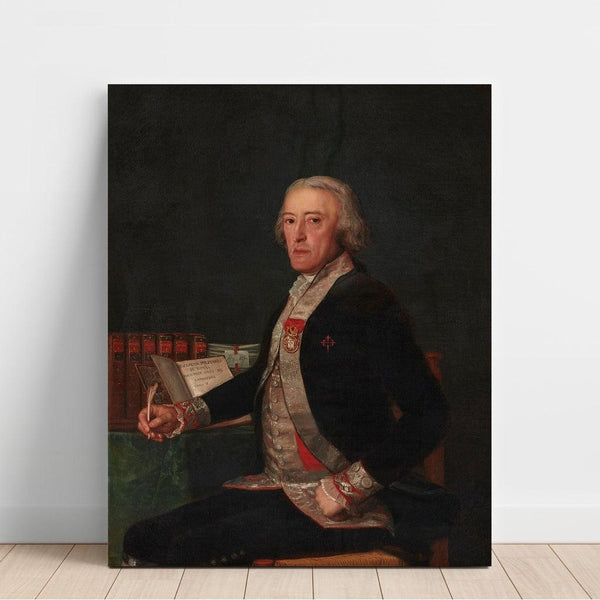
Goya's career embraced official honours. Admitted to the Royal Academy of Fine Arts of San Fernando, he became painter to the king and then rose to the title of first court painter at the very end of the eighteenth century. A sought-after portraitist of the aristocracy and the royal family, he fixed the features of his contemporaries with a frankness that, beneath the appearance of convention, often let a piercing reading of faces and powers show through.
A serious illness, around 1792–1793, marked a decisive turning point: Goya emerged from it almost entirely deaf. This ordeal, without turning him into the tormented artist that legend has sometimes caricatured, coincided with a clear inflection of his art towards introspection, satire and the exploration of the dark. It was in this context that, at the end of the 1790s, he engraved the series of the "Caprichos," a set of prints in which the criticism of social failings, superstitions and abuses mingles with an anxious imagination. The Napoleonic period and the Spanish War of Independence then fed works of a new gravity, bearing witness to the violence of his time without complacency.

Works that question the human condition
Goya's name remains tied to images of lasting force. "The Nude Maja" is among his most discussed canvases: a reclining female figure with a direct gaze, she breaks with the codes of mythological nudity and asserts a carnal presence with no detour, which explains the singular place she occupies in the history of Spanish painting. This audacity, measured but real, illustrates the way the artist knew how to shift the expectations of his patrons.
At the other end of his path lie his most inward compositions, of which "The Dog" offers one of the most striking examples. Reduced to a small animal's head emerging from a vast, indistinct expanse, this image has fascinated modern viewers by its austerity and its openness to interpretation. It belongs to the set of dark works that Goya painted directly onto the walls of his house on the outskirts of Madrid, before they were later transferred to canvas. The motif of witchcraft and the supernatural, present in several of his creations, extends this vein: the sabbath, the nocturnal figures and the unsettling processions convey a meditation on credulity, fear and the obscure forces of the collective imagination.

Goya did not, however, forget the world of work and effort. Scenes devoted to labour, such as that of the forge, show men caught in gesture and matter, with an almost sculptural power. The brushwork there becomes broad, bodily energy dominates, and one senses an attention to ordinary people that heralds certain concerns of the Realist painting to come. Reproduced today, these images continue to offer direct access to the diversity of his universe, between social gravity and plastic intensity.
A legacy turned towards modernity
Posterity has made Goya an essential milestone between classical and modern art. His freedom of execution, his way of loading colour and of suggesting rather than describing, opened paths that the following generations explored in turn. The Romantics recognised in him a sensibility freed from academic rules; later, painters attentive to matter and expression saw in him a forerunner of their own investigations. His work as an engraver, in particular, lastingly influenced the way of conceiving the print as a space for reflection and criticism.

This influence also stems from the reach of his subjects. By looking war, superstition, power and solitude in the face, Goya broadened the field of what painting could say about the human condition. His images do not seek to reassure: they offer a demanding reading of the real, where beauty stands alongside disquiet. It is no doubt this refusal of easy ornament that explains their persistent resonance among enthusiasts and historians alike.
Settled in Bordeaux during his final years, Francisco de Goya died there in 1828, far from the court where he had built his reputation, but still active. His work, held for the most part in the great Spanish and international collections, remains a point of reference. To rediscover it, through study or the faithful reproduction of his paintings, is to measure how fully an artist anchored in his century was able to open, by the sheer force of his gaze, the doors of modern painting.
Discover the full range of Francisco de Goya painting reproductions.