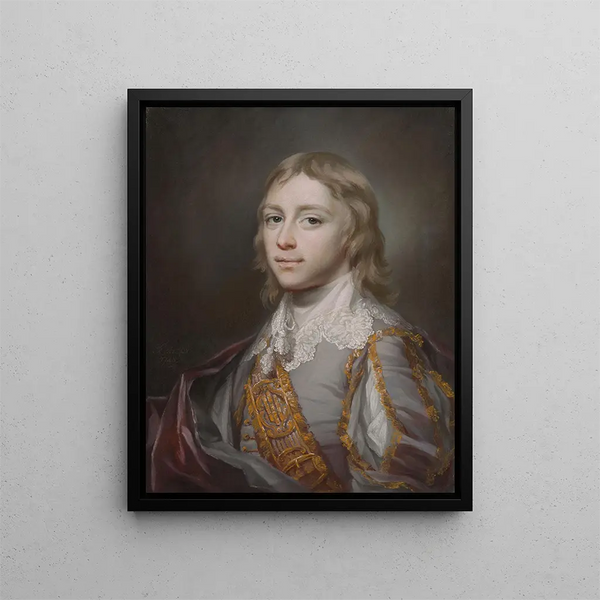
Among the great names of eighteenth-century British portraiture, Francis Cotes holds a singular place: that of an artist who raised pastel to the rank of major painting while also excelling in oil. A contemporary of Joshua Reynolds and Thomas Gainsborough, he was one of the founding members of the Royal Academy of Arts and one of the most sought-after portraitists of Georgian society. His work, marked by a restrained elegance and a great psychological accuracy, deserves to be rediscovered by art lovers and by collectors attentive to the history of English portraiture.
Francis Cotes, an English master of portraiture in the Age of Enlightenment
Born in London in 1726, Francis Cotes trained under George Knapton, a respected portraitist and pastellist, from whom he inherited a taste for precise drawing and attentive observation of faces. He worked for most of his career in the British capital, where he gradually established himself as one of the most admired portraitists of his time. His reputation rested as much on the likeness he achieved as on the quiet dignity with which he was able to invest his sitters.
His career unfolded at a decisive moment for the arts in England. In 1768, Francis Cotes was among the founding artists of the Royal Academy of Arts, an institution destined to shape British artistic life for the long term and to champion recognition for national painters. This commitment testifies to the esteem in which he was held by his peers, alongside figures as eminent as Reynolds, the Academy's first president.

Francis Cotes's career was, however, cut short: he died in 1770, at the age of only forty-four. This premature death deprived English painting of a talent in full maturity, but left behind a body of portraits that today rank among the finest testimonies to the society of his era.
Pastel and oil: a twofold technical mastery
What sets Francis Cotes apart from many of his contemporaries is his remarkable ease in two demanding techniques. Pastel, first of all, of which he was one of the leading exponents in England. This dry technique, inherited notably from the tradition exemplified by the Venetian Rosalba Carriera, allowed for velvety textural effects and a freshness of complexion particularly suited to portraiture. Cotes drew on all its resources, playing on the softness of the grain and the luminosity of the tints to render the sheen of fabrics and the delicacy of faces.

Yet he did not confine himself to this art reputed to be more intimate. Francis Cotes was also an accomplished oil painter, capable of large-scale ceremonial portraits in which the richness of the costumes and the solidity of the composition met the expectations of an aristocratic clientele. This dual competence allowed him to answer a variety of commissions, from the court portrait to the more familiar likeness, and to set the spontaneity of pastel in dialogue with the breadth of oil painting.
His studio also played a role in passing on this expertise. The pastellist John Russell, who in turn became a major figure of the genre in England, trained under him, thereby extending Cotes's influence well beyond his own career. His brother, Samuel Cotes, distinguished himself in the art of the miniature, confirming the family's rootedness in portraiture.
Portraits that tell the story of Georgian society
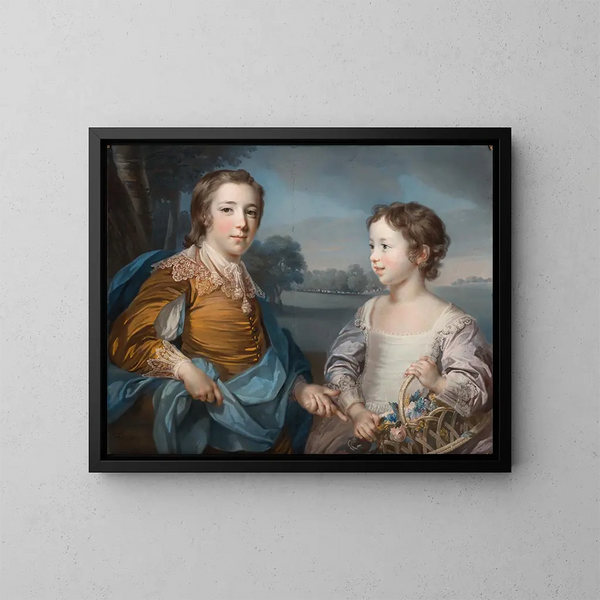
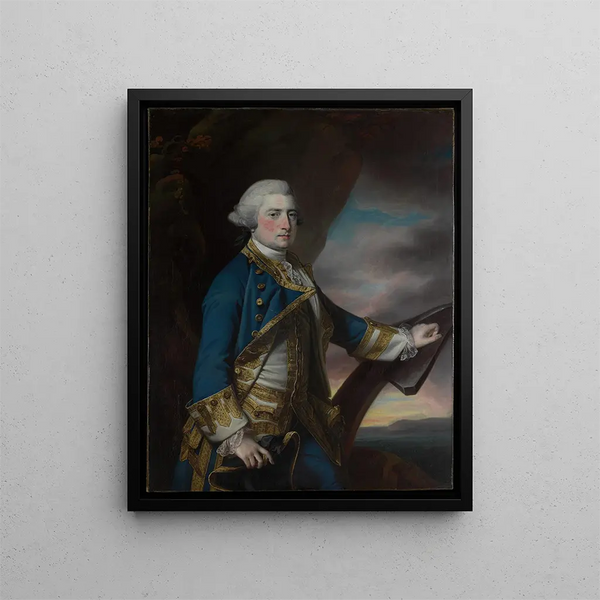
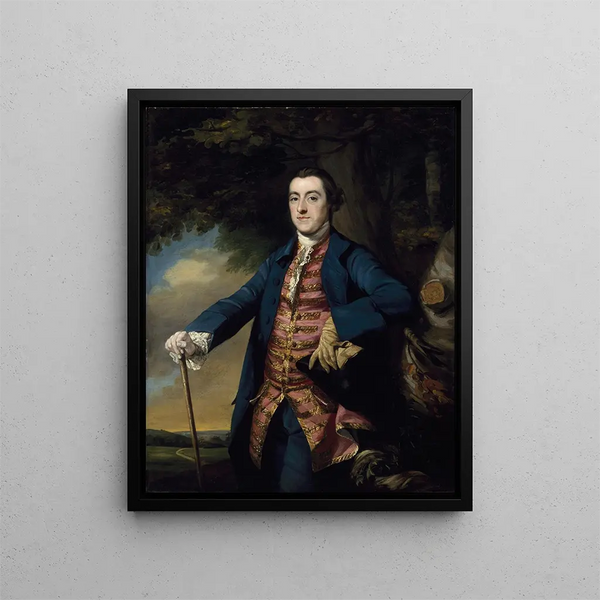
The work of Francis Cotes forms a veritable gallery of mid-eighteenth-century British high society. His sitters belonged to the aristocracy, the gentry and wealthy circles, and each of his portraits offers a valuable glimpse of the dress codes, attitudes and ideals of representation of the period. To him we owe effigies as varied as the portrait of Francis Vernon or that of Admiral Harry Paulet (1719/20–1794), sixth Duke of Bolton, figures that illustrate the range of his clientele, from civilian life to military and naval careers.

These portraits are never reduced to a mere exercise in likeness. Francis Cotes sought to capture a presence, a bearing, sometimes a nuance of character, while respecting the dignity his patrons expected. The sobriety of his backgrounds, the attention paid to the hands and the gaze, the accuracy of the drapery all contribute to a measured art of portraiture, far removed from any excessive theatricality, in which restraint becomes a form of elegance.
Through these faces, an era too can be read: that of a Georgian England mindful of its image, attached to the representation of rank and to the transmission of family identities. Cotes's portraits thus function as documents as much as works of art, precious to the historian as well as to the enthusiast.
Rediscovering Francis Cotes through his reproductions

Today, interest in Francis Cotes shows no sign of waning, carried by the growing recognition of pastel as an artistic technique in its own right and by the renewed attention that eighteenth-century British portraiture enjoys. His works, held in several public and private collections, offer a faithful panorama of an art of portraiture that is at once refined and human.
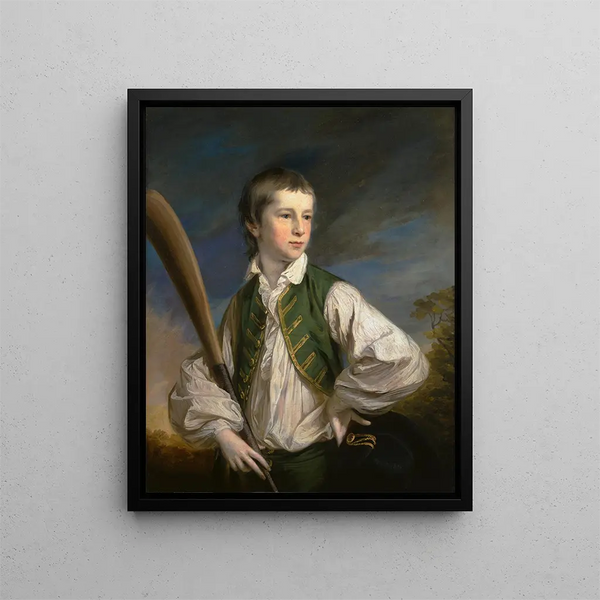
To extend this discovery at home, a quality reproduction is an accessible way to appreciate his art. ArtemLegrand.com thus offers the painting depicting William Denison, as well as the portrait of the Right Honorable Lady Mary Radcliffe (1732-1798), wife of Francis Eyre Esq., two works that reveal the keenness of observation and the sense of decorum characteristic of the painter. Hung in an interior, these reproductions recall the place of Francis Cotes in the history of portraiture and invite us to contemplate, with the distance of time, the measured elegance of the society he immortalized.
Rediscovering Francis Cotes means returning to an art of portraiture in which technical mastery is placed at the service of the truth of faces. Between pastel and oil, between intimacy and representation, his work remains an essential milestone for understanding English painting at the dawn of the Royal Academy, and a renewed pleasure for all who love the old masters of portraiture.
Discover the full range of Francis Cotes painting reproductions.