
Painting Woman in front of a still life by Cézanne - Paul Gauguin | Art print


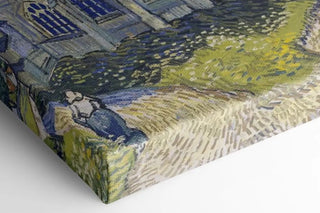
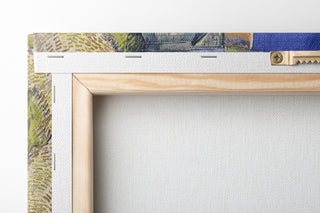
View from behind
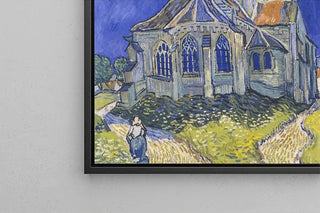
Frame (optional)
The artwork "Femme devant une nature morte de Cézanne" by Paul Gauguin stands as a vibrant testament to the interaction between two giants of art. Through this piece, Gauguin pays homage to the illustrious Cézanne, while infusing it with his own vision, marked by a bold palette and an innovative approach. This work, capturing the very essence of the late 19th century, invites viewers to immerse themselves in a universe where still life and portraiture meet, revealing the subtleties of everyday life and human emotions. The woman, the central figure of the composition, appears both contemplative and grounded in her environment—a duality that intrigues and captivates.
Style and uniqueness of the work
The style of this piece is distinguished by the harmony of colors and the richness of textures. Gauguin, true to his reputation as a colorist, employs vibrant hues that convey palpable energy to the scene. The still life, though static, is animated by nuances that seem to dance under the light, creating a dialogue between inanimate objects and human presence. The woman, dressed simply yet elegantly, becomes the focal point of this interaction. Her gaze, both introspective and distant, suggests a psychological depth that transcends a mere portrait. The composition, carefully balanced, reflects Cézanne's influence, while establishing itself as a work in its own right, where Gauguin's modernity is fully expressed.
The artist and his influence
Paul Gauguin, an emblematic figure of post-impressionism, has always sought to explore themes beyond mere representation. His work is characterized by a quest for meaning, a desire to capture the essence of the subjects he paints. The influence of Cézanne, with his way of breaking down forms and playing with perspective, is evident in this canvas. However, Gauguin does not merely imitate his predecessor; he reinterprets this approach through his own lens, integrating symbolic elements and a spiritual dimension. This piece, at the crossroads between
Painting Woman in front of a still life by Cézanne - Paul Gauguin | Art print

-10% FROM €95 IN PURCHASES
-15% FROM €195 IN PURCHASES
Regular price
- Unit price
- per
Tax included.
Free shipping
€4.90 / Free shipping on orders over €39
Satisfied or Money Back
Free returns within 30 days
10-year warranty
Our prints are guaranteed for 10 years
Any questions? We are here!
by email to contact@artemlegrand.com
THE STEPS OF YOUR ORDER
STEP 1 - ORDER PLACED
Your order has been confirmed and we are starting production
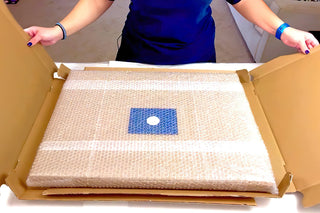
STEP 2 - SHIPPING
We ship your order. We send you an email to track the progress

STEP 3 - DELIVERY
You receive your order. You can also, according to your choice, be delivered to a relay point.
Matte finish
View from behind
Frame (optional)
The artwork "Femme devant une nature morte de Cézanne" by Paul Gauguin stands as a vibrant testament to the interaction between two giants of art. Through this piece, Gauguin pays homage to the illustrious Cézanne, while infusing it with his own vision, marked by a bold palette and an innovative approach. This work, capturing the very essence of the late 19th century, invites viewers to immerse themselves in a universe where still life and portraiture meet, revealing the subtleties of everyday life and human emotions. The woman, the central figure of the composition, appears both contemplative and grounded in her environment—a duality that intrigues and captivates.
Style and uniqueness of the work
The style of this piece is distinguished by the harmony of colors and the richness of textures. Gauguin, true to his reputation as a colorist, employs vibrant hues that convey palpable energy to the scene. The still life, though static, is animated by nuances that seem to dance under the light, creating a dialogue between inanimate objects and human presence. The woman, dressed simply yet elegantly, becomes the focal point of this interaction. Her gaze, both introspective and distant, suggests a psychological depth that transcends a mere portrait. The composition, carefully balanced, reflects Cézanne's influence, while establishing itself as a work in its own right, where Gauguin's modernity is fully expressed.
The artist and his influence
Paul Gauguin, an emblematic figure of post-impressionism, has always sought to explore themes beyond mere representation. His work is characterized by a quest for meaning, a desire to capture the essence of the subjects he paints. The influence of Cézanne, with his way of breaking down forms and playing with perspective, is evident in this canvas. However, Gauguin does not merely imitate his predecessor; he reinterprets this approach through his own lens, integrating symbolic elements and a spiritual dimension. This piece, at the crossroads between
12,34 €