
Painting Glass of wine and fruit bowl - Willem Kalf | Art print


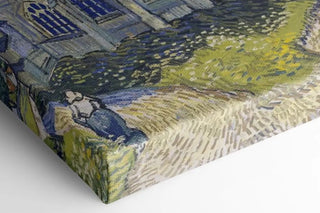
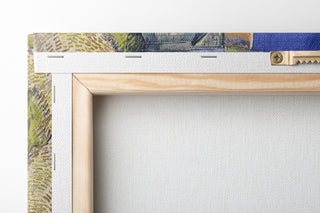
View from behind
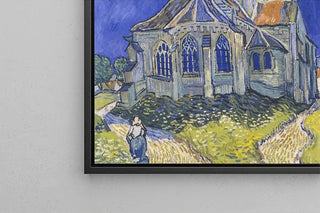
Frame (optional)
Art print of a Wine Glass and Fruit Bowl - Willem Kalf – Captivating Introduction
In the fascinating world of 17th-century Dutch painting, the artwork "Wine Glass and Fruit Bowl" by Willem Kalf stands out for its brilliance and visual richness. This painting, which captures the very essence of the baroque style, embodies the technical virtuosity and aesthetic sensitivity of its creator. Through a harmonious composition, Kalf invites us to contemplate a moment of everyday life elevated by art, where each element seems imbued with meaning and beauty. Light plays a leading role, illuminating the textures of the fruits and the transparency of the glass, while creating an atmosphere of delicacy and intimacy.
Style and uniqueness of the work
The uniqueness of "Wine Glass and Fruit Bowl" lies in the impeccable mastery of light and shadow, characteristic of Kalf's style. The carefully arranged fruits are painted with striking realism, with every detail revealing meticulous attention to nature. The reflections in the glass, meanwhile, demonstrate refined technique, where transparency and shine combine to create an illusion of volume and depth. The artwork not only evokes the material wealth of the period but also offers a deeper reflection on the fleeting nature of pleasures and possessions. By choosing everyday objects, Kalf elevates the mundane to a level of sublimation, transforming the simple into the extraordinary.
The artist and his influence
Willem Kalf, born in 1619 in Rotterdam, is one of the undisputed masters of still life, or vanitas, within the Dutch school. His work is set within an artistic context where the depiction of everyday objects becomes a privileged means of expression. Kalf established himself through his unique style, blending realism and symbolism, and his influence endures through the centuries. His paintings, in addition to bearing witness to the material wealth of his time, address universal themes such as vanity and ephemeral beauty. By incorporating elements of luxury, such as crystal glasses and exotic fruits, he managed to capture the collective imagination of his era, while
Painting Glass of wine and fruit bowl - Willem Kalf | Art print

-10% FROM €95 IN PURCHASES
-15% FROM €195 IN PURCHASES
Regular price
- Unit price
- per
Tax included.
Free shipping
€4.90 / Free shipping on orders over €39
Satisfied or Money Back
Free returns within 30 days
10-year warranty
Our prints are guaranteed for 10 years
Any questions? We are here!
by email to contact@artemlegrand.com
THE STEPS OF YOUR ORDER

STEP 1 - ORDER PLACED
Your order has been confirmed and we are starting production
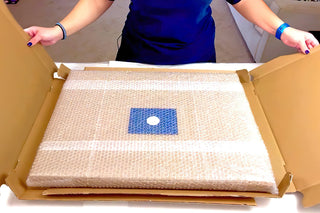
STEP 2 - SHIPPING
We ship your order. We send you an email to track the progress

STEP 3 - DELIVERY
You receive your order. You can also, according to your choice, be delivered to a relay point.
Matte finish
View from behind
Frame (optional)
Art print of a Wine Glass and Fruit Bowl - Willem Kalf – Captivating Introduction
In the fascinating world of 17th-century Dutch painting, the artwork "Wine Glass and Fruit Bowl" by Willem Kalf stands out for its brilliance and visual richness. This painting, which captures the very essence of the baroque style, embodies the technical virtuosity and aesthetic sensitivity of its creator. Through a harmonious composition, Kalf invites us to contemplate a moment of everyday life elevated by art, where each element seems imbued with meaning and beauty. Light plays a leading role, illuminating the textures of the fruits and the transparency of the glass, while creating an atmosphere of delicacy and intimacy.
Style and uniqueness of the work
The uniqueness of "Wine Glass and Fruit Bowl" lies in the impeccable mastery of light and shadow, characteristic of Kalf's style. The carefully arranged fruits are painted with striking realism, with every detail revealing meticulous attention to nature. The reflections in the glass, meanwhile, demonstrate refined technique, where transparency and shine combine to create an illusion of volume and depth. The artwork not only evokes the material wealth of the period but also offers a deeper reflection on the fleeting nature of pleasures and possessions. By choosing everyday objects, Kalf elevates the mundane to a level of sublimation, transforming the simple into the extraordinary.
The artist and his influence
Willem Kalf, born in 1619 in Rotterdam, is one of the undisputed masters of still life, or vanitas, within the Dutch school. His work is set within an artistic context where the depiction of everyday objects becomes a privileged means of expression. Kalf established himself through his unique style, blending realism and symbolism, and his influence endures through the centuries. His paintings, in addition to bearing witness to the material wealth of his time, address universal themes such as vanity and ephemeral beauty. By incorporating elements of luxury, such as crystal glasses and exotic fruits, he managed to capture the collective imagination of his era, while
12,34 €