
Virgin and Child Painting - Josef Abel | Art print


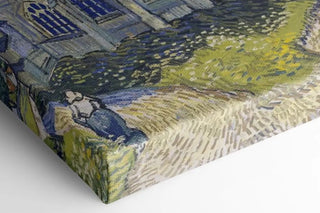
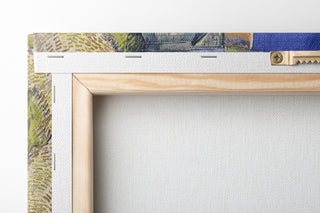
View from behind
Frame (optional)
Reproduction Vierge à l'Enfant - Josef Abel – Captivating introduction
The "Vierge à l'Enfant" by Josef Abel is a work that transcends the simple framework of religious painting to become a true ode to motherhood and divinity. In this tender depiction, the artist manages to capture the very essence of maternal love, offering the viewer an experience that is both intimate and universal. The scene portrays the Virgin Mary, surrounded by a soft, warm light, tenderly holding the Infant Jesus in her arms. This piece, both soothing and emotional, invites contemplation and reflection on the sacred nature of motherhood. Entering this universe, the viewer is transported to a moment of grace, where the divine and human meet.
Style and uniqueness of the work
Josef Abel's style is characterized by finesse and delicacy, which are evident in every detail of his creation. The chosen color palette, dominated by warm and gentle tones, gives the scene a serene and comforting atmosphere. The expressions on the faces are highly subtle, revealing an emotional depth that touches the heart directly. The composition is carefully balanced, with the Virgin and the Child placed at the center, immediately drawing the eye and establishing a visual dialogue between the figures. Abel also employs skillful use of light, creating delicate shadows that accentuate the contours of the characters and add an almost three-dimensional dimension to the canvas. This meticulous attention to detail and technical mastery make the "Vierge à l'Enfant" a unique work, capable of evoking deep feelings in those who contemplate it.
The artist and his influence
Josef Abel, though less known than some of his contemporaries, has left an indelible mark in the world of religious art. His work is rooted in a tradition that celebrates spirituality and the beauty of Christian figures, while incorporating stylistic elements that are uniquely his own. Abel was influenced by the great masters of the Renaissance, but he also developed an artistic language that is distinctly his, blending classicism with modern sensitivity. His approach to representation
Virgin and Child Painting - Josef Abel | Art print

-10% FROM €95 IN PURCHASES
-15% FROM €195 IN PURCHASES
Regular price
- Unit price
- per
Tax included.
Free shipping
€4.90 / Free shipping on orders over €39
Satisfied or Money Back
Free returns within 30 days
10-year warranty
Our prints are guaranteed for 10 years
Any questions? We are here!
by email to contact@artemlegrand.com
THE STEPS OF YOUR ORDER

STEP 1 - ORDER PLACED
Your order has been confirmed and we are starting production
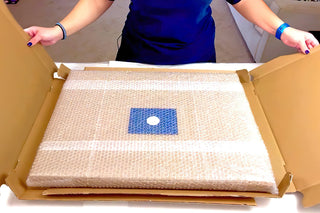
STEP 2 - SHIPPING
We ship your order. We send you an email to track the progress

STEP 3 - DELIVERY
You receive your order. You can also, according to your choice, be delivered to a relay point.
Matte finish
View from behind
Frame (optional)
Reproduction Vierge à l'Enfant - Josef Abel – Captivating introduction
The "Vierge à l'Enfant" by Josef Abel is a work that transcends the simple framework of religious painting to become a true ode to motherhood and divinity. In this tender depiction, the artist manages to capture the very essence of maternal love, offering the viewer an experience that is both intimate and universal. The scene portrays the Virgin Mary, surrounded by a soft, warm light, tenderly holding the Infant Jesus in her arms. This piece, both soothing and emotional, invites contemplation and reflection on the sacred nature of motherhood. Entering this universe, the viewer is transported to a moment of grace, where the divine and human meet.
Style and uniqueness of the work
Josef Abel's style is characterized by finesse and delicacy, which are evident in every detail of his creation. The chosen color palette, dominated by warm and gentle tones, gives the scene a serene and comforting atmosphere. The expressions on the faces are highly subtle, revealing an emotional depth that touches the heart directly. The composition is carefully balanced, with the Virgin and the Child placed at the center, immediately drawing the eye and establishing a visual dialogue between the figures. Abel also employs skillful use of light, creating delicate shadows that accentuate the contours of the characters and add an almost three-dimensional dimension to the canvas. This meticulous attention to detail and technical mastery make the "Vierge à l'Enfant" a unique work, capable of evoking deep feelings in those who contemplate it.
The artist and his influence
Josef Abel, though less known than some of his contemporaries, has left an indelible mark in the world of religious art. His work is rooted in a tradition that celebrates spirituality and the beauty of Christian figures, while incorporating stylistic elements that are uniquely his own. Abel was influenced by the great masters of the Renaissance, but he also developed an artistic language that is distinctly his, blending classicism with modern sensitivity. His approach to representation
12,34 €