
Art print Livre sur les plantes toxiques Pl65 - Friedrich Berge


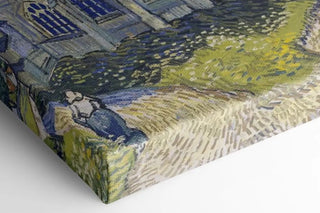
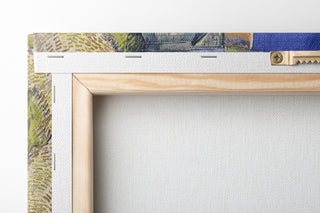
View from behind
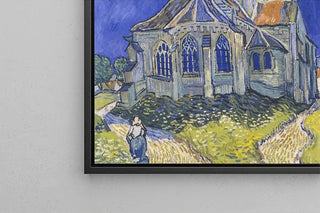
Frame (optional)
Fascinating in the realm of botanical art, Friedrich Berge's "Book on Toxic Plants Pl65" stands out for its approach that is both scientific and aesthetic. This piece, which captures the essence of toxic plants with remarkable precision, invites viewers to a visual exploration of nature's wonders. The artist manages to marry botanical expertise with artistic sensitivity, creating a work that transcends mere illustration to become a true narrative tableau. The piece serves as a tribute to the beauty and danger of plants, revealing hidden stories behind each leaf and flower.
Style and uniqueness of the work
Berge's style is characterized by meticulousness and attention to detail that make each plant a subject in its own right. The vibrant colors and carefully rendered textures allow viewers to almost feel the vitality of the depicted plants. Each illustration is a delicate balance between realism and stylization, where scientific accuracy meets an almost lyrical aesthetic. The work does not merely depict plants; it also tells a story, that of interactions between humans and nature, between fascination and danger. This duality is at the heart of the work's uniqueness, where each toxic plant becomes a symbol of mystery and warning, while also celebrating botanical diversity.
The artist and his influence
Friedrich Berge, as an artist and botanist, managed to leave his mark on his era through an innovative approach that influenced many contemporaries. His passion for nature and desire to document it accurately led him to create works that are now considered references in the field of botanical art. Berge does not limit himself to a simple art print of forms; he injects emotional and intellectual depth into his works that engage the viewer. His influence is felt not only in the art world but also within scientific circles, where his illustrations are often used as references for the study of plants. By redefining how plants are perceived artistically, Berge paved the way for a new appreciation of botany as an art form.
An exceptional wall decoration signed Artem
Art print Livre sur les plantes toxiques Pl65 - Friedrich Berge

-10% FROM €95 IN PURCHASES
-15% FROM €195 IN PURCHASES
Regular price
- Unit price
- by
Free shipping
€4.90 / Free shipping on orders over €39
Satisfied or Money Back
Free returns within 30 days
10-year warranty
Our prints are guaranteed for 10 years
Any questions? We are here!
by email to contact@artemlegrand.com
THE STEPS OF YOUR ORDER

STEP 1 - ORDER PLACED
Your order has been confirmed and we are starting production
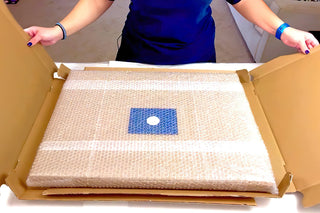
STEP 2 - SHIPPING
We ship your order. We send you an email to track the progress

STEP 3 - DELIVERY
You receive your order. You can also, according to your choice, be delivered to a relay point.
Matte finish
View from behind
Frame (optional)
Fascinating in the realm of botanical art, Friedrich Berge's "Book on Toxic Plants Pl65" stands out for its approach that is both scientific and aesthetic. This piece, which captures the essence of toxic plants with remarkable precision, invites viewers to a visual exploration of nature's wonders. The artist manages to marry botanical expertise with artistic sensitivity, creating a work that transcends mere illustration to become a true narrative tableau. The piece serves as a tribute to the beauty and danger of plants, revealing hidden stories behind each leaf and flower.
Style and uniqueness of the work
Berge's style is characterized by meticulousness and attention to detail that make each plant a subject in its own right. The vibrant colors and carefully rendered textures allow viewers to almost feel the vitality of the depicted plants. Each illustration is a delicate balance between realism and stylization, where scientific accuracy meets an almost lyrical aesthetic. The work does not merely depict plants; it also tells a story, that of interactions between humans and nature, between fascination and danger. This duality is at the heart of the work's uniqueness, where each toxic plant becomes a symbol of mystery and warning, while also celebrating botanical diversity.
The artist and his influence
Friedrich Berge, as an artist and botanist, managed to leave his mark on his era through an innovative approach that influenced many contemporaries. His passion for nature and desire to document it accurately led him to create works that are now considered references in the field of botanical art. Berge does not limit himself to a simple art print of forms; he injects emotional and intellectual depth into his works that engage the viewer. His influence is felt not only in the art world but also within scientific circles, where his illustrations are often used as references for the study of plants. By redefining how plants are perceived artistically, Berge paved the way for a new appreciation of botany as an art form.
An exceptional wall decoration signed Artem