
Painting L'église du village - Henri-Joseph Harpignies | Art print


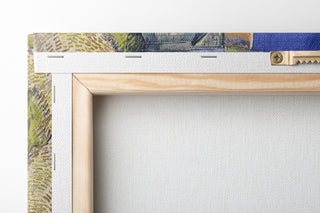
View from behind
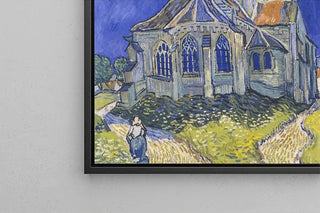
Frame (optional)
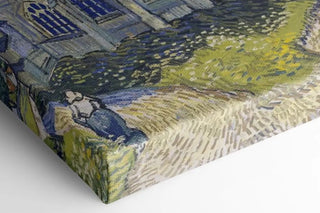
In the enchanting panorama of 19th-century landscape art, "L'église du village" by Henri-Joseph Harpignies stands as a true tribute to the beauty of French rural scenery. This piece, imbued with poetry and serenity, transports the viewer to the heart of a peaceful village, where nature and architecture meet harmoniously. Harpignies, with his keen eye and sensitivity, invites us to contemplate a moment frozen in time, where every detail seems to whisper a story, and every shade of color evokes an emotion. The art print of this work allows for rediscovering an era when art intertwined with daily life, offering a reflection of a simple yet meaningful world.
Style and uniqueness of the work
"L'église du village" is distinguished by its Impressionist style, characterized by delicate brushstrokes and a nuanced palette of colors that subtly capture the light. Harpignies, a true master of light, manages to create an atmosphere that is both warm and soothing, where the church, the central element of the composition, blends perfectly into the surrounding landscape. The majestic trees, lush fields, and the sky of a bright blue combine to form a lively canvas, where each element seems to vibrate with gentle energy. The perspective chosen by the artist, placing the church in slight low-angle view, emphasizes its importance while allowing it to dialogue with the nature around it. This work embodies a quest for harmony and beauty, an invitation to contemplation and daydreaming.
The artist and his influence
Henri-Joseph Harpignies, born in 1819, is often regarded as one of the pioneers of modern landscape art. His artistic journey is marked by a deep admiration for nature, which he translates with unique sensitivity. Influenced by the great masters of his time, he developed a style that is his own, combining realism and impressionism. Harpignies was also a passionate defender of French landscapes, highlighting the richness of the terroirs and traditions. His work has had
Painting L'église du village - Henri-Joseph Harpignies | Art print

-10% FROM €95 IN PURCHASES
-15% FROM €195 IN PURCHASES
Regular price
- Unit price
- per
Tax included.
Free shipping
€4.90 / Free shipping on orders over €39
Satisfied or Money Back
Free returns within 30 days
10-year warranty
Our prints are guaranteed for 10 years
Any questions? We are here!
by email to contact@artemlegrand.com
THE STEPS OF YOUR ORDER

STEP 1 - ORDER PLACED
Your order has been confirmed and we are starting production
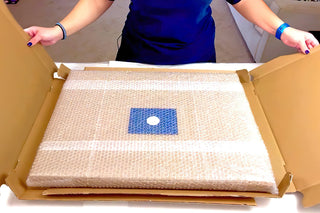
STEP 2 - SHIPPING
We ship your order. We send you an email to track the progress

STEP 3 - DELIVERY
You receive your order. You can also, according to your choice, be delivered to a relay point.
Matte finish
View from behind
Frame (optional)
In the enchanting panorama of 19th-century landscape art, "L'église du village" by Henri-Joseph Harpignies stands as a true tribute to the beauty of French rural scenery. This piece, imbued with poetry and serenity, transports the viewer to the heart of a peaceful village, where nature and architecture meet harmoniously. Harpignies, with his keen eye and sensitivity, invites us to contemplate a moment frozen in time, where every detail seems to whisper a story, and every shade of color evokes an emotion. The art print of this work allows for rediscovering an era when art intertwined with daily life, offering a reflection of a simple yet meaningful world.
Style and uniqueness of the work
"L'église du village" is distinguished by its Impressionist style, characterized by delicate brushstrokes and a nuanced palette of colors that subtly capture the light. Harpignies, a true master of light, manages to create an atmosphere that is both warm and soothing, where the church, the central element of the composition, blends perfectly into the surrounding landscape. The majestic trees, lush fields, and the sky of a bright blue combine to form a lively canvas, where each element seems to vibrate with gentle energy. The perspective chosen by the artist, placing the church in slight low-angle view, emphasizes its importance while allowing it to dialogue with the nature around it. This work embodies a quest for harmony and beauty, an invitation to contemplation and daydreaming.
The artist and his influence
Henri-Joseph Harpignies, born in 1819, is often regarded as one of the pioneers of modern landscape art. His artistic journey is marked by a deep admiration for nature, which he translates with unique sensitivity. Influenced by the great masters of his time, he developed a style that is his own, combining realism and impressionism. Harpignies was also a passionate defender of French landscapes, highlighting the richness of the terroirs and traditions. His work has had
12,34 €