
Painting The Red Cow - Paul Gauguin | Art print


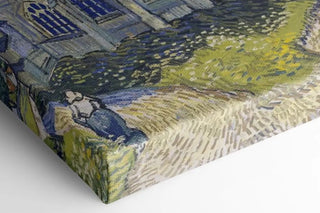
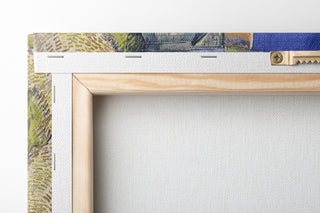
View from behind
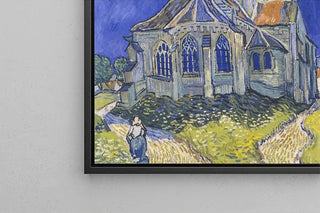
Frame (optional)
La vache rouge - Paul Gauguin – Captivating Introduction
In the vibrant universe of art, certain works transcend the mere frame of the canvas to become symbols of an era, testimonies of a unique vision. "The Red Cow - Paul Gauguin" fits perfectly into this category, offering viewers an immersion into a world bursting with color and sensations. This iconic piece, created in 1888, captures attention through its bold chromatic palette and its singular interpretation of nature. Through this painting, Gauguin does not merely depict an animal; he evokes a reality that goes beyond the visible, inviting exploration into the depths of imagination.
Style and uniqueness of the work
Paul Gauguin's style is distinguished by his ability to blend the real and the fantastical, a characteristic fully expressed in "The Red Cow." The canvas unfolds in a vivid palette, where the red of the animal sharply contrasts with the surrounding greens and blues. This chromatic opposition is not just an aesthetic choice; it reflects a vision where color becomes a language in its own right. Gauguin employs simplified forms and clear contours, demonstrating his desire to transcend reality. Each brushstroke seems charged with deep emotion, inviting the viewer to feel rather than just see. The cow, far from being a simple bovine, becomes a symbol of rural life, an embodiment of the simplicity and beauty of nature.
The artist and his influence
Paul Gauguin, an emblematic figure of the Post-Impressionist movement, profoundly impacted art history through his innovative approach and quest for personal expression. Born in Paris, he turned toward more exotic horizons, notably Polynesia, where he found inexhaustible inspiration. His work, with "The Red Cow" as a prime example, reflects a desire to break away from the artistic conventions of his time. Gauguin advocates for a vision of art as a means to reveal deeper truths, often in opposition to material reality. His influence extends far beyond his own era, inspiring generations of artists to explore their own subjectivity and to
Painting The Red Cow - Paul Gauguin | Art print

-10% FROM €95 IN PURCHASES
-15% FROM €195 IN PURCHASES
Regular price
- Unit price
- per
Tax included.
Free shipping
€4.90 / Free shipping on orders over €39
Satisfied or Money Back
Free returns within 30 days
10-year warranty
Our prints are guaranteed for 10 years
Any questions? We are here!
by email to contact@artemlegrand.com
THE STEPS OF YOUR ORDER

STEP 1 - ORDER PLACED
Your order has been confirmed and we are starting production
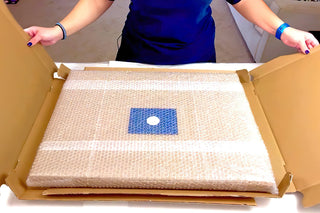
STEP 2 - SHIPPING
We ship your order. We send you an email to track the progress

STEP 3 - DELIVERY
You receive your order. You can also, according to your choice, be delivered to a relay point.
Matte finish
View from behind
Frame (optional)
La vache rouge - Paul Gauguin – Captivating Introduction
In the vibrant universe of art, certain works transcend the mere frame of the canvas to become symbols of an era, testimonies of a unique vision. "The Red Cow - Paul Gauguin" fits perfectly into this category, offering viewers an immersion into a world bursting with color and sensations. This iconic piece, created in 1888, captures attention through its bold chromatic palette and its singular interpretation of nature. Through this painting, Gauguin does not merely depict an animal; he evokes a reality that goes beyond the visible, inviting exploration into the depths of imagination.
Style and uniqueness of the work
Paul Gauguin's style is distinguished by his ability to blend the real and the fantastical, a characteristic fully expressed in "The Red Cow." The canvas unfolds in a vivid palette, where the red of the animal sharply contrasts with the surrounding greens and blues. This chromatic opposition is not just an aesthetic choice; it reflects a vision where color becomes a language in its own right. Gauguin employs simplified forms and clear contours, demonstrating his desire to transcend reality. Each brushstroke seems charged with deep emotion, inviting the viewer to feel rather than just see. The cow, far from being a simple bovine, becomes a symbol of rural life, an embodiment of the simplicity and beauty of nature.
The artist and his influence
Paul Gauguin, an emblematic figure of the Post-Impressionist movement, profoundly impacted art history through his innovative approach and quest for personal expression. Born in Paris, he turned toward more exotic horizons, notably Polynesia, where he found inexhaustible inspiration. His work, with "The Red Cow" as a prime example, reflects a desire to break away from the artistic conventions of his time. Gauguin advocates for a vision of art as a means to reveal deeper truths, often in opposition to material reality. His influence extends far beyond his own era, inspiring generations of artists to explore their own subjectivity and to
12,34 €