
Painting La Pentecôte l'Église romaine l'Église d'orient - Maurice Denis | Art print


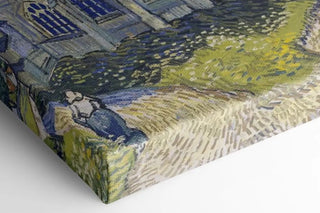
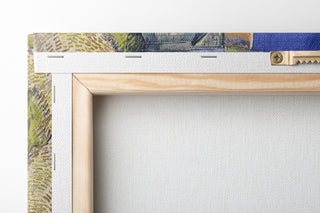
View from behind
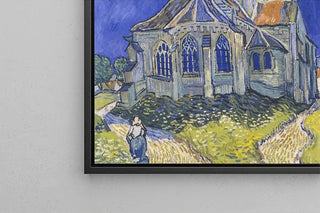
Frame (optional)
In the vibrant universe of modern art, the art print "Pentecost, the Roman Church, the Eastern Church" by Maurice Denis stands out for its boldness and spiritual depth. This piece, at the crossroads between tradition and modernity, evokes a crucial moment in Christian history, when the Holy Spirit descends upon the apostles, inspiring strength and inspiration. Denis's vibrant composition, imbued with radiant luminosity, invites the viewer to meditative contemplation. Beyond its simple representation, this art print is a true celebration of faith and communion between the Roman Church and the Eastern Church, thus uniting traditions often perceived as opposed.
Style and uniqueness of the art print
Maurice Denis's style is characterized by a synthetic and decorative approach, where each element is carefully designed to serve a narrative and symbolic purpose. In "Pentecost, the Roman Church, the Eastern Church," the stylized and almost hieratic human figures stand out against a luminous background, creating a striking contrast that immediately captures attention. The colors, vivid and harmonious, evoke an atmosphere of transcendence, while the flowing lines and simplified forms testify to the influence of symbolism. Denis manages to transform a religious event into a poetic visual experience, where every detail, from the apostles' gestures to divine light, contributes to a narrative rich in meaning. This art print does not merely illustrate a biblical story; it explores its spiritual depths, inviting the viewer to reflect on the nature of faith and unity.
The artist and his influence
Maurice Denis, an emblematic figure of the Nabi movement, redefined the boundaries of painting at the end of the 19th century and the beginning of the 20th century. Inspired by old masters while incorporating contemporary elements, he paved the way for a new aesthetic, where art becomes a space for dialogue between the sacred and the profane. His artistic vision, marked by a deep respect for religious traditions, is particularly evident in works like "The
Painting La Pentecôte l'Église romaine l'Église d'orient - Maurice Denis | Art print

-10% FROM €95 IN PURCHASES
-15% FROM €195 IN PURCHASES
Regular price
- Unit price
- per
Tax included.
Free shipping
€4.90 / Free shipping on orders over €39
Satisfied or Money Back
Free returns within 30 days
10-year warranty
Our prints are guaranteed for 10 years
Any questions? We are here!
by email to contact@artemlegrand.com
THE STEPS OF YOUR ORDER
STEP 1 - ORDER PLACED
Your order has been confirmed and we are starting production
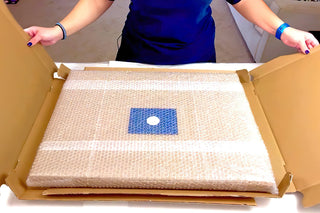
STEP 2 - SHIPPING
We ship your order. We send you an email to track the progress

STEP 3 - DELIVERY
You receive your order. You can also, according to your choice, be delivered to a relay point.
Matte finish
View from behind
Frame (optional)
In the vibrant universe of modern art, the art print "Pentecost, the Roman Church, the Eastern Church" by Maurice Denis stands out for its boldness and spiritual depth. This piece, at the crossroads between tradition and modernity, evokes a crucial moment in Christian history, when the Holy Spirit descends upon the apostles, inspiring strength and inspiration. Denis's vibrant composition, imbued with radiant luminosity, invites the viewer to meditative contemplation. Beyond its simple representation, this art print is a true celebration of faith and communion between the Roman Church and the Eastern Church, thus uniting traditions often perceived as opposed.
Style and uniqueness of the art print
Maurice Denis's style is characterized by a synthetic and decorative approach, where each element is carefully designed to serve a narrative and symbolic purpose. In "Pentecost, the Roman Church, the Eastern Church," the stylized and almost hieratic human figures stand out against a luminous background, creating a striking contrast that immediately captures attention. The colors, vivid and harmonious, evoke an atmosphere of transcendence, while the flowing lines and simplified forms testify to the influence of symbolism. Denis manages to transform a religious event into a poetic visual experience, where every detail, from the apostles' gestures to divine light, contributes to a narrative rich in meaning. This art print does not merely illustrate a biblical story; it explores its spiritual depths, inviting the viewer to reflect on the nature of faith and unity.
The artist and his influence
Maurice Denis, an emblematic figure of the Nabi movement, redefined the boundaries of painting at the end of the 19th century and the beginning of the 20th century. Inspired by old masters while incorporating contemporary elements, he paved the way for a new aesthetic, where art becomes a space for dialogue between the sacred and the profane. His artistic vision, marked by a deep respect for religious traditions, is particularly evident in works like "The
12,34 €