
Painting The Miraculous Transformation of Caterpillars and the Strange Food of Flowers Pl087 - Maria Sibylla Merian | Art print


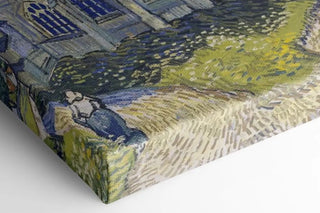
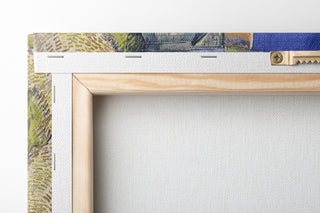
View from behind
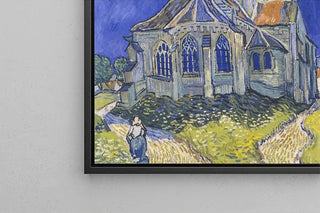
Frame (optional)
Reproduction La transformation miraculeuse des chenilles et l'étrange nourriture des fleurs Pl087 - Maria Sibylla Merian – Introduction captivante
The artwork "The Miraculous Transformation of Caterpillars and the Strange Food of Flowers Pl087" by Maria Sibylla Merian is a dazzling testament to the harmony between nature and art. Immersing oneself in this piece, the viewer is immediately transported into a world where the delicacy of insects blends with the richness of flowers. Merian, a pioneer in insect observation, masterfully captures the ephemeral beauty of life with remarkable precision. This work is much more than a simple illustration; it is an invitation to contemplate the cycle of life, to appreciate the metamorphosis of caterpillars into butterflies, and to recognize the interdependence of species within the ecosystem.
Style and uniqueness of the work
Maria Sibylla Merian's style is distinguished by its meticulous realism and vibrant color palette. Every detail, whether it be the veins of butterfly wings or the textures of petals, is rendered with such finesse that it almost feels tangible. Merian does not merely reproduce nature; she interprets it, breathing life into her compositions. Her use of light and shadow adds unprecedented depth to her subjects, creating an atmosphere that is both serene and dynamic. This piece, in particular, exemplifies her scientific and artistic approach, where rigorous observation of the natural world combines with aesthetic sensitivity. The juxtaposition of caterpillars and flowers, presented with such elegance, demonstrates her talent for marrying beauty with knowledge.
The artist and her influence
Maria Sibylla Merian, an iconic figure of the 17th century, paved the way for a new way of seeing and representing nature. Her journeys in South America and her in-depth studies of insects revolutionized the interaction between science and art. She was one of the first to document the life cycle of insects with scientific precision, while maintaining an artistic approach. Her influence extends far beyond her era; she has inspired numerous artists and naturalists, and her
Painting The Miraculous Transformation of Caterpillars and the Strange Food of Flowers Pl087 - Maria Sibylla Merian | Art print

-10% FROM €95 IN PURCHASES
-15% FROM €195 IN PURCHASES
Regular price
- Unit price
- per
Tax included.
Free shipping
€4.90 / Free shipping on orders over €39
Satisfied or Money Back
Free returns within 30 days
10-year warranty
Our prints are guaranteed for 10 years
Any questions? We are here!
by email to contact@artemlegrand.com
THE STEPS OF YOUR ORDER
STEP 1 - ORDER PLACED
Your order has been confirmed and we are starting production
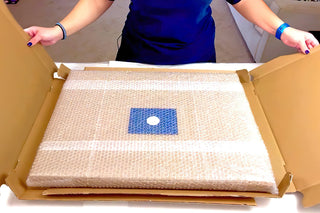
STEP 2 - SHIPPING
We ship your order. We send you an email to track the progress

STEP 3 - DELIVERY
You receive your order. You can also, according to your choice, be delivered to a relay point.
Matte finish
View from behind
Frame (optional)
Reproduction La transformation miraculeuse des chenilles et l'étrange nourriture des fleurs Pl087 - Maria Sibylla Merian – Introduction captivante
The artwork "The Miraculous Transformation of Caterpillars and the Strange Food of Flowers Pl087" by Maria Sibylla Merian is a dazzling testament to the harmony between nature and art. Immersing oneself in this piece, the viewer is immediately transported into a world where the delicacy of insects blends with the richness of flowers. Merian, a pioneer in insect observation, masterfully captures the ephemeral beauty of life with remarkable precision. This work is much more than a simple illustration; it is an invitation to contemplate the cycle of life, to appreciate the metamorphosis of caterpillars into butterflies, and to recognize the interdependence of species within the ecosystem.
Style and uniqueness of the work
Maria Sibylla Merian's style is distinguished by its meticulous realism and vibrant color palette. Every detail, whether it be the veins of butterfly wings or the textures of petals, is rendered with such finesse that it almost feels tangible. Merian does not merely reproduce nature; she interprets it, breathing life into her compositions. Her use of light and shadow adds unprecedented depth to her subjects, creating an atmosphere that is both serene and dynamic. This piece, in particular, exemplifies her scientific and artistic approach, where rigorous observation of the natural world combines with aesthetic sensitivity. The juxtaposition of caterpillars and flowers, presented with such elegance, demonstrates her talent for marrying beauty with knowledge.
The artist and her influence
Maria Sibylla Merian, an iconic figure of the 17th century, paved the way for a new way of seeing and representing nature. Her journeys in South America and her in-depth studies of insects revolutionized the interaction between science and art. She was one of the first to document the life cycle of insects with scientific precision, while maintaining an artistic approach. Her influence extends far beyond her era; she has inspired numerous artists and naturalists, and her
12,34 €