
Painting The Letter - Pierre Carrier-Belleuse | Art print


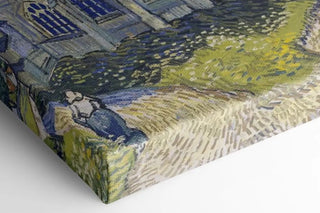
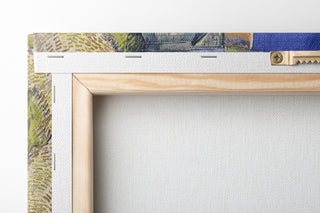
View from behind
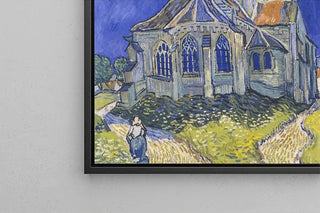
Frame (optional)
In the fascinating world of art, some works manage to capture moments of life with such intensity that they transcend time. "The Letter" by Pierre Carrier-Belleuse is a perfect example. This painting, imbued with delicacy and emotion, immerses us in the intimacy of a scene where human communication, through writing, becomes the vehicle for a message full of meaning. The artist succeeds in immortalizing a fraction of a second, where the gaze of the characters resonates with a depth that invites reflection. This piece is not just a simple painting; it is a true mirror of the human soul.
Style and uniqueness of the work
Pierre Carrier-Belleuse's style is distinguished by its ability to combine realism and romanticism. In "The Letter," the characters are painted with remarkable precision, each detail of their expression and posture demonstrating mastered technique. The light, soft and enveloping, plays a crucial role in the composition, subtly illuminating the faces and creating an intimate atmosphere. The colors, delicately chosen, evoke a palette of feelings ranging from melancholy to hope. This work also stands out for its universal theme: communication. The act of reading a letter becomes a powerful symbol here, revealing personal stories and deep emotions. Carrier-Belleuse manages to establish a silent dialogue between the characters, an interaction that speaks to each of us, making the work all the more captivating.
The artist and his influence
Pierre Carrier-Belleuse, born in 1844, is an artist whose work marked the 19th century. A student of the illustrious painter Gustave Courbet, he developed a style that is uniquely his own, blending academic influences with contemporary inspirations. His career is marked by success, and he quickly became an essential figure at the Paris Salon. Carrier-Belleuse's influence extends far beyond his own artistic production; he inspired many artists of his time and subsequent generations, notably through his approach to portraiture and genre scenes. His works, including "The Letter," demonstrate a sensitivity towards human emotions, an aspect
Painting The Letter - Pierre Carrier-Belleuse | Art print

-10% FROM €95 IN PURCHASES
-15% FROM €195 IN PURCHASES
Regular price
- Unit price
- per
Tax included.
Free shipping
€4.90 / Free shipping on orders over €39
Satisfied or Money Back
Free returns within 30 days
10-year warranty
Our prints are guaranteed for 10 years
Any questions? We are here!
by email to contact@artemlegrand.com
THE STEPS OF YOUR ORDER
STEP 1 - ORDER PLACED
Your order has been confirmed and we are starting production
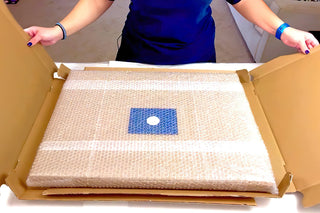
STEP 2 - SHIPPING
We ship your order. We send you an email to track the progress

STEP 3 - DELIVERY
You receive your order. You can also, according to your choice, be delivered to a relay point.
Matte finish
View from behind
Frame (optional)
In the fascinating world of art, some works manage to capture moments of life with such intensity that they transcend time. "The Letter" by Pierre Carrier-Belleuse is a perfect example. This painting, imbued with delicacy and emotion, immerses us in the intimacy of a scene where human communication, through writing, becomes the vehicle for a message full of meaning. The artist succeeds in immortalizing a fraction of a second, where the gaze of the characters resonates with a depth that invites reflection. This piece is not just a simple painting; it is a true mirror of the human soul.
Style and uniqueness of the work
Pierre Carrier-Belleuse's style is distinguished by its ability to combine realism and romanticism. In "The Letter," the characters are painted with remarkable precision, each detail of their expression and posture demonstrating mastered technique. The light, soft and enveloping, plays a crucial role in the composition, subtly illuminating the faces and creating an intimate atmosphere. The colors, delicately chosen, evoke a palette of feelings ranging from melancholy to hope. This work also stands out for its universal theme: communication. The act of reading a letter becomes a powerful symbol here, revealing personal stories and deep emotions. Carrier-Belleuse manages to establish a silent dialogue between the characters, an interaction that speaks to each of us, making the work all the more captivating.
The artist and his influence
Pierre Carrier-Belleuse, born in 1844, is an artist whose work marked the 19th century. A student of the illustrious painter Gustave Courbet, he developed a style that is uniquely his own, blending academic influences with contemporary inspirations. His career is marked by success, and he quickly became an essential figure at the Paris Salon. Carrier-Belleuse's influence extends far beyond his own artistic production; he inspired many artists of his time and subsequent generations, notably through his approach to portraiture and genre scenes. His works, including "The Letter," demonstrate a sensitivity towards human emotions, an aspect
12,34 €