
Painting The Demoiselles Charlotte Jeanette and Anne Sofie Laurent - Per Krafft the Younger


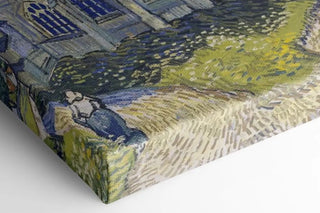
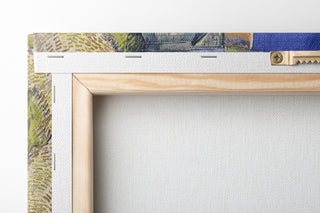
View from behind
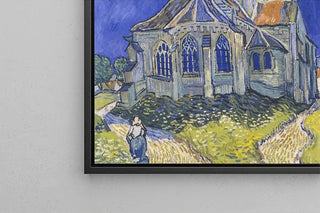
Frame (optional)
The Demoiselles Charlotte Jeanette and Anne Sofie Laurent - Per Krafft le Jeune – Captivating Introduction
At the heart of early 19th-century Swedish art, the artwork titled "The Demoiselles Charlotte Jeanette and Anne Sofie Laurent" by Per Krafft le Jeune stands as a vibrant testament to the artistic sensibility of its time. This art print, characterized by unparalleled delicacy and finesse, invites viewers to immerse themselves in a universe where beauty is intertwined with intimacy. The female figures, gently posed, seem to capture a suspended moment, revealing both their elegance and their character. By examining this piece, one discovers not only a portrait but also a visual narrative that evokes human relationships and the subtle emotions that traverse them.
Style and uniqueness of the artwork
Per Krafft le Jeune's style is distinguished by meticulous attention to detail and a refined color palette. In "The Demoiselles Charlotte Jeanette and Anne Sofie Laurent," each brushstroke appears imbued with a profound intention, where light plays a crucial role in highlighting the faces and clothing of the demoiselles. The flowing drapery and delicate textures of the fabrics are rendered with such precision that they seem almost tangible. Krafft manages to create an intimate atmosphere, where the gaze of the models, both direct and mysterious, engages the viewer in a silent conversation. This blend of realism and romanticism makes this art print a quintessential example of the art of its time, while also imparting a modernity that continues to resonate today.
The artist and his influence
Per Krafft le Jeune, a prominent figure in the Swedish art scene, has established himself through his talent and unique vision. Son of a renowned painter, he inherited a rich artistic legacy that he managed to transcend. His training abroad, notably in Paris, allowed him to absorb influences from the great masters of his era, while developing a personal style that is entirely his own. Krafft not only contributed to the evolution of Swedish painting but also paved the way for a new approach to female representation, putting
Painting The Demoiselles Charlotte Jeanette and Anne Sofie Laurent - Per Krafft the Younger

-10% FROM €95 IN PURCHASES
-15% FROM €195 IN PURCHASES
Regular price
- Unit price
- per
Tax included.
Free shipping
€4.90 / Free shipping on orders over €39
Satisfied or Money Back
Free returns within 30 days
10-year warranty
Our prints are guaranteed for 10 years
Any questions? We are here!
by email to contact@artemlegrand.com
THE STEPS OF YOUR ORDER

STEP 1 - ORDER PLACED
Your order has been confirmed and we are starting production
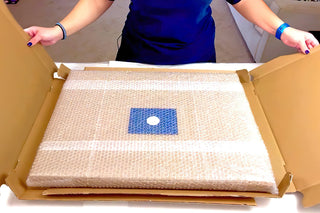
STEP 2 - SHIPPING
We ship your order. We send you an email to track the progress

STEP 3 - DELIVERY
You receive your order. You can also, according to your choice, be delivered to a relay point.
Matte finish
View from behind
Frame (optional)
The Demoiselles Charlotte Jeanette and Anne Sofie Laurent - Per Krafft le Jeune – Captivating Introduction
At the heart of early 19th-century Swedish art, the artwork titled "The Demoiselles Charlotte Jeanette and Anne Sofie Laurent" by Per Krafft le Jeune stands as a vibrant testament to the artistic sensibility of its time. This art print, characterized by unparalleled delicacy and finesse, invites viewers to immerse themselves in a universe where beauty is intertwined with intimacy. The female figures, gently posed, seem to capture a suspended moment, revealing both their elegance and their character. By examining this piece, one discovers not only a portrait but also a visual narrative that evokes human relationships and the subtle emotions that traverse them.
Style and uniqueness of the artwork
Per Krafft le Jeune's style is distinguished by meticulous attention to detail and a refined color palette. In "The Demoiselles Charlotte Jeanette and Anne Sofie Laurent," each brushstroke appears imbued with a profound intention, where light plays a crucial role in highlighting the faces and clothing of the demoiselles. The flowing drapery and delicate textures of the fabrics are rendered with such precision that they seem almost tangible. Krafft manages to create an intimate atmosphere, where the gaze of the models, both direct and mysterious, engages the viewer in a silent conversation. This blend of realism and romanticism makes this art print a quintessential example of the art of its time, while also imparting a modernity that continues to resonate today.
The artist and his influence
Per Krafft le Jeune, a prominent figure in the Swedish art scene, has established himself through his talent and unique vision. Son of a renowned painter, he inherited a rich artistic legacy that he managed to transcend. His training abroad, notably in Paris, allowed him to absorb influences from the great masters of his era, while developing a personal style that is entirely his own. Krafft not only contributed to the evolution of Swedish painting but also paved the way for a new approach to female representation, putting
12,34 €