
Art print of La Cour Lacordaire at the Carmelite Convent on Vaugirard Street - Georges-Émile Carette


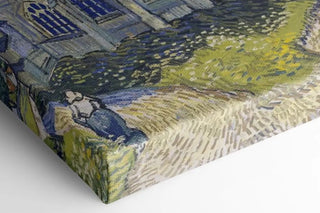
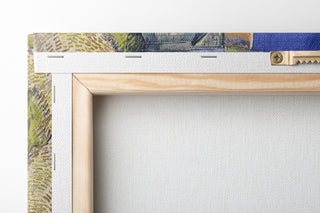
View from behind
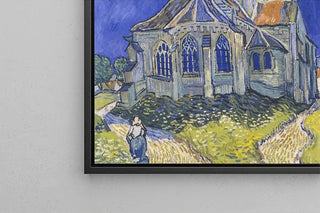
Frame (optional)
La Cour Lacordaire at the Carmes Convent on Vaugirard Street - Georges-Émile Carette – Captivating Introduction
In the heart of early 20th-century Paris, Georges-Émile Carette's artwork, "La Cour Lacordaire at the Carmes Convent on Vaugirard Street," stands as a vibrant testament to monastic life and Parisian architecture. This painting, imbued with a serene atmosphere, transports us to a space where time seems to stand still, inviting the viewer to discover the subtleties of a world that is both spiritual and everyday. By capturing the light filtering through the foliage, Carette succeeds in evoking a sense of peace and contemplation, characteristic of places of prayer and retreat. The piece, both intimate and universal, reminds us of the importance of nature and spirituality in urban life.
Style and uniqueness of the work
Carette's style is distinguished by an impressionist approach, where light and color play a leading role. In "La Cour Lacordaire at the Carmes Convent on Vaugirard Street," fluid brushstrokes and delicate nuances create an almost tangible atmosphere, where each element seems to vibrate with its own life. Shadows dance on the walls, while the lush green of the trees adds a touch of freshness to the composition. Carette manages to capture not only the architecture of the convent but also the essence of the tranquility that reigns there. The meticulous details, from bricks to foliage, testify to an attentive eye and a deep respect for his subject. This painting is not limited to a simple representation but becomes an invitation to meditation and reflection on the harmony between man and nature.
The artist and his influence
Georges-Émile Carette, a French artist born in 1854, established himself as a major figure of the Impressionist school. His work, marked by sensitivity to light play and atmospheres, reflects a constant search for beauty in everyday life. Influenced by masters such as Monet and Pissarro, Carette develops a style that is uniquely his own, combining precision and poetry. His interest
Art print of La Cour Lacordaire at the Carmelite Convent on Vaugirard Street - Georges-Émile Carette

-10% FROM €95 IN PURCHASES
-15% FROM €195 IN PURCHASES
Regular price
- Unit price
- per
Tax included.
Free shipping
€4.90 / Free shipping on orders over €39
Satisfied or Money Back
Free returns within 30 days
10-year warranty
Our prints are guaranteed for 10 years
Any questions? We are here!
by email to contact@artemlegrand.com
THE STEPS OF YOUR ORDER

STEP 1 - ORDER PLACED
Your order has been confirmed and we are starting production
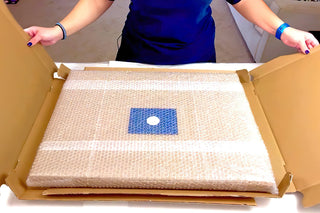
STEP 2 - SHIPPING
We ship your order. We send you an email to track the progress

STEP 3 - DELIVERY
You receive your order. You can also, according to your choice, be delivered to a relay point.
Matte finish
View from behind
Frame (optional)
La Cour Lacordaire at the Carmes Convent on Vaugirard Street - Georges-Émile Carette – Captivating Introduction
In the heart of early 20th-century Paris, Georges-Émile Carette's artwork, "La Cour Lacordaire at the Carmes Convent on Vaugirard Street," stands as a vibrant testament to monastic life and Parisian architecture. This painting, imbued with a serene atmosphere, transports us to a space where time seems to stand still, inviting the viewer to discover the subtleties of a world that is both spiritual and everyday. By capturing the light filtering through the foliage, Carette succeeds in evoking a sense of peace and contemplation, characteristic of places of prayer and retreat. The piece, both intimate and universal, reminds us of the importance of nature and spirituality in urban life.
Style and uniqueness of the work
Carette's style is distinguished by an impressionist approach, where light and color play a leading role. In "La Cour Lacordaire at the Carmes Convent on Vaugirard Street," fluid brushstrokes and delicate nuances create an almost tangible atmosphere, where each element seems to vibrate with its own life. Shadows dance on the walls, while the lush green of the trees adds a touch of freshness to the composition. Carette manages to capture not only the architecture of the convent but also the essence of the tranquility that reigns there. The meticulous details, from bricks to foliage, testify to an attentive eye and a deep respect for his subject. This painting is not limited to a simple representation but becomes an invitation to meditation and reflection on the harmony between man and nature.
The artist and his influence
Georges-Émile Carette, a French artist born in 1854, established himself as a major figure of the Impressionist school. His work, marked by sensitivity to light play and atmospheres, reflects a constant search for beauty in everyday life. Influenced by masters such as Monet and Pissarro, Carette develops a style that is uniquely his own, combining precision and poetry. His interest
12,34 €