
Painting The Butcher - Georg Scholz | Art print


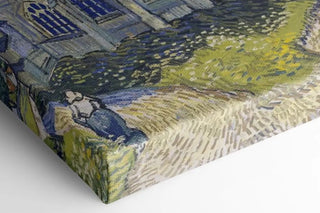
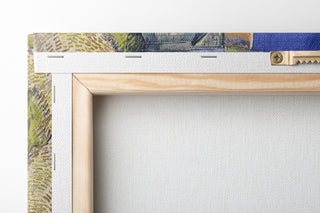
View from behind
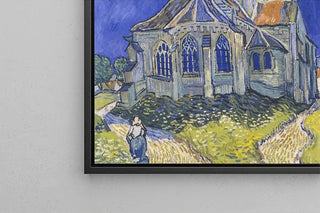
Frame (optional)
Reproduction Le boucher - Georg Scholz – Engaging introduction
In the vibrant landscape of 20th-century art, Georg Scholz's "Le boucher" stands out for its evocative power and exploration of urban life themes. This canvas, a true mirror of its era's society, immerses us in a universe where everyday brutality blends with striking aesthetics. Through this art print, viewers are invited to contemplate not only the depicted scene but also the emotions and reflections it evokes. Scholz, with his sharp gaze and keen sense of observation, offers a vision that is both raw and poetic of the human condition, prompting us to question our relationship with life and death.
Style and uniqueness of the work
Georg Scholz's style is characterized by a realistic approach, tinged with expressionism that emphasizes features and colors to better convey the intensity of feelings. In "Le boucher," the portrayal of the main character, with his imposing stature and focused expression, evokes a certain form of strength, but also an inherent vulnerability linked to his profession. The play of shadow and light, along with the earthy color palette, gives the piece a mood that is both dark and captivating. Scholz manages to capture the movement and energy of the scene, almost palpable in the smell of fresh meat and the sound of knives. Every detail, from the butcher's gaze to the texture of the food, is carefully crafted, demonstrating a concern for realism that does not exclude a strong symbolic dimension.
The artist and his influence
Georg Scholz, born in 1890 in Berlin, was an artist whose career was deeply influenced by the social and political upheavals of his time. His training at the Fine Arts Academy and his experience within the expressionist movement led him to develop a unique style, blending realism with social critique. Scholz was able to capture the essence of his era, addressing often taboo subjects with disarming frankness. His work, although sometimes controversial, paved the way for new reflections on the representation of daily life and social classes. By integrating elements of urban life
Painting The Butcher - Georg Scholz | Art print

-10% FROM €95 IN PURCHASES
-15% FROM €195 IN PURCHASES
Regular price
- Unit price
- per
Tax included.
Free shipping
€4.90 / Free shipping on orders over €39
Satisfied or Money Back
Free returns within 30 days
10-year warranty
Our prints are guaranteed for 10 years
Any questions? We are here!
by email to contact@artemlegrand.com
THE STEPS OF YOUR ORDER

STEP 1 - ORDER PLACED
Your order has been confirmed and we are starting production
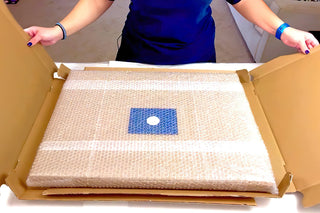
STEP 2 - SHIPPING
We ship your order. We send you an email to track the progress

STEP 3 - DELIVERY
You receive your order. You can also, according to your choice, be delivered to a relay point.
Matte finish
View from behind
Frame (optional)
Reproduction Le boucher - Georg Scholz – Engaging introduction
In the vibrant landscape of 20th-century art, Georg Scholz's "Le boucher" stands out for its evocative power and exploration of urban life themes. This canvas, a true mirror of its era's society, immerses us in a universe where everyday brutality blends with striking aesthetics. Through this art print, viewers are invited to contemplate not only the depicted scene but also the emotions and reflections it evokes. Scholz, with his sharp gaze and keen sense of observation, offers a vision that is both raw and poetic of the human condition, prompting us to question our relationship with life and death.
Style and uniqueness of the work
Georg Scholz's style is characterized by a realistic approach, tinged with expressionism that emphasizes features and colors to better convey the intensity of feelings. In "Le boucher," the portrayal of the main character, with his imposing stature and focused expression, evokes a certain form of strength, but also an inherent vulnerability linked to his profession. The play of shadow and light, along with the earthy color palette, gives the piece a mood that is both dark and captivating. Scholz manages to capture the movement and energy of the scene, almost palpable in the smell of fresh meat and the sound of knives. Every detail, from the butcher's gaze to the texture of the food, is carefully crafted, demonstrating a concern for realism that does not exclude a strong symbolic dimension.
The artist and his influence
Georg Scholz, born in 1890 in Berlin, was an artist whose career was deeply influenced by the social and political upheavals of his time. His training at the Fine Arts Academy and his experience within the expressionist movement led him to develop a unique style, blending realism with social critique. Scholz was able to capture the essence of his era, addressing often taboo subjects with disarming frankness. His work, although sometimes controversial, paved the way for new reflections on the representation of daily life and social classes. By integrating elements of urban life
12,34 €