
Painting The Balalaika Player - Jean-Baptiste Le Prince | Art print


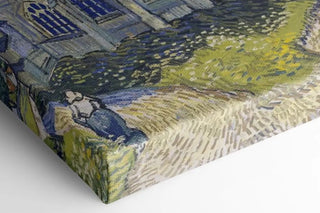
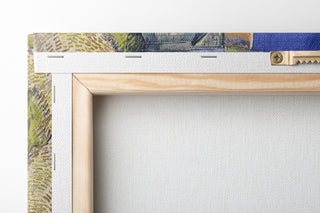
View from behind
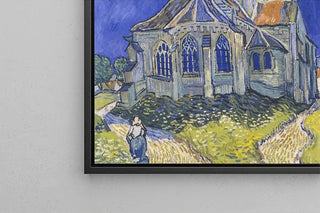
Frame (optional)
In the rich and diverse panorama of art history, certain works stand out for their ability to capture the essence of a culture and an era. "Art print Le Joueur de balalaïka - Jean-Baptiste Le Prince" is one of these creations that evoke not only the beauty of music but also the depth of the human soul. This piece, painted in the 18th century, transports us to a universe where melody and painting meet, revealing the passion and joie de vivre of the depicted characters. By contemplating this work, the viewer is invited to immerse themselves in an atmosphere filled with nostalgia and conviviality, where each brushstroke seems to resonate with the notes of a vibrant balalaïka.
Style and uniqueness of the work
Jean-Baptiste Le Prince's style is characterized by finesse and delicacy that are uniquely his own. In "Art print Le Joueur de balalaïka," the artist manages to capture not only the posture of the musician but also the emotion emanating from his performance. The chosen colors, both warm and harmonious, create a striking contrast with the shadows, thus emphasizing the scene's depth. The choice of the balalaïka as the central instrument is no coincidence; it symbolizes a rich musical tradition rooted in Russian folklore. The composition, meanwhile, is carefully orchestrated, with elements that complement each other to form visual harmony. The viewer's gaze is naturally guided toward the player, whose focused and passionate expression reflects the intensity of the moment. This painting is much more than a simple representation; it is an invitation to feel the music through visual art.
The artist and his influence
Jean-Baptiste Le Prince, a painter and engraver of French origin, established himself in the 18th-century art scene thanks to his exceptional talent and his ability to capture moments of life with rare authenticity. His stay in Russia, where he witnessed local culture, profoundly influenced his work. By incorporating Russian themes and motifs into his creations, he not only expanded his own repertoire but
Painting The Balalaika Player - Jean-Baptiste Le Prince | Art print

-10% FROM €95 IN PURCHASES
-15% FROM €195 IN PURCHASES
Regular price
- Unit price
- per
Tax included.
Free shipping
€4.90 / Free shipping on orders over €39
Satisfied or Money Back
Free returns within 30 days
10-year warranty
Our prints are guaranteed for 10 years
Any questions? We are here!
by email to contact@artemlegrand.com
THE STEPS OF YOUR ORDER
STEP 1 - ORDER PLACED
Your order has been confirmed and we are starting production
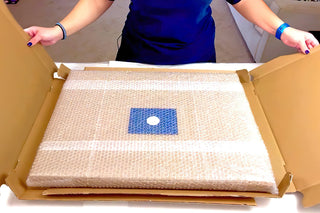
STEP 2 - SHIPPING
We ship your order. We send you an email to track the progress

STEP 3 - DELIVERY
You receive your order. You can also, according to your choice, be delivered to a relay point.
Matte finish
View from behind
Frame (optional)
In the rich and diverse panorama of art history, certain works stand out for their ability to capture the essence of a culture and an era. "Art print Le Joueur de balalaïka - Jean-Baptiste Le Prince" is one of these creations that evoke not only the beauty of music but also the depth of the human soul. This piece, painted in the 18th century, transports us to a universe where melody and painting meet, revealing the passion and joie de vivre of the depicted characters. By contemplating this work, the viewer is invited to immerse themselves in an atmosphere filled with nostalgia and conviviality, where each brushstroke seems to resonate with the notes of a vibrant balalaïka.
Style and uniqueness of the work
Jean-Baptiste Le Prince's style is characterized by finesse and delicacy that are uniquely his own. In "Art print Le Joueur de balalaïka," the artist manages to capture not only the posture of the musician but also the emotion emanating from his performance. The chosen colors, both warm and harmonious, create a striking contrast with the shadows, thus emphasizing the scene's depth. The choice of the balalaïka as the central instrument is no coincidence; it symbolizes a rich musical tradition rooted in Russian folklore. The composition, meanwhile, is carefully orchestrated, with elements that complement each other to form visual harmony. The viewer's gaze is naturally guided toward the player, whose focused and passionate expression reflects the intensity of the moment. This painting is much more than a simple representation; it is an invitation to feel the music through visual art.
The artist and his influence
Jean-Baptiste Le Prince, a painter and engraver of French origin, established himself in the 18th-century art scene thanks to his exceptional talent and his ability to capture moments of life with rare authenticity. His stay in Russia, where he witnessed local culture, profoundly influenced his work. By incorporating Russian themes and motifs into his creations, he not only expanded his own repertoire but
12,34 €