
Painting Study for Madame Heim's Portrait - Robert Delaunay | Art print Source: Tableau Étude pour le Portrait de Madame Heim - Robert Delaunay | Reproduction


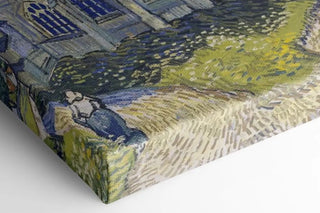
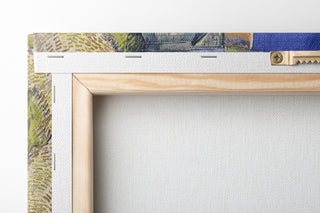
View from behind
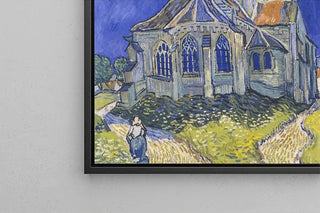
Frame (optional)
The artwork "Study for the Portrait of Madame Heim" by Robert Delaunay presents itself as an open window into the vibrant and colorful universe of modern art. Created in the early 20th century, this study embodies not only the exceptional talent of the artist but also the spirit of a rapidly changing era. Through this piece, Delaunay invites us to explore the nuances of light and color, while capturing the very essence of his model, Madame Heim. This portrait, both intimate and bold, reflects a constant search for harmony between abstraction and figuration, a delicate balance that characterizes the work of this emblematic artist.
Style and uniqueness of the work
Delaunay stands out with his daring use of colors and shapes, and "Study for the Portrait of Madame Heim" is no exception. The artist plays with vibrant shades, juxtaposing warm and cool tones to create a sense of movement and depth. The contours of Madame Heim's face blend into a chromatic whirlwind, demonstrating an almost kinetic approach to painting. This technique, which foreshadows Orphism, emphasizes the subjectivity of visual perception, where color becomes the primary vehicle of emotion. The work does not merely depict a face; it evokes an atmosphere, a sensation, making each gaze unique and personal. The composition, although centered on the portrait, transcends simple realism to offer a rich and immersive aesthetic experience.
The artist and his influence
Robert Delaunay, a major figure of Cubism and a pioneer of Orphism, managed to leave his mark on his era with an innovative vision of art. Born in Paris in 1885, he quickly established himself as an avant-garde artist, influencing many contemporaries as well as future generations. His collaboration with other artists, such as his wife Sonia Delaunay, helped broaden the horizons of modern art, integrating color and light as fundamental elements of artistic creation. Through his works, Delaunay sought to capture the rhythm of modern life, echoing social and technological transformations.
Painting Study for Madame Heim's Portrait - Robert Delaunay | Art print Source: Tableau Étude pour le Portrait de Madame Heim - Robert Delaunay | Reproduction

-10% FROM €95 IN PURCHASES
-15% FROM €195 IN PURCHASES
Regular price
- Unit price
- per
Tax included.
Free shipping
€4.90 / Free shipping on orders over €39
Satisfied or Money Back
Free returns within 30 days
10-year warranty
Our prints are guaranteed for 10 years
Any questions? We are here!
by email to contact@artemlegrand.com
THE STEPS OF YOUR ORDER
STEP 1 - ORDER PLACED
Your order has been confirmed and we are starting production
STEP 2 - SHIPPING
We ship your order. We send you an email to track the progress

STEP 3 - DELIVERY
You receive your order. You can also, according to your choice, be delivered to a relay point.
Matte finish
View from behind
Frame (optional)
The artwork "Study for the Portrait of Madame Heim" by Robert Delaunay presents itself as an open window into the vibrant and colorful universe of modern art. Created in the early 20th century, this study embodies not only the exceptional talent of the artist but also the spirit of a rapidly changing era. Through this piece, Delaunay invites us to explore the nuances of light and color, while capturing the very essence of his model, Madame Heim. This portrait, both intimate and bold, reflects a constant search for harmony between abstraction and figuration, a delicate balance that characterizes the work of this emblematic artist.
Style and uniqueness of the work
Delaunay stands out with his daring use of colors and shapes, and "Study for the Portrait of Madame Heim" is no exception. The artist plays with vibrant shades, juxtaposing warm and cool tones to create a sense of movement and depth. The contours of Madame Heim's face blend into a chromatic whirlwind, demonstrating an almost kinetic approach to painting. This technique, which foreshadows Orphism, emphasizes the subjectivity of visual perception, where color becomes the primary vehicle of emotion. The work does not merely depict a face; it evokes an atmosphere, a sensation, making each gaze unique and personal. The composition, although centered on the portrait, transcends simple realism to offer a rich and immersive aesthetic experience.
The artist and his influence
Robert Delaunay, a major figure of Cubism and a pioneer of Orphism, managed to leave his mark on his era with an innovative vision of art. Born in Paris in 1885, he quickly established himself as an avant-garde artist, influencing many contemporaries as well as future generations. His collaboration with other artists, such as his wife Sonia Delaunay, helped broaden the horizons of modern art, integrating color and light as fundamental elements of artistic creation. Through his works, Delaunay sought to capture the rhythm of modern life, echoing social and technological transformations.
12,34 €