
Art print Still life with flowers in a glass vase - Rachel Ruysch | Art print


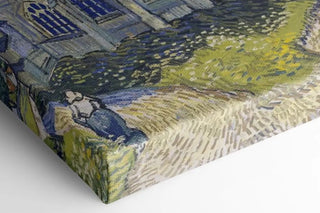
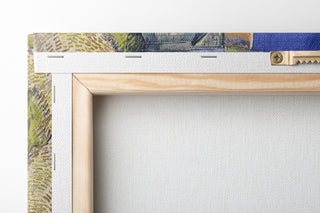
View from behind
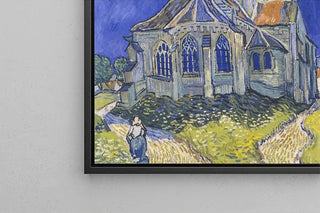
Frame (optional)
In the fascinating world of still life painting, the work of Rachel Ruysch, titled "Nature morte avec des fleurs dans un vase en verre," stands out for its delicacy and striking realism. Painted in the early 18th century, this floral composition transcends mere decoration to offer a true ode to the ephemeral beauty of nature. The flowers, carefully arranged in a glass vase, seem almost alive, as if they could animate at any moment. This piece, emblematic of the baroque style, invites silent contemplation, where every detail is a celebration of life and death—a theme dear to the artist.
Style and uniqueness of the work
Rachel Ruysch's style is characterized by an exceptional mastery of colors and textures. In "Nature morte avec des fleurs dans un vase en verre," she employs a rich and varied palette, ranging from vibrant hues to softer shades, creating a striking contrast that captures the eye. The flowers, whether roses, peonies, or lilies, are rendered with meticulous precision, each petal and leaf depicted with careful attention. Light plays a crucial role in this composition, illuminating the glass vase and creating reflections that add an extra dimension to the artwork. Ruysch manages to capture not only the beauty of the flowers but also their fragility, thus evoking the fleeting nature of life. This blend of realism and romanticism makes this art print a unique piece, where every element tells a story.
The artist and her influence
Rachel Ruysch, born in 1664 in The Hague, is one of the first women to make a name for herself in the world of painting, dominated by men of her time. Raised in an artistic environment, she developed an early interest in botany and painting. Her training and influences, notably those of Flemish masters, allowed her to develop a personal style that combines scientific precision with artistic sensitivity. Beyond her work, Ruysch paved the way for other women artists, proving that art has no gender. Her impact on the genre
Art print Still life with flowers in a glass vase - Rachel Ruysch | Art print

-10% FROM €95 IN PURCHASES
-15% FROM €195 IN PURCHASES
Regular price
- Unit price
- per
Tax included.
Free shipping
€4.90 / Free shipping on orders over €39
Satisfied or Money Back
Free returns within 30 days
10-year warranty
Our prints are guaranteed for 10 years
Any questions? We are here!
by email to contact@artemlegrand.com
THE STEPS OF YOUR ORDER
STEP 1 - ORDER PLACED
Your order has been confirmed and we are starting production
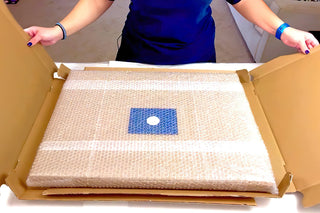
STEP 2 - SHIPPING
We ship your order. We send you an email to track the progress

STEP 3 - DELIVERY
You receive your order. You can also, according to your choice, be delivered to a relay point.
Matte finish
View from behind
Frame (optional)
In the fascinating world of still life painting, the work of Rachel Ruysch, titled "Nature morte avec des fleurs dans un vase en verre," stands out for its delicacy and striking realism. Painted in the early 18th century, this floral composition transcends mere decoration to offer a true ode to the ephemeral beauty of nature. The flowers, carefully arranged in a glass vase, seem almost alive, as if they could animate at any moment. This piece, emblematic of the baroque style, invites silent contemplation, where every detail is a celebration of life and death—a theme dear to the artist.
Style and uniqueness of the work
Rachel Ruysch's style is characterized by an exceptional mastery of colors and textures. In "Nature morte avec des fleurs dans un vase en verre," she employs a rich and varied palette, ranging from vibrant hues to softer shades, creating a striking contrast that captures the eye. The flowers, whether roses, peonies, or lilies, are rendered with meticulous precision, each petal and leaf depicted with careful attention. Light plays a crucial role in this composition, illuminating the glass vase and creating reflections that add an extra dimension to the artwork. Ruysch manages to capture not only the beauty of the flowers but also their fragility, thus evoking the fleeting nature of life. This blend of realism and romanticism makes this art print a unique piece, where every element tells a story.
The artist and her influence
Rachel Ruysch, born in 1664 in The Hague, is one of the first women to make a name for herself in the world of painting, dominated by men of her time. Raised in an artistic environment, she developed an early interest in botany and painting. Her training and influences, notably those of Flemish masters, allowed her to develop a personal style that combines scientific precision with artistic sensitivity. Beyond her work, Ruysch paved the way for other women artists, proving that art has no gender. Her impact on the genre
12,34 €