
Art print Petite croix noire - Kazimir Malevitch | Art print


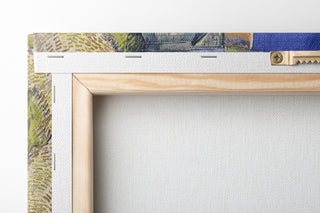
View from behind
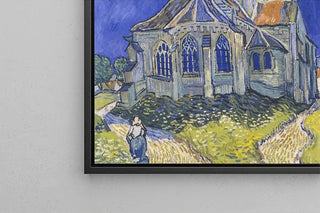
Frame (optional)
Petite black cross reproduction - Kazimir Malevitch – Captivating introduction
Kazimir Malevitch's "Petite black cross" embodies an artistic revolution that redefined the boundaries of modern painting. Created in 1915, this iconic artwork crystallizes the essence of suprematism, a movement founded on the idea that art should free itself from the constraints of the material world to explore pure abstraction. Gazing at this canvas, the viewer is invited on an introspective journey where form and color become vectors of emotion and ideas. The cross, a symbol of transcendence and spirituality, stands here as a visual manifesto, a bold statement on the place of art in contemporary society.
Style and uniqueness of the work
The "Petite black cross" stands out for its striking simplicity and bold use of color. The almost ethereal white background contrasts with the black cross, creating a visual tension that draws the eye and keeps it alert. This duality between emptiness and fullness, between shadow and light, is emblematic of Malevitch's style, which seeks to reduce painting to its most fundamental elements. By eliminating superfluous details, the artist manages to focus attention on the very essence of the form. The cross, far from being a simple motif, becomes a symbol of the absolute, an invitation to reflect on the nature of existence and spirituality. This work, both minimalist and deeply philosophical, embodies Malevitch's quest for a new aesthetic, a visual language that transcends conventions.
The artist and his influence
Kazimir Malevitch, an emblematic figure of Russian avant-garde, played a crucial role in the emergence of modern art. His innovative approach inspired many artists around the world, especially those seeking to explore abstraction and challenge established norms. By founding suprematism, Malevitch paved the way for a new understanding of art, where form and color become autonomous entities. His influence extends far beyond his era, impacting movements such as constructivism and minimalism.
Art print Petite croix noire - Kazimir Malevitch | Art print

-10% FROM €95 IN PURCHASES
-15% FROM €195 IN PURCHASES
Regular price
- Unit price
- per
Tax included.
Free shipping
€4.90 / Free shipping on orders over €39
Satisfied or Money Back
Free returns within 30 days
10-year warranty
Our prints are guaranteed for 10 years
Any questions? We are here!
by email to contact@artemlegrand.com
THE STEPS OF YOUR ORDER

STEP 1 - ORDER PLACED
Your order has been confirmed and we are starting production
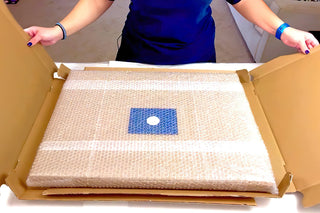
STEP 2 - SHIPPING
We ship your order. We send you an email to track the progress

STEP 3 - DELIVERY
You receive your order. You can also, according to your choice, be delivered to a relay point.
Matte finish
View from behind
Frame (optional)
Petite black cross reproduction - Kazimir Malevitch – Captivating introduction
Kazimir Malevitch's "Petite black cross" embodies an artistic revolution that redefined the boundaries of modern painting. Created in 1915, this iconic artwork crystallizes the essence of suprematism, a movement founded on the idea that art should free itself from the constraints of the material world to explore pure abstraction. Gazing at this canvas, the viewer is invited on an introspective journey where form and color become vectors of emotion and ideas. The cross, a symbol of transcendence and spirituality, stands here as a visual manifesto, a bold statement on the place of art in contemporary society.
Style and uniqueness of the work
The "Petite black cross" stands out for its striking simplicity and bold use of color. The almost ethereal white background contrasts with the black cross, creating a visual tension that draws the eye and keeps it alert. This duality between emptiness and fullness, between shadow and light, is emblematic of Malevitch's style, which seeks to reduce painting to its most fundamental elements. By eliminating superfluous details, the artist manages to focus attention on the very essence of the form. The cross, far from being a simple motif, becomes a symbol of the absolute, an invitation to reflect on the nature of existence and spirituality. This work, both minimalist and deeply philosophical, embodies Malevitch's quest for a new aesthetic, a visual language that transcends conventions.
The artist and his influence
Kazimir Malevitch, an emblematic figure of Russian avant-garde, played a crucial role in the emergence of modern art. His innovative approach inspired many artists around the world, especially those seeking to explore abstraction and challenge established norms. By founding suprematism, Malevitch paved the way for a new understanding of art, where form and color become autonomous entities. His influence extends far beyond his era, impacting movements such as constructivism and minimalism.
12,34 €