
Painting Parc de l'hôpital Saint-Paul - Vincent van Gogh | Art print


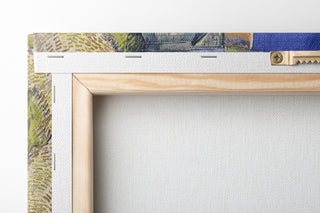
View from behind
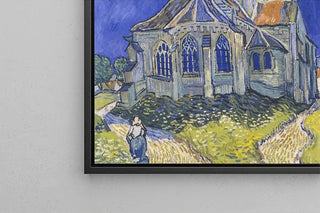
Frame (optional)
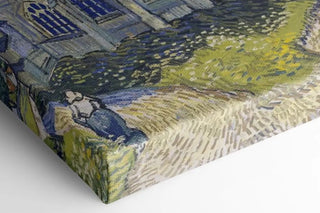
At the heart of Vincent van Gogh's artistic production lies an iconic work, the "Saint-Paul Hospital Park," which invites deep contemplation. Created in 1889, this painting evokes not only the landscape of a park but also the troubled state of mind of the artist. By choosing this subject, Van Gogh immerses us in a universe where nature and humanity meet, revealing a fragile and poignant beauty. The vibrant colors and bold brushstrokes testify to his creative genius and his relentless quest for light, making this piece essential for anyone interested in art history.
Style and uniqueness of the work
The "Saint-Paul Hospital Park" stands out for its Post-Impressionist style, characterized by a palette of bright colors and stylized forms. Van Gogh uses shades of green, yellow, and blue that blend harmoniously, creating an atmosphere that is both serene and dynamic. The trees, with swirling foliage, seem to dance in the breeze, while the ground is dotted with flowers that add a touch of life to the composition. Each brushstroke is filled with emotion, conveying the artist's feelings towards nature. This work does not merely depict a place; it captures its essence, inviting the viewer to feel the tranquility and melancholy emanating from this park, while also revealing Van Gogh's inner struggle.
The artist and his influence
Vincent van Gogh, an emblematic figure of the late 19th century, profoundly impacted art history with his innovative approach and unique vision. Although his career was brief and tumultuous, his influence on subsequent generations of artists is undeniable. His bold use of colors and light paved the way for new artistic movements, including Fauvism and Expressionism. Van Gogh transformed his personal experiences into universal art, touching millions around the world. The "Saint-Paul Hospital Park" is a perfect example of this alchemy between the
Painting Parc de l'hôpital Saint-Paul - Vincent van Gogh | Art print

-10% FROM €95 IN PURCHASES
-15% FROM €195 IN PURCHASES
Regular price
- Unit price
- per
Tax included.
Free shipping
€4.90 / Free shipping on orders over €39
Satisfied or Money Back
Free returns within 30 days
10-year warranty
Our prints are guaranteed for 10 years
Any questions? We are here!
by email to contact@artemlegrand.com
THE STEPS OF YOUR ORDER

STEP 1 - ORDER PLACED
Your order has been confirmed and we are starting production

STEP 2 - SHIPPING
We ship your order. We send you an email to track the progress

STEP 3 - DELIVERY
You receive your order. You can also, according to your choice, be delivered to a relay point.
Matte finish
View from behind
Frame (optional)
At the heart of Vincent van Gogh's artistic production lies an iconic work, the "Saint-Paul Hospital Park," which invites deep contemplation. Created in 1889, this painting evokes not only the landscape of a park but also the troubled state of mind of the artist. By choosing this subject, Van Gogh immerses us in a universe where nature and humanity meet, revealing a fragile and poignant beauty. The vibrant colors and bold brushstrokes testify to his creative genius and his relentless quest for light, making this piece essential for anyone interested in art history.
Style and uniqueness of the work
The "Saint-Paul Hospital Park" stands out for its Post-Impressionist style, characterized by a palette of bright colors and stylized forms. Van Gogh uses shades of green, yellow, and blue that blend harmoniously, creating an atmosphere that is both serene and dynamic. The trees, with swirling foliage, seem to dance in the breeze, while the ground is dotted with flowers that add a touch of life to the composition. Each brushstroke is filled with emotion, conveying the artist's feelings towards nature. This work does not merely depict a place; it captures its essence, inviting the viewer to feel the tranquility and melancholy emanating from this park, while also revealing Van Gogh's inner struggle.
The artist and his influence
Vincent van Gogh, an emblematic figure of the late 19th century, profoundly impacted art history with his innovative approach and unique vision. Although his career was brief and tumultuous, his influence on subsequent generations of artists is undeniable. His bold use of colors and light paved the way for new artistic movements, including Fauvism and Expressionism. Van Gogh transformed his personal experiences into universal art, touching millions around the world. The "Saint-Paul Hospital Park" is a perfect example of this alchemy between the
12,34 €