
Painting Portrait of Mme Charles Rome - William Blake Richmond | Art print Source: Tableau Portrait de Mme Charles Rome - William Blake Richmond | Reproduction


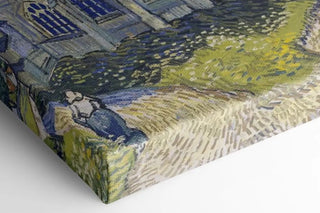
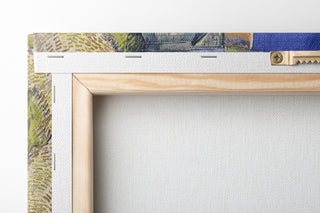
View from behind
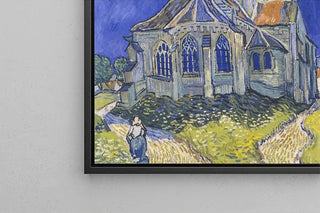
Frame (optional)
Portrait of Mme Charles Rome - William Blake Richmond – Captivating Introduction
In the vast panorama of art history, certain works stand out for their ability to capture the very essence of humanity. The "Portrait of Mme Charles Rome" by William Blake Richmond is a striking example. This piece, created at the end of the 19th century, transcends a simple portrait to become a profound exploration of personality and human emotion. The delicacy of the model's features, combined with the artist's technical mastery, invites the viewer to immerse themselves in a universe where time seems suspended. Through this art print, the work continues to fascinate and inspire, testifying to the richness of artistic expression of its era.
Style and uniqueness of the work
The uniqueness of the "Portrait of Mme Charles Rome" lies in the subtle harmony between realism and idealization. Richmond, known for his ability to render light and texture with remarkable precision, manages here to create an intimate atmosphere. The colors, both soft and vibrant, blend to bring the canvas to life, while the pose of the model, both natural and posed, reveals rare psychological depth. Every detail, from the draping of the dress to the reflections in the hair, is carefully thought out to convey an impression of serenity and dignity. This portrait does not merely depict a woman; it tells a story, that of a time when art was a privileged means of expressing human emotions.
The artist and his influence
William Blake Richmond, an emblematic figure of the Pre-Raphaelite movement, knew how to combine tradition and innovation in his work. Trained at the Royal Academy of Fine Arts, he developed a style that, while inspired by the masters of the past, sought to express a modern sensibility. His artistic approach is characterized by meticulous attention to detail and a constant pursuit of beauty. Richmond was also a passionate advocate of decorative art, integrating his painting skills into architectural projects and the creation of stained glass windows. His influence extends beyond his own works, inspiring many contemporary artists to explore the limits of pictorial expression and to redefine the portrait as
Painting Portrait of Mme Charles Rome - William Blake Richmond | Art print Source: Tableau Portrait de Mme Charles Rome - William Blake Richmond | Reproduction

-10% FROM €95 IN PURCHASES
-15% FROM €195 IN PURCHASES
Regular price
- Unit price
- per
Tax included.
Free shipping
€4.90 / Free shipping on orders over €39
Satisfied or Money Back
Free returns within 30 days
10-year warranty
Our prints are guaranteed for 10 years
Any questions? We are here!
by email to contact@artemlegrand.com
THE STEPS OF YOUR ORDER

STEP 1 - ORDER PLACED
Your order has been confirmed and we are starting production
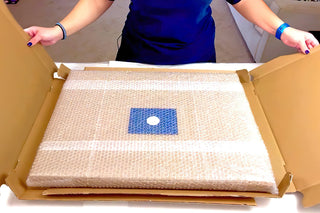
STEP 2 - SHIPPING
We ship your order. We send you an email to track the progress

STEP 3 - DELIVERY
You receive your order. You can also, according to your choice, be delivered to a relay point.
Matte finish
View from behind
Frame (optional)
Portrait of Mme Charles Rome - William Blake Richmond – Captivating Introduction
In the vast panorama of art history, certain works stand out for their ability to capture the very essence of humanity. The "Portrait of Mme Charles Rome" by William Blake Richmond is a striking example. This piece, created at the end of the 19th century, transcends a simple portrait to become a profound exploration of personality and human emotion. The delicacy of the model's features, combined with the artist's technical mastery, invites the viewer to immerse themselves in a universe where time seems suspended. Through this art print, the work continues to fascinate and inspire, testifying to the richness of artistic expression of its era.
Style and uniqueness of the work
The uniqueness of the "Portrait of Mme Charles Rome" lies in the subtle harmony between realism and idealization. Richmond, known for his ability to render light and texture with remarkable precision, manages here to create an intimate atmosphere. The colors, both soft and vibrant, blend to bring the canvas to life, while the pose of the model, both natural and posed, reveals rare psychological depth. Every detail, from the draping of the dress to the reflections in the hair, is carefully thought out to convey an impression of serenity and dignity. This portrait does not merely depict a woman; it tells a story, that of a time when art was a privileged means of expressing human emotions.
The artist and his influence
William Blake Richmond, an emblematic figure of the Pre-Raphaelite movement, knew how to combine tradition and innovation in his work. Trained at the Royal Academy of Fine Arts, he developed a style that, while inspired by the masters of the past, sought to express a modern sensibility. His artistic approach is characterized by meticulous attention to detail and a constant pursuit of beauty. Richmond was also a passionate advocate of decorative art, integrating his painting skills into architectural projects and the creation of stained glass windows. His influence extends beyond his own works, inspiring many contemporary artists to explore the limits of pictorial expression and to redefine the portrait as
12,34 €