
Painting Portrait of Marie-Sophie Friedericke von Holzhausen - Johann Georg Ziesenis


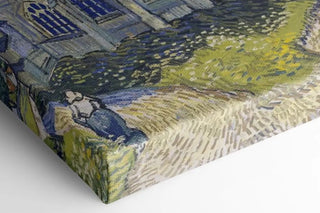
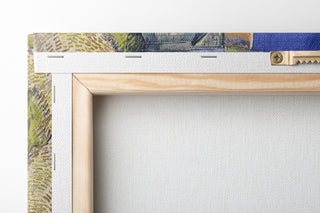
View from behind
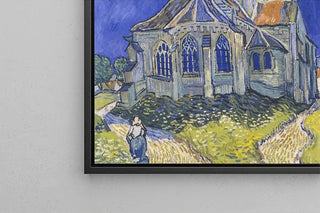
Frame (optional)
In the fascinating world of 18th-century painting, the "Portrait of Marie-Sophie Friedericke von Holzhausen" by Johann Georg Ziesenis stands out for its ability to capture the very essence of its subject. This painting, a true mirror of its time, transports us to a world where nobility and elegance blend with unparalleled artistic sensitivity. Through Marie-Sophie's eyes, one perceives not only a woman of her era but also the aspirations and nuances of a society in full transformation. The art print of this iconic work allows appreciation of the finesse of details and the depth of emotions emanating from each brushstroke.
Style and uniqueness of the work
Ziesenis's style, marked by remarkable delicacy, manifests through a subtle palette and play of light that highlight the beauty of the subject. Marie-Sophie, dressed in an elegant gown, is depicted with natural grace, her delicate features and penetrating gaze evoking deep introspection. The artist excels in portrait art, capturing not only physical appearance but also the soul of his models. The choice of colors, ranging from soft tones to more vivid shades, creates an atmosphere that is both intimate and captivating. Every detail, from the sparkling jewelry to the texture of the fabric, is carefully rendered, demonstrating a concern for realism that characterizes Ziesenis's work.
The artist and his influence
Johann Georg Ziesenis, born in 1700, established himself as one of the most prominent portrait artists of his time. Trained in academic traditions, he developed a personal style that combines technical rigor with sensitivity. His career, marked by numerous commissions from the nobility, testifies to the esteem in which he was held. Ziesenis skillfully navigated between the demands of his patrons and his own artistic vision, creating works that continue to inspire contemporary artists. His approach to portraiture, focused on the psychology of the model, paved the way for a new way of conceiving human representation in art. Through his portraits, he not only immortalized [[...]]
Painting Portrait of Marie-Sophie Friedericke von Holzhausen - Johann Georg Ziesenis

-10% FROM €95 IN PURCHASES
-15% FROM €195 IN PURCHASES
Regular price
- Unit price
- per
Tax included.
Free shipping
€4.90 / Free shipping on orders over €39
Satisfied or Money Back
Free returns within 30 days
10-year warranty
Our prints are guaranteed for 10 years
Any questions? We are here!
by email to contact@artemlegrand.com
THE STEPS OF YOUR ORDER
STEP 1 - ORDER PLACED
Your order has been confirmed and we are starting production
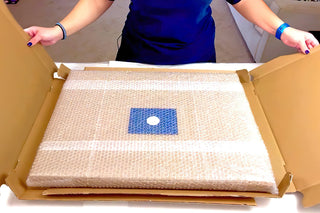
STEP 2 - SHIPPING
We ship your order. We send you an email to track the progress

STEP 3 - DELIVERY
You receive your order. You can also, according to your choice, be delivered to a relay point.
Matte finish
View from behind
Frame (optional)
In the fascinating world of 18th-century painting, the "Portrait of Marie-Sophie Friedericke von Holzhausen" by Johann Georg Ziesenis stands out for its ability to capture the very essence of its subject. This painting, a true mirror of its time, transports us to a world where nobility and elegance blend with unparalleled artistic sensitivity. Through Marie-Sophie's eyes, one perceives not only a woman of her era but also the aspirations and nuances of a society in full transformation. The art print of this iconic work allows appreciation of the finesse of details and the depth of emotions emanating from each brushstroke.
Style and uniqueness of the work
Ziesenis's style, marked by remarkable delicacy, manifests through a subtle palette and play of light that highlight the beauty of the subject. Marie-Sophie, dressed in an elegant gown, is depicted with natural grace, her delicate features and penetrating gaze evoking deep introspection. The artist excels in portrait art, capturing not only physical appearance but also the soul of his models. The choice of colors, ranging from soft tones to more vivid shades, creates an atmosphere that is both intimate and captivating. Every detail, from the sparkling jewelry to the texture of the fabric, is carefully rendered, demonstrating a concern for realism that characterizes Ziesenis's work.
The artist and his influence
Johann Georg Ziesenis, born in 1700, established himself as one of the most prominent portrait artists of his time. Trained in academic traditions, he developed a personal style that combines technical rigor with sensitivity. His career, marked by numerous commissions from the nobility, testifies to the esteem in which he was held. Ziesenis skillfully navigated between the demands of his patrons and his own artistic vision, creating works that continue to inspire contemporary artists. His approach to portraiture, focused on the psychology of the model, paved the way for a new way of conceiving human representation in art. Through his portraits, he not only immortalized [[...]]
12,34 €