
Portrait painting of Dirck Hendrick Meulenaer - Paulus Hennekyn | Art print


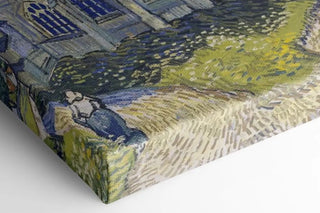
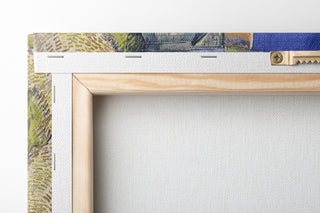
View from behind
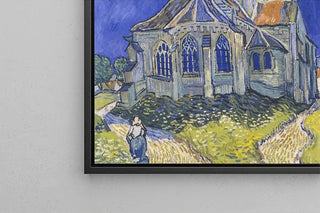
Frame (optional)
In the fascinating world of art, some works transcend time and continue to spark our curiosity. The "Portrait of Dirck Hendrick Meulenaer" by Paulus Hennekyn is one of those iconic pieces that, through its intensity and realism, immerses us in an era where the portrait was much more than a simple representation. This painting, dating from the 17th century, invites us to explore not only the personality of its subject but also the cultural and artistic context of its time. Through this portrait, Hennekyn manages to capture the very essence of his model, Dirck Hendrick Meulenaer, a man whose story deserves to be rediscovered.
Style and uniqueness of the work
Paulus Hennekyn's style is distinguished by striking realism and meticulous attention to detail. In this work, the features of Dirck Hendrick Meulenaer are rendered with such precision that one could almost hear the beating of his heart. The light plays a crucial role in this composition, highlighting the nuances of his face and the textures of his clothing. The colors, though subdued, create an intimate and reflective atmosphere. Hennekyn uses a palette that evokes the richness of materials, making the viewer almost tactilely aware of the silk and velvet that dress the model. This art print does not merely depict a man; it tells a story, that of an era where social status and personality intertwined in a powerful visual dialogue.
The artist and his influence
Paulus Hennekyn, often overshadowed by other masters of his time, deserves special attention for his ability to capture the human soul through his art. Trained in the Flemish tradition, he was able to incorporate elements of realism that set him apart from his contemporaries. His work, though less known, has influenced many artists who sought to imitate his approach to portraiture. Hennekyn created art prints that go beyond mere resemblance, injecting psychological depth into each gaze. In doing so, he contributed to the evolution of the portrait as a genre, transforming it into a means of personal and social expression. Thus, the "Portrait
Portrait painting of Dirck Hendrick Meulenaer - Paulus Hennekyn | Art print

-10% FROM €95 IN PURCHASES
-15% FROM €195 IN PURCHASES
Regular price
- Unit price
- per
Tax included.
Free shipping
€4.90 / Free shipping on orders over €39
Satisfied or Money Back
Free returns within 30 days
10-year warranty
Our prints are guaranteed for 10 years
Any questions? We are here!
by email to contact@artemlegrand.com
THE STEPS OF YOUR ORDER
STEP 1 - ORDER PLACED
Your order has been confirmed and we are starting production
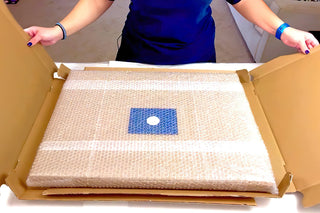
STEP 2 - SHIPPING
We ship your order. We send you an email to track the progress

STEP 3 - DELIVERY
You receive your order. You can also, according to your choice, be delivered to a relay point.
Matte finish
View from behind
Frame (optional)
In the fascinating world of art, some works transcend time and continue to spark our curiosity. The "Portrait of Dirck Hendrick Meulenaer" by Paulus Hennekyn is one of those iconic pieces that, through its intensity and realism, immerses us in an era where the portrait was much more than a simple representation. This painting, dating from the 17th century, invites us to explore not only the personality of its subject but also the cultural and artistic context of its time. Through this portrait, Hennekyn manages to capture the very essence of his model, Dirck Hendrick Meulenaer, a man whose story deserves to be rediscovered.
Style and uniqueness of the work
Paulus Hennekyn's style is distinguished by striking realism and meticulous attention to detail. In this work, the features of Dirck Hendrick Meulenaer are rendered with such precision that one could almost hear the beating of his heart. The light plays a crucial role in this composition, highlighting the nuances of his face and the textures of his clothing. The colors, though subdued, create an intimate and reflective atmosphere. Hennekyn uses a palette that evokes the richness of materials, making the viewer almost tactilely aware of the silk and velvet that dress the model. This art print does not merely depict a man; it tells a story, that of an era where social status and personality intertwined in a powerful visual dialogue.
The artist and his influence
Paulus Hennekyn, often overshadowed by other masters of his time, deserves special attention for his ability to capture the human soul through his art. Trained in the Flemish tradition, he was able to incorporate elements of realism that set him apart from his contemporaries. His work, though less known, has influenced many artists who sought to imitate his approach to portraiture. Hennekyn created art prints that go beyond mere resemblance, injecting psychological depth into each gaze. In doing so, he contributed to the evolution of the portrait as a genre, transforming it into a means of personal and social expression. Thus, the "Portrait
12,34 €