
Portrait painting of Charles F. W. Nichols - Joseph Kleitsch | Art print


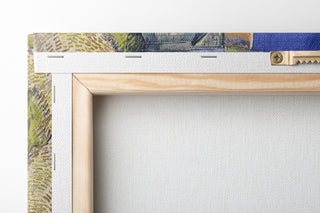
View from behind
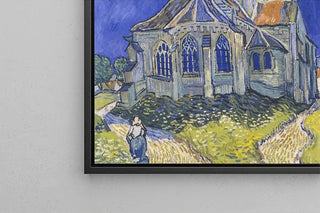
Frame (optional)
In the rich and complex universe of art, some works stand out for their ability to capture not only the appearance of a subject but also its essence. This is the case of the "Portrait of Charles F. W. Nichols" created by Joseph Kleitsch, a painting that transcends the simple frame of a figurative representation to offer an immersion into the soul of its model. This piece, imbued with delicacy and depth, invites the viewer to an intimate exploration of human emotions and social relationships of its time. Through this portrait, Kleitsch manages to establish a visual dialogue between the past and the present, encouraging each to question the very nature of identity.
Style and uniqueness of the work
Joseph Kleitsch's style is characterized by an impressionist approach that emphasizes light and color. In the "Portrait of Charles F. W. Nichols," each brushstroke seems to dance on the canvas, creating a vibrant and lively atmosphere. The hues chosen by the artist evoke subtle warmth, while the delicately placed shadows add an almost tangible dimension to the face of the model. Kleitsch knows how to play with contrasts, making Nichols' features both realistic and imbued with a certain poetry. This portrait also stands out for its harmonious composition, where the blurred background highlights the central figure, thus emphasizing the psychological depth of Nichols' gaze. The work demonstrates undeniable technical mastery, while conveying a sensitivity that touches the heart.
The artist and his influence
Joseph Kleitsch, an emblematic figure of the early 20th century, is often associated with the Chicago art scene and the rise of American Impressionism. His background, marked by European influences and a sensitivity to American realities, allows him to develop a unique style that is his own. As an artist, Kleitsch does not merely reproduce reality; he aspires to capture the soul of his subjects. His work reflects an era when art begins to emancipate itself from academic conventions to embrace a more personal and subjective vision. Through portraits like that of Charles F. W. Nichols, Kleitsch was able to immortalize figures
Portrait painting of Charles F. W. Nichols - Joseph Kleitsch | Art print

-10% FROM €95 IN PURCHASES
-15% FROM €195 IN PURCHASES
Regular price
- Unit price
- per
Tax included.
Free shipping
€4.90 / Free shipping on orders over €39
Satisfied or Money Back
Free returns within 30 days
10-year warranty
Our prints are guaranteed for 10 years
Any questions? We are here!
by email to contact@artemlegrand.com
THE STEPS OF YOUR ORDER

STEP 1 - ORDER PLACED
Your order has been confirmed and we are starting production

STEP 2 - SHIPPING
We ship your order. We send you an email to track the progress

STEP 3 - DELIVERY
You receive your order. You can also, according to your choice, be delivered to a relay point.
Matte finish
View from behind
Frame (optional)
In the rich and complex universe of art, some works stand out for their ability to capture not only the appearance of a subject but also its essence. This is the case of the "Portrait of Charles F. W. Nichols" created by Joseph Kleitsch, a painting that transcends the simple frame of a figurative representation to offer an immersion into the soul of its model. This piece, imbued with delicacy and depth, invites the viewer to an intimate exploration of human emotions and social relationships of its time. Through this portrait, Kleitsch manages to establish a visual dialogue between the past and the present, encouraging each to question the very nature of identity.
Style and uniqueness of the work
Joseph Kleitsch's style is characterized by an impressionist approach that emphasizes light and color. In the "Portrait of Charles F. W. Nichols," each brushstroke seems to dance on the canvas, creating a vibrant and lively atmosphere. The hues chosen by the artist evoke subtle warmth, while the delicately placed shadows add an almost tangible dimension to the face of the model. Kleitsch knows how to play with contrasts, making Nichols' features both realistic and imbued with a certain poetry. This portrait also stands out for its harmonious composition, where the blurred background highlights the central figure, thus emphasizing the psychological depth of Nichols' gaze. The work demonstrates undeniable technical mastery, while conveying a sensitivity that touches the heart.
The artist and his influence
Joseph Kleitsch, an emblematic figure of the early 20th century, is often associated with the Chicago art scene and the rise of American Impressionism. His background, marked by European influences and a sensitivity to American realities, allows him to develop a unique style that is his own. As an artist, Kleitsch does not merely reproduce reality; he aspires to capture the soul of his subjects. His work reflects an era when art begins to emancipate itself from academic conventions to embrace a more personal and subjective vision. Through portraits like that of Charles F. W. Nichols, Kleitsch was able to immortalize figures
12,34 €