
Portrait painting of Catharina Hendrika Horn, the artist's wife - Jacob Maris | Art print


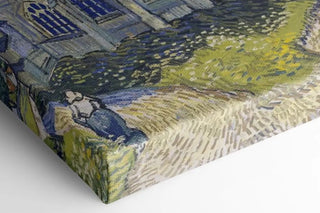
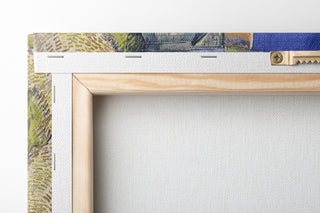
View from behind
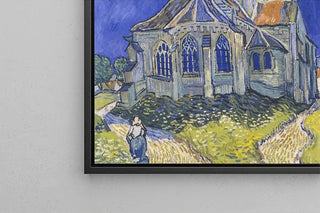
Frame (optional)
In the fascinating world of 19th-century Dutch art, the art print "Portrait of Catharina Hendrika Horn, the artist's wife - Jacob Maris" stands out for its intimacy and emotional depth. This painting, which captures with rare delicacy the essence of a woman and the bond that unites the artist with his muse, immerses us in a moment of life, forever frozen on the canvas. Observing this portrait, the viewer is immediately transported into Jacob Maris's personal universe, where each brushstroke seems to whisper a story of love and devotion. Catharina Hendrika Horn, the artist's wife, appears not only as a subject but also as a source of inspiration, a reflection of her husband's aspirations and emotions.
Style and uniqueness of the work
Jacob Maris's style is characterized by an impressionist approach, where light plays a predominant role in perceiving his subjects. In this portrait, the luminosity emanating from Catharina's face is accentuated by delicate nuances, creating a striking contrast with the darker, more mysterious background. The color palette, subtly chosen, evokes a warm and intimate atmosphere, suggesting both the softness of domestic life and the depth of feelings. The details of Catharina's clothing, carefully rendered, demonstrate particular attention to texture and material, reinforcing the impression of reality. This art print is not merely a physical representation; it is a psychological exploration, a window into the soul of its subject, where each element contributes to a rich and immersive visual narrative.
The artist and his influence
Jacob Maris, an emblematic figure of The Hague School, knew how to blend tradition and innovation in his work. Influenced by the masters of the past, he also drew inspiration from contemporary movements of his time, notably impressionism, to develop a style that is uniquely his own. His distinctive approach to portraiture, where emotion takes precedence over simple representation, left a mark on his contemporaries and continues to inspire artists today. By choosing to paint his wife, Maris does not merely capture her likeness but also [[conveys]] the depth of their connection and the emotional resonance that defines their relationship.
Portrait painting of Catharina Hendrika Horn, the artist's wife - Jacob Maris | Art print

-10% FROM €95 IN PURCHASES
-15% FROM €195 IN PURCHASES
Regular price
- Unit price
- per
Tax included.
Free shipping
€4.90 / Free shipping on orders over €39
Satisfied or Money Back
Free returns within 30 days
10-year warranty
Our prints are guaranteed for 10 years
Any questions? We are here!
by email to contact@artemlegrand.com
THE STEPS OF YOUR ORDER
STEP 1 - ORDER PLACED
Your order has been confirmed and we are starting production
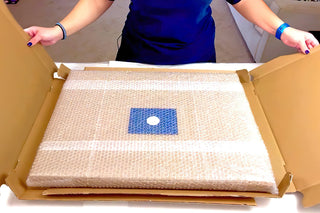
STEP 2 - SHIPPING
We ship your order. We send you an email to track the progress

STEP 3 - DELIVERY
You receive your order. You can also, according to your choice, be delivered to a relay point.
Matte finish
View from behind
Frame (optional)
In the fascinating world of 19th-century Dutch art, the art print "Portrait of Catharina Hendrika Horn, the artist's wife - Jacob Maris" stands out for its intimacy and emotional depth. This painting, which captures with rare delicacy the essence of a woman and the bond that unites the artist with his muse, immerses us in a moment of life, forever frozen on the canvas. Observing this portrait, the viewer is immediately transported into Jacob Maris's personal universe, where each brushstroke seems to whisper a story of love and devotion. Catharina Hendrika Horn, the artist's wife, appears not only as a subject but also as a source of inspiration, a reflection of her husband's aspirations and emotions.
Style and uniqueness of the work
Jacob Maris's style is characterized by an impressionist approach, where light plays a predominant role in perceiving his subjects. In this portrait, the luminosity emanating from Catharina's face is accentuated by delicate nuances, creating a striking contrast with the darker, more mysterious background. The color palette, subtly chosen, evokes a warm and intimate atmosphere, suggesting both the softness of domestic life and the depth of feelings. The details of Catharina's clothing, carefully rendered, demonstrate particular attention to texture and material, reinforcing the impression of reality. This art print is not merely a physical representation; it is a psychological exploration, a window into the soul of its subject, where each element contributes to a rich and immersive visual narrative.
The artist and his influence
Jacob Maris, an emblematic figure of The Hague School, knew how to blend tradition and innovation in his work. Influenced by the masters of the past, he also drew inspiration from contemporary movements of his time, notably impressionism, to develop a style that is uniquely his own. His distinctive approach to portraiture, where emotion takes precedence over simple representation, left a mark on his contemporaries and continues to inspire artists today. By choosing to paint his wife, Maris does not merely capture her likeness but also [[conveys]] the depth of their connection and the emotional resonance that defines their relationship.
12,34 €