
Painting Portrait of Balthasar I Moretus - Thomas Willeboirts Bosschaert | Art print


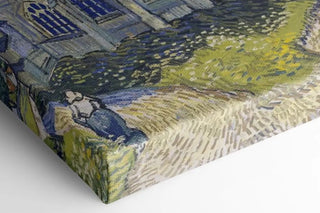
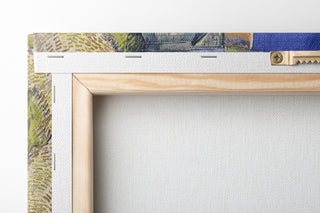
View from behind
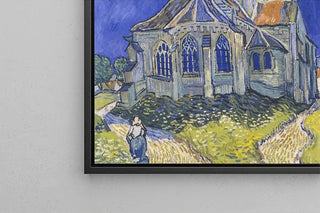
Frame (optional)
Portrait of Balthasar I Moretus - Thomas Willeboirts Bosschaert – Captivating Introduction
The "Portrait of Balthasar I Moretus" by Thomas Willeboirts Bosschaert stands as an iconic work of 17th-century Flemish painting. This painting, both intimate and majestic, invites viewers to immerse themselves in a universe where technical virtuosity meets profound humanity. Through the penetrating gaze of Balthasar I Moretus, director of the renowned Plantin-Moretus printing house in Antwerp, the artist manages to capture not only the physical features of his subject but also his spiritual essence. This portrait is distinguished by its ability to evoke emotions, making the character come alive and feel accessible. The light, shadows, and meticulous details weave a visual narrative that transcends mere representation of a man.
Style and uniqueness of the work
Bosschaert's style is characterized by an exceptional mastery of light and color. In this art print, the delicate nuances of Moretus's skin contrast with the rich tones of his attire, creating a captivating visual harmony. The composition, carefully balanced, highlights the face of the subject, whose thoughtful and slightly melancholic expression engages the viewer. The decorative elements, though discreet, add contextual depth to the piece, evoking the intellectual and artistic world in which Balthasar I Moretus operated. This art print does not merely depict a man; it tells a story, that of an enlightened patron and a man of letters, rooted in his era.
The artist and his influence
Thomas Willeboirts Bosschaert, born in 1613, was a painter whose work is rooted in the Flemish Baroque movement. Trained in Antwerp, he established himself through his distinctive style and his ability to combine realism with idealization. Bosschaert was influenced by masters such as Rubens, but he developed his own voice, marked by a particular sensitivity to the psychology of his subjects. His work on portraits, like that of Balthasar I Moretus, demonstrates a deep understanding of human relationships and social dynamics. The way he manages to immortalize
Painting Portrait of Balthasar I Moretus - Thomas Willeboirts Bosschaert | Art print

-10% FROM €95 IN PURCHASES
-15% FROM €195 IN PURCHASES
Regular price
- Unit price
- per
Tax included.
Free shipping
€4.90 / Free shipping on orders over €39
Satisfied or Money Back
Free returns within 30 days
10-year warranty
Our prints are guaranteed for 10 years
Any questions? We are here!
by email to contact@artemlegrand.com
THE STEPS OF YOUR ORDER

STEP 1 - ORDER PLACED
Your order has been confirmed and we are starting production
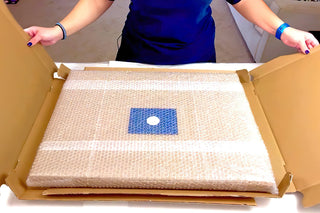
STEP 2 - SHIPPING
We ship your order. We send you an email to track the progress

STEP 3 - DELIVERY
You receive your order. You can also, according to your choice, be delivered to a relay point.
Matte finish
View from behind
Frame (optional)
Portrait of Balthasar I Moretus - Thomas Willeboirts Bosschaert – Captivating Introduction
The "Portrait of Balthasar I Moretus" by Thomas Willeboirts Bosschaert stands as an iconic work of 17th-century Flemish painting. This painting, both intimate and majestic, invites viewers to immerse themselves in a universe where technical virtuosity meets profound humanity. Through the penetrating gaze of Balthasar I Moretus, director of the renowned Plantin-Moretus printing house in Antwerp, the artist manages to capture not only the physical features of his subject but also his spiritual essence. This portrait is distinguished by its ability to evoke emotions, making the character come alive and feel accessible. The light, shadows, and meticulous details weave a visual narrative that transcends mere representation of a man.
Style and uniqueness of the work
Bosschaert's style is characterized by an exceptional mastery of light and color. In this art print, the delicate nuances of Moretus's skin contrast with the rich tones of his attire, creating a captivating visual harmony. The composition, carefully balanced, highlights the face of the subject, whose thoughtful and slightly melancholic expression engages the viewer. The decorative elements, though discreet, add contextual depth to the piece, evoking the intellectual and artistic world in which Balthasar I Moretus operated. This art print does not merely depict a man; it tells a story, that of an enlightened patron and a man of letters, rooted in his era.
The artist and his influence
Thomas Willeboirts Bosschaert, born in 1613, was a painter whose work is rooted in the Flemish Baroque movement. Trained in Antwerp, he established himself through his distinctive style and his ability to combine realism with idealization. Bosschaert was influenced by masters such as Rubens, but he developed his own voice, marked by a particular sensitivity to the psychology of his subjects. His work on portraits, like that of Balthasar I Moretus, demonstrates a deep understanding of human relationships and social dynamics. The way he manages to immortalize
12,34 €