
Painting Portrait of a Young Man - John Wollaston | Art print Source: Tableau Portrait d'un jeune homme - John Wollaston | Reproduction


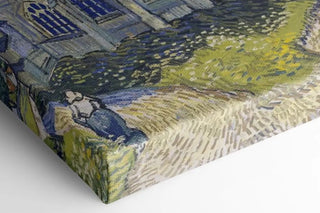
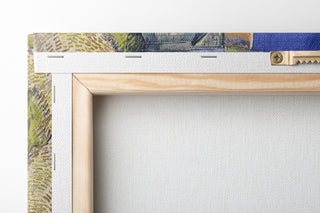
View from behind
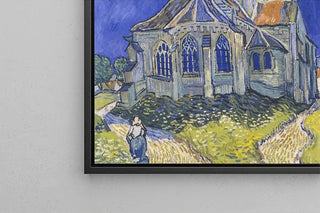
Frame (optional)
Portrait of a Young Man - John Wollaston – Captivating Introduction
The "Portrait of a Young Man" by John Wollaston is a work that transcends the simple frame of a pictorial representation to become a window into a bygone era. This 18th-century painting captures not only the features of a young man with an intense gaze but also the essence of a society in full transformation. Wollaston, an English portraitist of American origin, infused his creations with psychological depth and timeless elegance. This portrait invites viewers to reflect on the identity, social status, and aspirations of its subject, while offering a visually stunning contemplation of rare beauty.
Style and uniqueness of the work
The piece stands out for its characteristic style, blending realism with fine detail. Wollaston excels in capturing the nuances of light and shadow, bringing the young man's face to life. Every brushstroke seems to tell a story, and the model's gaze, both confident and contemplative, appears to defy time. The color palette chosen by the artist, subtle and harmonious, helps create an atmosphere of serenity and mystery. The draped clothing, carefully rendered, adds a tactile dimension to the work, while the background, often neutral, highlights the central figure without distraction. This approach allows Wollaston to focus on the very essence of his subject, making this art print not only a representation but also a psychological exploration.
The artist and his influence
John Wollaston, active mainly in London, was a key figure in the development of the portrait in the 18th century. Trained within the American artistic context before establishing himself in Europe, he skillfully combined influences from his heritage with European trends of his time. His work marked a transition toward a more intimate style, where the individual is at the center of attention. Wollaston's contemporaries were influenced by his ability to capture the essence of his subjects, and his work paved the way for other artists seeking to explore psychology in portraiture. He also contributed to popularizing art prints as both personal and collective objects, reinforcing the
Painting Portrait of a Young Man - John Wollaston | Art print Source: Tableau Portrait d'un jeune homme - John Wollaston | Reproduction

-10% FROM €95 IN PURCHASES
-15% FROM €195 IN PURCHASES
Regular price
- Unit price
- per
Tax included.
Free shipping
€4.90 / Free shipping on orders over €39
Satisfied or Money Back
Free returns within 30 days
10-year warranty
Our prints are guaranteed for 10 years
Any questions? We are here!
by email to contact@artemlegrand.com
THE STEPS OF YOUR ORDER

STEP 1 - ORDER PLACED
Your order has been confirmed and we are starting production
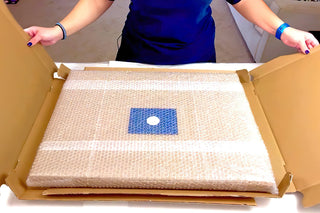
STEP 2 - SHIPPING
We ship your order. We send you an email to track the progress

STEP 3 - DELIVERY
You receive your order. You can also, according to your choice, be delivered to a relay point.
Matte finish
View from behind
Frame (optional)
Portrait of a Young Man - John Wollaston – Captivating Introduction
The "Portrait of a Young Man" by John Wollaston is a work that transcends the simple frame of a pictorial representation to become a window into a bygone era. This 18th-century painting captures not only the features of a young man with an intense gaze but also the essence of a society in full transformation. Wollaston, an English portraitist of American origin, infused his creations with psychological depth and timeless elegance. This portrait invites viewers to reflect on the identity, social status, and aspirations of its subject, while offering a visually stunning contemplation of rare beauty.
Style and uniqueness of the work
The piece stands out for its characteristic style, blending realism with fine detail. Wollaston excels in capturing the nuances of light and shadow, bringing the young man's face to life. Every brushstroke seems to tell a story, and the model's gaze, both confident and contemplative, appears to defy time. The color palette chosen by the artist, subtle and harmonious, helps create an atmosphere of serenity and mystery. The draped clothing, carefully rendered, adds a tactile dimension to the work, while the background, often neutral, highlights the central figure without distraction. This approach allows Wollaston to focus on the very essence of his subject, making this art print not only a representation but also a psychological exploration.
The artist and his influence
John Wollaston, active mainly in London, was a key figure in the development of the portrait in the 18th century. Trained within the American artistic context before establishing himself in Europe, he skillfully combined influences from his heritage with European trends of his time. His work marked a transition toward a more intimate style, where the individual is at the center of attention. Wollaston's contemporaries were influenced by his ability to capture the essence of his subjects, and his work paved the way for other artists seeking to explore psychology in portraiture. He also contributed to popularizing art prints as both personal and collective objects, reinforcing the
12,34 €