
Portrait of a noble - Rosalba Carriera | Art print


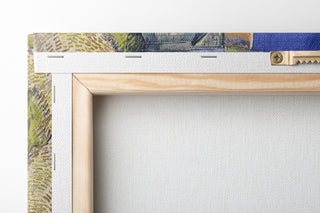
View from behind
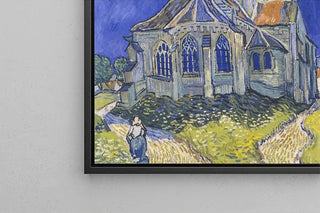
Frame (optional)
Portrait of a Noble - Rosalba Carriera – Captivating Introduction
In the world of 18th-century painting, Rosalba Carriera stands out for her exceptional talent and her ability to capture the very essence of her subjects. The "Portrait of a Noble" is a perfect illustration of this, revealing not only the artist's technical skill but also a deep understanding of human psychology. This painting, imbued with delicacy and refinement, transports us to an era where nobility was synonymous with grandeur and distinction. Through the meticulously rendered features of the noble, Carriera invites us to explore the subtleties of his character, while immersing us in the intimate atmosphere of aristocratic salons.
Style and uniqueness of the work
Rosalba Carriera's style is characterized by unparalleled finesse, both in the choice of colors and in the depiction of textures. In the "Portrait of a Noble," the soft pastel palette, typical of her works, creates a visual harmony that immediately captures the eye. The details of the costume, jewelry, and accessories are rendered with remarkable precision, demonstrating meticulous attention to every element. The subtly modulated light plays a crucial role in highlighting the noble's face, emphasizing his expression and giving the painting an almost lifelike dimension. This portrait does not merely depict a historical figure; it evokes a personality, a story, and a social status, while revealing Carriera's technical mastery.
The artist and her influence
Rosalba Carriera, born in Venice in 1673, is often regarded as one of the pioneers of pastel portraiture. Her career, spanning several decades, was marked by rapid recognition and remarkable success, both in Italy and abroad. Carriera managed to establish herself in an artistic environment dominated by men, becoming the official painter of numerous aristocrats and dignitaries. Her influence extends beyond her contemporaries, inspiring generations of artists who saw in her a model of creativity and determination. The pastel technique she perfected paved the way for new approaches in portraiture, combining realism and sensitivity. Thus, the "Portrait of a Noble"
Portrait of a noble - Rosalba Carriera | Art print

-10% FROM €95 IN PURCHASES
-15% FROM €195 IN PURCHASES
Regular price
- Unit price
- per
Tax included.
Free shipping
€4.90 / Free shipping on orders over €39
Satisfied or Money Back
Free returns within 30 days
10-year warranty
Our prints are guaranteed for 10 years
Any questions? We are here!
by email to contact@artemlegrand.com
THE STEPS OF YOUR ORDER

STEP 1 - ORDER PLACED
Your order has been confirmed and we are starting production
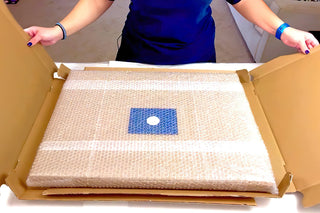
STEP 2 - SHIPPING
We ship your order. We send you an email to track the progress

STEP 3 - DELIVERY
You receive your order. You can also, according to your choice, be delivered to a relay point.
Matte finish
View from behind
Frame (optional)
Portrait of a Noble - Rosalba Carriera – Captivating Introduction
In the world of 18th-century painting, Rosalba Carriera stands out for her exceptional talent and her ability to capture the very essence of her subjects. The "Portrait of a Noble" is a perfect illustration of this, revealing not only the artist's technical skill but also a deep understanding of human psychology. This painting, imbued with delicacy and refinement, transports us to an era where nobility was synonymous with grandeur and distinction. Through the meticulously rendered features of the noble, Carriera invites us to explore the subtleties of his character, while immersing us in the intimate atmosphere of aristocratic salons.
Style and uniqueness of the work
Rosalba Carriera's style is characterized by unparalleled finesse, both in the choice of colors and in the depiction of textures. In the "Portrait of a Noble," the soft pastel palette, typical of her works, creates a visual harmony that immediately captures the eye. The details of the costume, jewelry, and accessories are rendered with remarkable precision, demonstrating meticulous attention to every element. The subtly modulated light plays a crucial role in highlighting the noble's face, emphasizing his expression and giving the painting an almost lifelike dimension. This portrait does not merely depict a historical figure; it evokes a personality, a story, and a social status, while revealing Carriera's technical mastery.
The artist and her influence
Rosalba Carriera, born in Venice in 1673, is often regarded as one of the pioneers of pastel portraiture. Her career, spanning several decades, was marked by rapid recognition and remarkable success, both in Italy and abroad. Carriera managed to establish herself in an artistic environment dominated by men, becoming the official painter of numerous aristocrats and dignitaries. Her influence extends beyond her contemporaries, inspiring generations of artists who saw in her a model of creativity and determination. The pastel technique she perfected paved the way for new approaches in portraiture, combining realism and sensitivity. Thus, the "Portrait of a Noble"
12,34 €