
Portrait of a man probably from the Pauw family - Paulus Moreelse | Art print


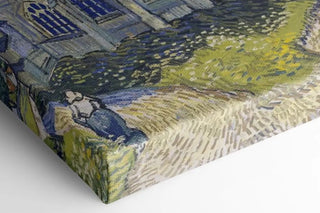
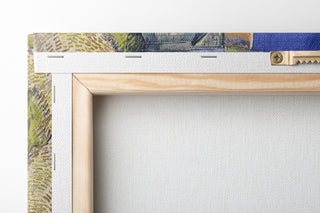
View from behind
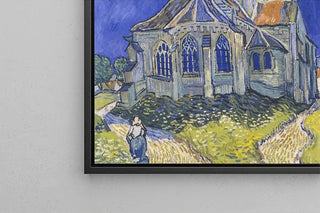
Frame (optional)
In the vast panorama of art history, certain works stand out for their ability to capture not only appearance but also the essence of an individual. The "Art print of a man probably from the Pauw family" by Paulus Moreelse is a striking example of this artistic feat. This painting, evoking a bygone era, immerses us in the universe of 17th-century Dutch portraits, where the depiction of the subject goes far beyond mere resemblance. The piece, both intimate and majestic, invites us to explore the subtleties of human personality through the artist's gaze.
Style and uniqueness of the work
Moreelse's style is distinguished by meticulous attention to detail and skillful use of light. In this portrait, the textures of clothing, the delicacy of features, and the depth of shadows testify to exceptional craftsmanship. Every element of the painting, from the richly adorned drapery to the simple yet evocative background, contributes to the overall atmosphere. The depicted man appears both approachable and distant—a duality that intrigues and captivates the viewer. The color palette chosen by the artist, oscillating between warm tones and darker shades, reinforces this impression of psychological depth. This art print does not merely depict a man; it tells a story, that of an era, a family, and a cultural heritage that can be guessed through the subject's intense gaze.
The artist and his influence
Paulus Moreelse, a Dutch painter of the 17th century, is often regarded as a master of portraiture. His career, though less renowned than that of his contemporaries such as Rembrandt, is marked by an innovative approach and an artistic sensitivity unique to him. More than a mere craftsman of painting, Moreelse knew how to capture the soul of his subjects, transforming each art print into a psychological exploration. His influence has been felt through the centuries, inspiring many artists who sought to imitate his style or draw inspiration from it. Studying his work reveals an artist in constant pursuit of perfection, aiming to transcend the simple act of painting to reach a form of artistic transcendence.
Portrait of a man probably from the Pauw family - Paulus Moreelse | Art print

-10% FROM €95 IN PURCHASES
-15% FROM €195 IN PURCHASES
Regular price
- Unit price
- per
Tax included.
Free shipping
€4.90 / Free shipping on orders over €39
Satisfied or Money Back
Free returns within 30 days
10-year warranty
Our prints are guaranteed for 10 years
Any questions? We are here!
by email to contact@artemlegrand.com
THE STEPS OF YOUR ORDER
STEP 1 - ORDER PLACED
Your order has been confirmed and we are starting production
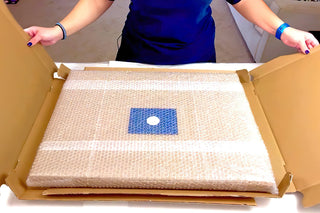
STEP 2 - SHIPPING
We ship your order. We send you an email to track the progress

STEP 3 - DELIVERY
You receive your order. You can also, according to your choice, be delivered to a relay point.
Matte finish
View from behind
Frame (optional)
In the vast panorama of art history, certain works stand out for their ability to capture not only appearance but also the essence of an individual. The "Art print of a man probably from the Pauw family" by Paulus Moreelse is a striking example of this artistic feat. This painting, evoking a bygone era, immerses us in the universe of 17th-century Dutch portraits, where the depiction of the subject goes far beyond mere resemblance. The piece, both intimate and majestic, invites us to explore the subtleties of human personality through the artist's gaze.
Style and uniqueness of the work
Moreelse's style is distinguished by meticulous attention to detail and skillful use of light. In this portrait, the textures of clothing, the delicacy of features, and the depth of shadows testify to exceptional craftsmanship. Every element of the painting, from the richly adorned drapery to the simple yet evocative background, contributes to the overall atmosphere. The depicted man appears both approachable and distant—a duality that intrigues and captivates the viewer. The color palette chosen by the artist, oscillating between warm tones and darker shades, reinforces this impression of psychological depth. This art print does not merely depict a man; it tells a story, that of an era, a family, and a cultural heritage that can be guessed through the subject's intense gaze.
The artist and his influence
Paulus Moreelse, a Dutch painter of the 17th century, is often regarded as a master of portraiture. His career, though less renowned than that of his contemporaries such as Rembrandt, is marked by an innovative approach and an artistic sensitivity unique to him. More than a mere craftsman of painting, Moreelse knew how to capture the soul of his subjects, transforming each art print into a psychological exploration. His influence has been felt through the centuries, inspiring many artists who sought to imitate his style or draw inspiration from it. Studying his work reveals an artist in constant pursuit of perfection, aiming to transcend the simple act of painting to reach a form of artistic transcendence.
12,34 €