
Portrait Painting of Elisabeth Bierž-Pfister - Johann Bucher | Art print


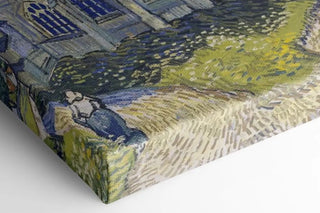
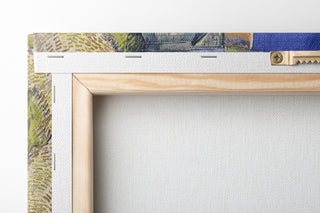
View from behind
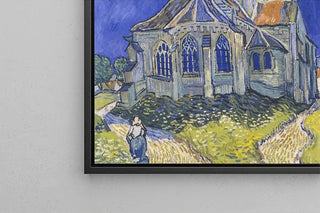
Frame (optional)
In the fascinating world of art, some works transcend the simple frame to become timeless witnesses to humanity. The "Portrait of Elisabeth Bierž-Pfister" by Johann Bucher falls into this privileged category. This painting, which captures the essence of a woman who is both mysterious and charismatic, invites us to delve into a universe where each brushstroke tells a story. Through this art print, the viewer is transported to a bygone era, while being confronted with universal emotions that still resonate today. This portrait is not limited to depicting a face; it evokes a personality, a life, and a period.
Style and uniqueness of the work
Johann Bucher's style, although rooted in the traditions of his time, is distinguished by an intimate and delicate approach. In "Portrait of Elisabeth Bierž-Pfister," light plays a fundamental role, illuminating the model's face in an almost supernatural way. The shades of color, carefully chosen, evoke a palette of feelings ranging from melancholy to serenity. The composition is both simple and complex, where each element, from the background to the facial expression, contributes to creating an atmosphere charged with emotion. This portrait, far from being a mere representation, becomes an open window into the soul of its subject, a silent dialogue between the artist and the viewer.
The artist and his influence
Johann Bucher, an artist whose name is often associated with finesse and psychological depth, managed to mark his era with works imbued with sensitivity. Trained in the most respected art schools, he developed a style that is uniquely his own, blending realism and impressionism. His influence extends well beyond his own creations, inspiring a generation of artists to explore human emotions through the prism of painting. By choosing to depict Elisabeth Bierž-Pfister, Bucher does not merely paint a portrait; he immortalizes an emblematic figure of his time, while offering a critical look at social conventions and societal expectations. In doing so, he opens the
Portrait Painting of Elisabeth Bierž-Pfister - Johann Bucher | Art print

-10% FROM €95 IN PURCHASES
-15% FROM €195 IN PURCHASES
Regular price
- Unit price
- per
Tax included.
Free shipping
€4.90 / Free shipping on orders over €39
Satisfied or Money Back
Free returns within 30 days
10-year warranty
Our prints are guaranteed for 10 years
Any questions? We are here!
by email to contact@artemlegrand.com
THE STEPS OF YOUR ORDER

STEP 1 - ORDER PLACED
Your order has been confirmed and we are starting production
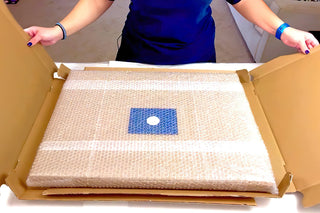
STEP 2 - SHIPPING
We ship your order. We send you an email to track the progress

STEP 3 - DELIVERY
You receive your order. You can also, according to your choice, be delivered to a relay point.
Matte finish
View from behind
Frame (optional)
In the fascinating world of art, some works transcend the simple frame to become timeless witnesses to humanity. The "Portrait of Elisabeth Bierž-Pfister" by Johann Bucher falls into this privileged category. This painting, which captures the essence of a woman who is both mysterious and charismatic, invites us to delve into a universe where each brushstroke tells a story. Through this art print, the viewer is transported to a bygone era, while being confronted with universal emotions that still resonate today. This portrait is not limited to depicting a face; it evokes a personality, a life, and a period.
Style and uniqueness of the work
Johann Bucher's style, although rooted in the traditions of his time, is distinguished by an intimate and delicate approach. In "Portrait of Elisabeth Bierž-Pfister," light plays a fundamental role, illuminating the model's face in an almost supernatural way. The shades of color, carefully chosen, evoke a palette of feelings ranging from melancholy to serenity. The composition is both simple and complex, where each element, from the background to the facial expression, contributes to creating an atmosphere charged with emotion. This portrait, far from being a mere representation, becomes an open window into the soul of its subject, a silent dialogue between the artist and the viewer.
The artist and his influence
Johann Bucher, an artist whose name is often associated with finesse and psychological depth, managed to mark his era with works imbued with sensitivity. Trained in the most respected art schools, he developed a style that is uniquely his own, blending realism and impressionism. His influence extends well beyond his own creations, inspiring a generation of artists to explore human emotions through the prism of painting. By choosing to depict Elisabeth Bierž-Pfister, Bucher does not merely paint a portrait; he immortalizes an emblematic figure of his time, while offering a critical look at social conventions and societal expectations. In doing so, he opens the
12,34 €