
Portrait of Eleonora Chigi, Princess of Teano - Jacques Sablet | Art print


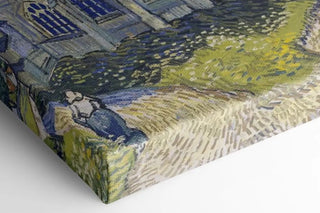
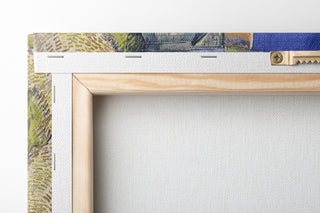
View from behind
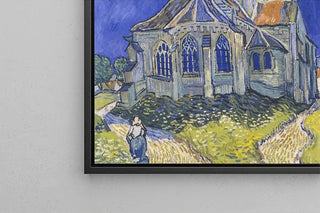
Frame (optional)
Portrait of Eleonora Chigi, Princess of Teano - Jacques Sablet – Captivating Introduction
In the rich and complex universe of art, some works transcend their era and capture the very essence of their subject. The "Portrait of Eleonora Chigi, Princess of Teano" by Jacques Sablet is one of these iconic pieces. This artwork, which depicts with remarkable finesse the nobility and grace of Eleonora Chigi, invites the viewer to immerse themselves in a world where elegance and beauty are intertwined with profound humanity. Through Sablet's brushstrokes, the gaze is immediately drawn to the delicacy of the princess's features, revealing not only her appearance but also her character. This portrait is a true window into the past, a visual testament to 18th-century Italian aristocracy.
Style and uniqueness of the work
Jacques Sablet's work stands out for its ability to blend realism and idealism, an approach that gives each art print an almost lifelike dimension. In the "Portrait of Eleonora Chigi," the color palette chosen by the artist plays a crucial role. Soft and nuanced tones, ranging from delicate pinks to deep blues, create an intimate atmosphere while highlighting the luminous complexion of the princess. The meticulous details, such as the embroidery on her dress and the reflections of light in her hair, demonstrate exceptional craftsmanship. The background, subtly blurred, accentuates the presence of the central figure, allowing the observer to focus on Eleonora's expression and posture. This art print does not merely depict a person; it evokes a story, a life, an era.
The artist and his influence
Jacques Sablet, although less well-known than some of his contemporaries, managed to leave his mark on his era through his distinctive style and artistic sensitivity. Originating from the Geneva region, Sablet made a place for himself in the European artistic scene, influenced by the baroque and rococo movements prevalent in his time. His approach to portraiture goes beyond simple representation; he seeks to
Portrait of Eleonora Chigi, Princess of Teano - Jacques Sablet | Art print

-10% FROM €95 IN PURCHASES
-15% FROM €195 IN PURCHASES
Regular price
- Unit price
- per
Tax included.
Free shipping
€4.90 / Free shipping on orders over €39
Satisfied or Money Back
Free returns within 30 days
10-year warranty
Our prints are guaranteed for 10 years
Any questions? We are here!
by email to contact@artemlegrand.com
THE STEPS OF YOUR ORDER

STEP 1 - ORDER PLACED
Your order has been confirmed and we are starting production
STEP 2 - SHIPPING
We ship your order. We send you an email to track the progress

STEP 3 - DELIVERY
You receive your order. You can also, according to your choice, be delivered to a relay point.
Matte finish
View from behind
Frame (optional)
Portrait of Eleonora Chigi, Princess of Teano - Jacques Sablet – Captivating Introduction
In the rich and complex universe of art, some works transcend their era and capture the very essence of their subject. The "Portrait of Eleonora Chigi, Princess of Teano" by Jacques Sablet is one of these iconic pieces. This artwork, which depicts with remarkable finesse the nobility and grace of Eleonora Chigi, invites the viewer to immerse themselves in a world where elegance and beauty are intertwined with profound humanity. Through Sablet's brushstrokes, the gaze is immediately drawn to the delicacy of the princess's features, revealing not only her appearance but also her character. This portrait is a true window into the past, a visual testament to 18th-century Italian aristocracy.
Style and uniqueness of the work
Jacques Sablet's work stands out for its ability to blend realism and idealism, an approach that gives each art print an almost lifelike dimension. In the "Portrait of Eleonora Chigi," the color palette chosen by the artist plays a crucial role. Soft and nuanced tones, ranging from delicate pinks to deep blues, create an intimate atmosphere while highlighting the luminous complexion of the princess. The meticulous details, such as the embroidery on her dress and the reflections of light in her hair, demonstrate exceptional craftsmanship. The background, subtly blurred, accentuates the presence of the central figure, allowing the observer to focus on Eleonora's expression and posture. This art print does not merely depict a person; it evokes a story, a life, an era.
The artist and his influence
Jacques Sablet, although less well-known than some of his contemporaries, managed to leave his mark on his era through his distinctive style and artistic sensitivity. Originating from the Geneva region, Sablet made a place for himself in the European artistic scene, influenced by the baroque and rococo movements prevalent in his time. His approach to portraiture goes beyond simple representation; he seeks to
12,34 €