
Painting Portrait of Anna Schmirer - Leopold Kupelwieser | Art print


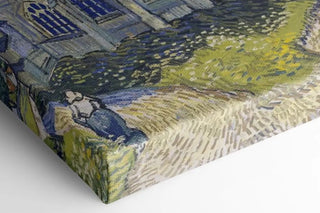
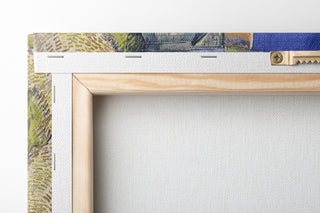
View from behind
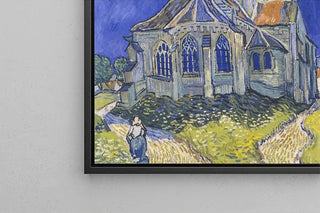
Frame (optional)
Portrait of Anna Schmirer - Leopold Kupelwieser – Engaging Introduction
The "Portrait of Anna Schmirer" by Leopold Kupelwieser is a work that transcends the simple framework of pictorial representation to immerse the viewer in a universe filled with emotion and delicacy. Created in the early 19th century, this painting embodies the aesthetic values and social concerns of its time. Anna Schmirer's penetrating gaze, her graceful posture, and the subtle nuances of color that compose the painting invite deep contemplation. This portrait does not merely depict a person; it tells a story, that of a woman whose beauty and personality are elevated by the artist's talent.
Style and uniqueness of the work
Kupelwieser's style is characterized by finesse in execution and particular attention to detail. In the "Portrait of Anna Schmirer," the artist manages to capture the very essence of his model, blending realism and idealization. The play of light and shadow, as well as the chosen color palette, create an intimate atmosphere that highlights Anna's inner depth. The delicate features of her face, accentuated by touches of light, reveal a sensitivity that touches the viewer's heart. The composition is carefully balanced, with each element having its place and contributing to the harmony of the whole. Thus, the singularity of this work lies not only in its technique but also in Kupelwieser's ability to evoke universal emotions through the portrait of a unique woman.
The artist and his influence
Leopold Kupelwieser, born in 1796 in Vienna, is an emblematic figure of the Austrian Romantic movement. Raised in an artistic environment, he was able to absorb the influences of his time while developing a personal style. His approach to portraiture is marked by a desire to capture not only physical appearance but also the inner life of his models. Kupelwieser had the opportunity to associate with renowned artists and exchange ideas, which enriched his pictorial practice. His contribution to the art of the portrait has
Painting Portrait of Anna Schmirer - Leopold Kupelwieser | Art print

-10% FROM €95 IN PURCHASES
-15% FROM €195 IN PURCHASES
Regular price
- Unit price
- per
Tax included.
Free shipping
€4.90 / Free shipping on orders over €39
Satisfied or Money Back
Free returns within 30 days
10-year warranty
Our prints are guaranteed for 10 years
Any questions? We are here!
by email to contact@artemlegrand.com
THE STEPS OF YOUR ORDER

STEP 1 - ORDER PLACED
Your order has been confirmed and we are starting production
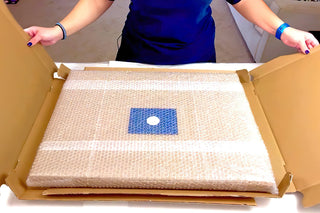
STEP 2 - SHIPPING
We ship your order. We send you an email to track the progress

STEP 3 - DELIVERY
You receive your order. You can also, according to your choice, be delivered to a relay point.
Matte finish
View from behind
Frame (optional)
Portrait of Anna Schmirer - Leopold Kupelwieser – Engaging Introduction
The "Portrait of Anna Schmirer" by Leopold Kupelwieser is a work that transcends the simple framework of pictorial representation to immerse the viewer in a universe filled with emotion and delicacy. Created in the early 19th century, this painting embodies the aesthetic values and social concerns of its time. Anna Schmirer's penetrating gaze, her graceful posture, and the subtle nuances of color that compose the painting invite deep contemplation. This portrait does not merely depict a person; it tells a story, that of a woman whose beauty and personality are elevated by the artist's talent.
Style and uniqueness of the work
Kupelwieser's style is characterized by finesse in execution and particular attention to detail. In the "Portrait of Anna Schmirer," the artist manages to capture the very essence of his model, blending realism and idealization. The play of light and shadow, as well as the chosen color palette, create an intimate atmosphere that highlights Anna's inner depth. The delicate features of her face, accentuated by touches of light, reveal a sensitivity that touches the viewer's heart. The composition is carefully balanced, with each element having its place and contributing to the harmony of the whole. Thus, the singularity of this work lies not only in its technique but also in Kupelwieser's ability to evoke universal emotions through the portrait of a unique woman.
The artist and his influence
Leopold Kupelwieser, born in 1796 in Vienna, is an emblematic figure of the Austrian Romantic movement. Raised in an artistic environment, he was able to absorb the influences of his time while developing a personal style. His approach to portraiture is marked by a desire to capture not only physical appearance but also the inner life of his models. Kupelwieser had the opportunity to associate with renowned artists and exchange ideas, which enriched his pictorial practice. His contribution to the art of the portrait has
12,34 €