
Painting Portrait of a Young Woman - Gustaf Lundberg | Art print


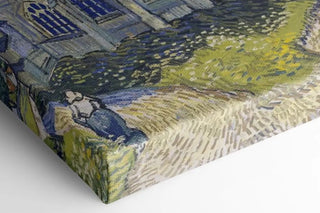
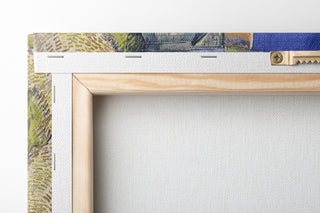
View from behind
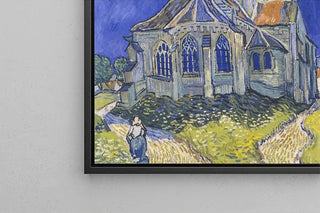
Frame (optional)
Portrait of a Young Woman - Gustaf Lundberg – Captivating Introduction
The "Portrait of a Young Woman" by Gustaf Lundberg is a work that transcends time and invites contemplation. Created in the 18th century, this painting stands out for its elegance and finesse, showcasing the artist's exceptional craftsmanship. In a world where art intertwines with human emotions, this portrait does not merely depict a female figure; it captures the very essence of beauty and delicacy. The atmosphere emanating from this piece is both mysterious and familiar, inviting the viewer to delve into the intimate universe of the young woman, whose identity, though vague, seems filled with stories to tell.
Style and uniqueness of the work
Lundberg, master of the portrait, employs refined pictorial techniques to bring his models to life. In this painting, the features of the young woman are delicately modeled, while subtly orchestrated lighting highlights the softness of her face. The colors, chosen with care, blend harmoniously, creating a light effect that seems to envelop the subject with an almost divine aura. The posture of the young woman, both graceful and natural, demonstrates a mastery of composition that guides the viewer’s gaze to the most minute details, such as the fabric of her dress or the reflections in her hair. This work reflects an era when portraiture was not only a means of representing a person but also a form of artistic expression, revealing the aspirations and emotions of its time.
The artist and his influence
Gustaf Lundberg, a Swedish artist trained at the French court, established himself in the European art scene thanks to his exceptional talent. Influenced by the great masters of his time, he integrated elements of Rococo while developing a personal style that is uniquely his own. His portraits, often imbued with a certain melancholy, are the result of meticulous observation and sensitivity to the psychology of his subjects. Lundberg thus contributed to redefining the art of portraiture in the 18th century, emphasizing personality and emotion rather than mere physical appearance. His work paved the way
Painting Portrait of a Young Woman - Gustaf Lundberg | Art print

-10% FROM €95 IN PURCHASES
-15% FROM €195 IN PURCHASES
Regular price
- Unit price
- per
Tax included.
Free shipping
€4.90 / Free shipping on orders over €39
Satisfied or Money Back
Free returns within 30 days
10-year warranty
Our prints are guaranteed for 10 years
Any questions? We are here!
by email to contact@artemlegrand.com
THE STEPS OF YOUR ORDER

STEP 1 - ORDER PLACED
Your order has been confirmed and we are starting production
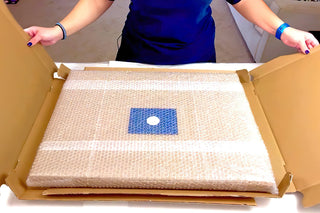
STEP 2 - SHIPPING
We ship your order. We send you an email to track the progress

STEP 3 - DELIVERY
You receive your order. You can also, according to your choice, be delivered to a relay point.
Matte finish
View from behind
Frame (optional)
Portrait of a Young Woman - Gustaf Lundberg – Captivating Introduction
The "Portrait of a Young Woman" by Gustaf Lundberg is a work that transcends time and invites contemplation. Created in the 18th century, this painting stands out for its elegance and finesse, showcasing the artist's exceptional craftsmanship. In a world where art intertwines with human emotions, this portrait does not merely depict a female figure; it captures the very essence of beauty and delicacy. The atmosphere emanating from this piece is both mysterious and familiar, inviting the viewer to delve into the intimate universe of the young woman, whose identity, though vague, seems filled with stories to tell.
Style and uniqueness of the work
Lundberg, master of the portrait, employs refined pictorial techniques to bring his models to life. In this painting, the features of the young woman are delicately modeled, while subtly orchestrated lighting highlights the softness of her face. The colors, chosen with care, blend harmoniously, creating a light effect that seems to envelop the subject with an almost divine aura. The posture of the young woman, both graceful and natural, demonstrates a mastery of composition that guides the viewer’s gaze to the most minute details, such as the fabric of her dress or the reflections in her hair. This work reflects an era when portraiture was not only a means of representing a person but also a form of artistic expression, revealing the aspirations and emotions of its time.
The artist and his influence
Gustaf Lundberg, a Swedish artist trained at the French court, established himself in the European art scene thanks to his exceptional talent. Influenced by the great masters of his time, he integrated elements of Rococo while developing a personal style that is uniquely his own. His portraits, often imbued with a certain melancholy, are the result of meticulous observation and sensitivity to the psychology of his subjects. Lundberg thus contributed to redefining the art of portraiture in the 18th century, emphasizing personality and emotion rather than mere physical appearance. His work paved the way
12,34 €