
Painting Portrait of a Woman in an Armchair - Johannes Pieter de Frey | Art print


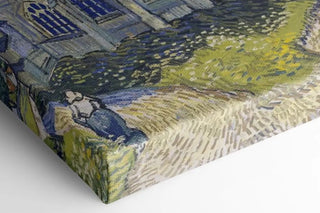
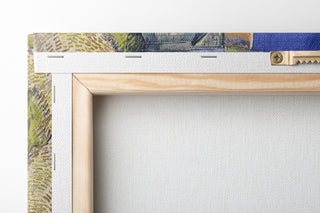
View from behind
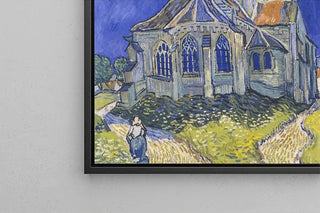
Frame (optional)
Johannes Pieter de Frey’s “Portrait of a Woman in an Armchair” is a masterpiece that transcends the simple frame of painting to engage in a broader reflection on the female condition in the 17th century. This piece, imbued with delicacy and subtlety, invites us to delve into the intimacy of a woman, whose expression and posture reveal rare emotional depth. Through this art print, the artist manages to capture not only the physical features of her model but also her essence, her story, and perhaps even her dreams. The soft light bathing the scene and the meticulous details of the armchair she is seated in contribute to creating an atmosphere charged with mystery and poetry, encouraging the viewer to imagine her life beyond the canvas.
Style and uniqueness of the work
Johannes Pieter de Frey’s style is characterized by an exceptional mastery of color and light, elements that intertwine harmoniously in the “Art print of a woman in an armchair.” The color palette chosen by the artist, oscillating between warm tones and cooler shades, creates a striking contrast that immediately draws the eye. The texture of the woman’s clothing, rendered with impressive realism, testifies to the artist’s virtuosity. Every fold, every reflection of light on the fabric, adds detail that enriches the composition. Moreover, the woman’s posture, both relaxed and dignified, evokes a certain modernity for the period, challenging traditional portrait conventions. This blend of classicism and modern sensitivity makes this work a true masterpiece, continuing to inspire and move viewers.
The artist and his influence
Johannes Pieter de Frey, although less known than some of his contemporaries, managed to carve out a place in the pantheon of 17th-century Dutch artists. Influenced by the masters of Dutch painting, he developed a personal style that combines finesse and emotion. His work is distinguished by particular attention to detail and the psychology of his models. De Frey often explored themes related to everyday life and
Painting Portrait of a Woman in an Armchair - Johannes Pieter de Frey | Art print

-10% FROM €95 IN PURCHASES
-15% FROM €195 IN PURCHASES
Regular price
- Unit price
- per
Tax included.
Free shipping
€4.90 / Free shipping on orders over €39
Satisfied or Money Back
Free returns within 30 days
10-year warranty
Our prints are guaranteed for 10 years
Any questions? We are here!
by email to contact@artemlegrand.com
THE STEPS OF YOUR ORDER
STEP 1 - ORDER PLACED
Your order has been confirmed and we are starting production
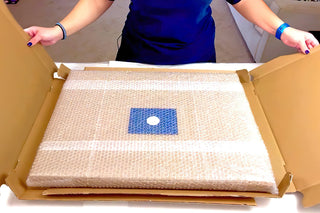
STEP 2 - SHIPPING
We ship your order. We send you an email to track the progress

STEP 3 - DELIVERY
You receive your order. You can also, according to your choice, be delivered to a relay point.
Matte finish
View from behind
Frame (optional)
Johannes Pieter de Frey’s “Portrait of a Woman in an Armchair” is a masterpiece that transcends the simple frame of painting to engage in a broader reflection on the female condition in the 17th century. This piece, imbued with delicacy and subtlety, invites us to delve into the intimacy of a woman, whose expression and posture reveal rare emotional depth. Through this art print, the artist manages to capture not only the physical features of her model but also her essence, her story, and perhaps even her dreams. The soft light bathing the scene and the meticulous details of the armchair she is seated in contribute to creating an atmosphere charged with mystery and poetry, encouraging the viewer to imagine her life beyond the canvas.
Style and uniqueness of the work
Johannes Pieter de Frey’s style is characterized by an exceptional mastery of color and light, elements that intertwine harmoniously in the “Art print of a woman in an armchair.” The color palette chosen by the artist, oscillating between warm tones and cooler shades, creates a striking contrast that immediately draws the eye. The texture of the woman’s clothing, rendered with impressive realism, testifies to the artist’s virtuosity. Every fold, every reflection of light on the fabric, adds detail that enriches the composition. Moreover, the woman’s posture, both relaxed and dignified, evokes a certain modernity for the period, challenging traditional portrait conventions. This blend of classicism and modern sensitivity makes this work a true masterpiece, continuing to inspire and move viewers.
The artist and his influence
Johannes Pieter de Frey, although less known than some of his contemporaries, managed to carve out a place in the pantheon of 17th-century Dutch artists. Influenced by the masters of Dutch painting, he developed a personal style that combines finesse and emotion. His work is distinguished by particular attention to detail and the psychology of his models. De Frey often explored themes related to everyday life and
12,34 €