
Painting Portrait of a man believed to be Augustijn Wtenbogaert 1577-1655 - Govert Flinck | Art print


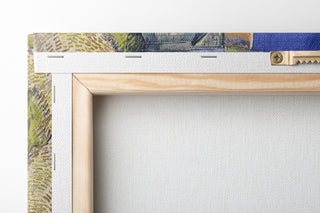
View from behind
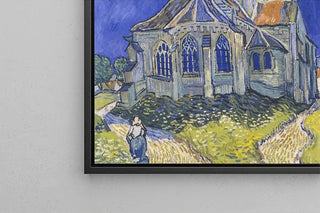
Frame (optional)
In the fascinating world of 17th-century Dutch painting, the art print "Portrait of a man believed to be Augustijn Wtenbogaert" by Govert Flinck stands out for its elegance and mystery. This painting, which captures the essence of a character whose identity still sparks debate, is a true window into a rich era full of nuances and emotions. Flinck, a pupil of Rembrandt, managed, through this portrait, to transcend mere facial features and offer a lively and vibrant representation of his subject. The light, shadows, and meticulous details combine to bring this work to life, inviting the viewer to contemplate not only the face but also the soul of the depicted man.
Style and uniqueness of the work
Flinck's style is a delicate dance between realism and idealization, an approach that allows him to capture the personality of his subjects while elevating them to an almost heroic status. In this portrait, mastery of chiaroscuro is particularly striking. The play of light highlights the facial features, emphasizing the penetrating gaze and the apparent serenity of Augustijn Wtenbogaert. The details of the robe, with its rich textures, add visual depth that draws the eye and stimulates the imagination. Flinck does not merely reproduce a face; he tells a story, that of a man of his time, an intellectual engaged in the religious and political debates of his era. This painting, through its balanced composition and attention to detail, bears witness to the virtuosity of the artist and his desire to leave a lasting mark in the history of art.
The artist and his influence
Govert Flinck, born in 1615 in The Hague, is often considered one of the most talented artists of his time, although his name is sometimes overshadowed by that of his master, Rembrandt. Flinck mastered his mentor's techniques while developing a style that is uniquely his own, characterized by a subtle use of color and a keen sense of composition.
Painting Portrait of a man believed to be Augustijn Wtenbogaert 1577-1655 - Govert Flinck | Art print

-10% FROM €95 IN PURCHASES
-15% FROM €195 IN PURCHASES
Regular price
- Unit price
- per
Tax included.
Free shipping
€4.90 / Free shipping on orders over €39
Satisfied or Money Back
Free returns within 30 days
10-year warranty
Our prints are guaranteed for 10 years
Any questions? We are here!
by email to contact@artemlegrand.com
THE STEPS OF YOUR ORDER

STEP 1 - ORDER PLACED
Your order has been confirmed and we are starting production
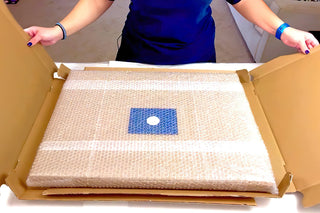
STEP 2 - SHIPPING
We ship your order. We send you an email to track the progress

STEP 3 - DELIVERY
You receive your order. You can also, according to your choice, be delivered to a relay point.
Matte finish
View from behind
Frame (optional)
In the fascinating world of 17th-century Dutch painting, the art print "Portrait of a man believed to be Augustijn Wtenbogaert" by Govert Flinck stands out for its elegance and mystery. This painting, which captures the essence of a character whose identity still sparks debate, is a true window into a rich era full of nuances and emotions. Flinck, a pupil of Rembrandt, managed, through this portrait, to transcend mere facial features and offer a lively and vibrant representation of his subject. The light, shadows, and meticulous details combine to bring this work to life, inviting the viewer to contemplate not only the face but also the soul of the depicted man.
Style and uniqueness of the work
Flinck's style is a delicate dance between realism and idealization, an approach that allows him to capture the personality of his subjects while elevating them to an almost heroic status. In this portrait, mastery of chiaroscuro is particularly striking. The play of light highlights the facial features, emphasizing the penetrating gaze and the apparent serenity of Augustijn Wtenbogaert. The details of the robe, with its rich textures, add visual depth that draws the eye and stimulates the imagination. Flinck does not merely reproduce a face; he tells a story, that of a man of his time, an intellectual engaged in the religious and political debates of his era. This painting, through its balanced composition and attention to detail, bears witness to the virtuosity of the artist and his desire to leave a lasting mark in the history of art.
The artist and his influence
Govert Flinck, born in 1615 in The Hague, is often considered one of the most talented artists of his time, although his name is sometimes overshadowed by that of his master, Rembrandt. Flinck mastered his mentor's techniques while developing a style that is uniquely his own, characterized by a subtle use of color and a keen sense of composition.
12,34 €