
Portrait of a lady wearing a pink dress - Maurice Quentin de La Tour | Art print


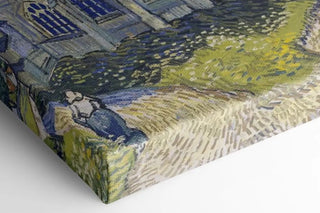
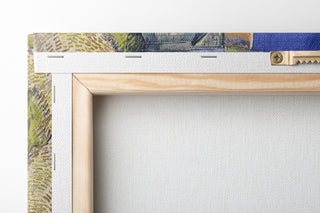
View from behind
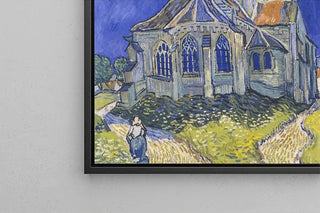
Frame (optional)
In the vast panorama of art history, certain works stand out for their ability to capture the very essence of beauty and elegance. The "Portrait of a lady wearing a pink dress" by Maurice Quentin de La Tour is one of those creations that transcend time. Painted in the 18th century, this iconic piece not only showcases the exceptional talent of its artist but also reflects the aesthetic standards and social values of its era. Approaching this portrait, one is immediately struck by the delicacy of the lady's features, whose gaze seems to tell a story imbued with mystery and grace.
Style and uniqueness of the work
La Tour's style is characterized by striking realism, combined with a finesse of execution that gives his portraits an almost tactile dimension. In "Portrait of a lady wearing a pink dress," the luminosity of the pink color, subtly nuanced, draws the eye and evokes a softness that is both romantic and refined. The choice of drapery and the way light plays on textures demonstrate remarkable technical mastery. Each fold of the dress is rendered with precision that seems almost alive, reinforcing the impression that the lady could come to life at any moment. This portrait is not limited to a simple representation; it invites the viewer to delve into the intimacy of its subject, to feel her emotions, and to question her personal story.
The artist and his influence
Maurice Quentin de La Tour, an emblematic figure of French portraiture, managed to establish himself in a rapidly changing artistic world. Trained in the footsteps of great masters, he developed a style that combines tradition and innovation. His approach to portraiture goes beyond mere physical representation, seeking to capture the soul of his models. La Tour influenced many artists of his time and subsequent generations, notably through his bold use of color and his ability to create intimate atmospheres. By exploring the psychology of his subjects, he paved the way for a new understanding of portraiture, where personality and emotion take precedence over strict resemblance. In doing so, he contributed to redefining the conventions of the genre, leaving
Portrait of a lady wearing a pink dress - Maurice Quentin de La Tour | Art print

-10% FROM €95 IN PURCHASES
-15% FROM €195 IN PURCHASES
Regular price
- Unit price
- per
Tax included.
Free shipping
€4.90 / Free shipping on orders over €39
Satisfied or Money Back
Free returns within 30 days
10-year warranty
Our prints are guaranteed for 10 years
Any questions? We are here!
by email to contact@artemlegrand.com
THE STEPS OF YOUR ORDER
STEP 1 - ORDER PLACED
Your order has been confirmed and we are starting production
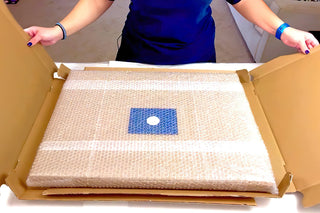
STEP 2 - SHIPPING
We ship your order. We send you an email to track the progress

STEP 3 - DELIVERY
You receive your order. You can also, according to your choice, be delivered to a relay point.
Matte finish
View from behind
Frame (optional)
In the vast panorama of art history, certain works stand out for their ability to capture the very essence of beauty and elegance. The "Portrait of a lady wearing a pink dress" by Maurice Quentin de La Tour is one of those creations that transcend time. Painted in the 18th century, this iconic piece not only showcases the exceptional talent of its artist but also reflects the aesthetic standards and social values of its era. Approaching this portrait, one is immediately struck by the delicacy of the lady's features, whose gaze seems to tell a story imbued with mystery and grace.
Style and uniqueness of the work
La Tour's style is characterized by striking realism, combined with a finesse of execution that gives his portraits an almost tactile dimension. In "Portrait of a lady wearing a pink dress," the luminosity of the pink color, subtly nuanced, draws the eye and evokes a softness that is both romantic and refined. The choice of drapery and the way light plays on textures demonstrate remarkable technical mastery. Each fold of the dress is rendered with precision that seems almost alive, reinforcing the impression that the lady could come to life at any moment. This portrait is not limited to a simple representation; it invites the viewer to delve into the intimacy of its subject, to feel her emotions, and to question her personal story.
The artist and his influence
Maurice Quentin de La Tour, an emblematic figure of French portraiture, managed to establish himself in a rapidly changing artistic world. Trained in the footsteps of great masters, he developed a style that combines tradition and innovation. His approach to portraiture goes beyond mere physical representation, seeking to capture the soul of his models. La Tour influenced many artists of his time and subsequent generations, notably through his bold use of color and his ability to create intimate atmospheres. By exploring the psychology of his subjects, he paved the way for a new understanding of portraiture, where personality and emotion take precedence over strict resemblance. In doing so, he contributed to redefining the conventions of the genre, leaving
12,34 €