
Painting of a peasant knitting - Jules Breton | Art print


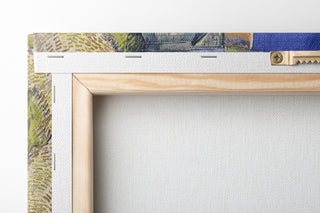
View from behind
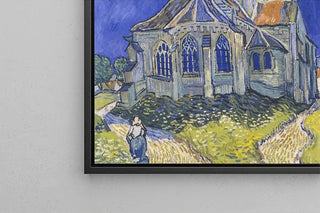
Frame (optional)
In the rich and diverse universe of 19th-century French painting, the artwork "A Peasant Knitting" by Jules Breton stands out for its emotional depth and attachment to rural life. This intimate and tranquil scene captures the very essence of peasant life, where the daily act of knitting becomes a symbol of simplicity and devotion. Through this piece, the artist invites us to immerse ourselves in a world where time seems to stand still, and where every detail resonates with touching sincerity. The art print of this iconic work allows us to rediscover the beauty of ordinary moments, while paying homage to an ancestral craftsmanship.
Style and uniqueness of the work
Jules Breton's style is characterized by meticulous attention to detail and a delicate color palette that evokes natural light. In "A Peasant Knitting," the softness of the hues and the finesse of the lines create a soothing atmosphere in the composition. The artist uses light to highlight the texture of the clothing and the softness of the peasant's skin, thus creating a striking contrast between the simplicity of the subject and the richness of the emotions it evokes. Elements of nature, present in the background, harmonize with the central figure, reinforcing the idea of a deep union between man and his environment. This work, far from being a simple portrait, becomes an ode to rural life, patience, and love of well-done work.
The artist and his influence
Jules Breton, born in 1827, is one of the major representatives of the naturalist movement in painting. Influenced by masters such as Millet and Courbet, he dedicated himself to depicting peasant life, seeking to highlight the dignity and beauty of land workers. Through his works, he manages to transcend mere illustration of daily life to offer a reflection on the human condition. His realistic approach, combined with poetic sensitivity, allows him to capture moments of life that still resonate today. By choosing to focus on subjects often overlooked by his contemporaries, Breton contributed to redefining the way we view rurality, making of
Painting of a peasant knitting - Jules Breton | Art print

-10% FROM €95 IN PURCHASES
-15% FROM €195 IN PURCHASES
Regular price
- Unit price
- per
Tax included.
Free shipping
€4.90 / Free shipping on orders over €39
Satisfied or Money Back
Free returns within 30 days
10-year warranty
Our prints are guaranteed for 10 years
Any questions? We are here!
by email to contact@artemlegrand.com
THE STEPS OF YOUR ORDER

STEP 1 - ORDER PLACED
Your order has been confirmed and we are starting production
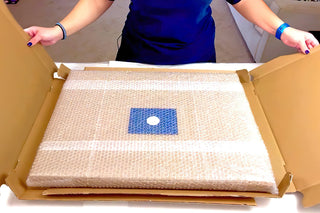
STEP 2 - SHIPPING
We ship your order. We send you an email to track the progress

STEP 3 - DELIVERY
You receive your order. You can also, according to your choice, be delivered to a relay point.
Matte finish
View from behind
Frame (optional)
In the rich and diverse universe of 19th-century French painting, the artwork "A Peasant Knitting" by Jules Breton stands out for its emotional depth and attachment to rural life. This intimate and tranquil scene captures the very essence of peasant life, where the daily act of knitting becomes a symbol of simplicity and devotion. Through this piece, the artist invites us to immerse ourselves in a world where time seems to stand still, and where every detail resonates with touching sincerity. The art print of this iconic work allows us to rediscover the beauty of ordinary moments, while paying homage to an ancestral craftsmanship.
Style and uniqueness of the work
Jules Breton's style is characterized by meticulous attention to detail and a delicate color palette that evokes natural light. In "A Peasant Knitting," the softness of the hues and the finesse of the lines create a soothing atmosphere in the composition. The artist uses light to highlight the texture of the clothing and the softness of the peasant's skin, thus creating a striking contrast between the simplicity of the subject and the richness of the emotions it evokes. Elements of nature, present in the background, harmonize with the central figure, reinforcing the idea of a deep union between man and his environment. This work, far from being a simple portrait, becomes an ode to rural life, patience, and love of well-done work.
The artist and his influence
Jules Breton, born in 1827, is one of the major representatives of the naturalist movement in painting. Influenced by masters such as Millet and Courbet, he dedicated himself to depicting peasant life, seeking to highlight the dignity and beauty of land workers. Through his works, he manages to transcend mere illustration of daily life to offer a reflection on the human condition. His realistic approach, combined with poetic sensitivity, allows him to capture moments of life that still resonate today. By choosing to focus on subjects often overlooked by his contemporaries, Breton contributed to redefining the way we view rurality, making of
12,34 €