
Nude Sitting Painting - Georges d'Espagnat | Art print


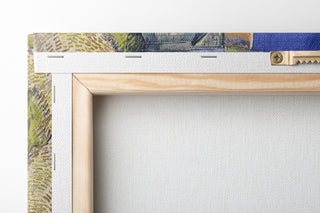
View from behind
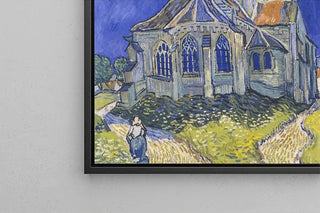
Frame (optional)
Nu sitting - Georges d'Espagnat – Captivating introduction
In the vast panorama of art history, certain works emanate a sensuality and delicacy that transcend time. "Nu sitting" by Georges d'Espagnat is a perfect example. This piece, emblematic of the early 20th century, embodies the artistic aspirations of a period when the Impressionist movement had already paved the way for new explorations. The painting, both simple and complex, captures the essence of female beauty while revealing the depth of the human soul. Contemplating this art print, the viewer is immediately transported into a universe where light plays with forms, and where the body becomes a canvas that is both fragile and powerful.
Style and uniqueness of the work
Georges d'Espagnat's style is distinguished by a unique approach to color and light. In "Nu sitting," he uses warm, soft tones that envelop the female figure in an intimate and warm atmosphere. The way he renders the model's skin, almost luminous, demonstrates exceptional mastery of technique. Every brushstroke seems to be a caress, a celebration of the human form. The composition, although classic in its subject, reveals modernity in the way the artist plays with shadows and lights, creating a depth that invites exploration. This art print does not merely depict a nude; it evokes an emotion, a suspended moment in time where beauty and vulnerability meet.
The artist and his influence
Georges d'Espagnat, often less known than his contemporaries, nonetheless left an indelible mark on the art world. Born in 1870, he was influenced by the great masters of his time, such as Pierre Bonnard and Édouard Vuillard, while developing a style that is uniquely his own. His ability to capture the intimacy of female models, often close friends or relatives, testifies to a rare sensitivity. D'Espagnat knew how to combine realism with a touch of poetry, making his works windows into universal emotions. His legacy lies in his capacity to inspire many contemporary artists, who continue to
Nude Sitting Painting - Georges d'Espagnat | Art print

-10% FROM €95 IN PURCHASES
-15% FROM €195 IN PURCHASES
Regular price
- Unit price
- per
Tax included.
Free shipping
€4.90 / Free shipping on orders over €39
Satisfied or Money Back
Free returns within 30 days
10-year warranty
Our prints are guaranteed for 10 years
Any questions? We are here!
by email to contact@artemlegrand.com
THE STEPS OF YOUR ORDER

STEP 1 - ORDER PLACED
Your order has been confirmed and we are starting production
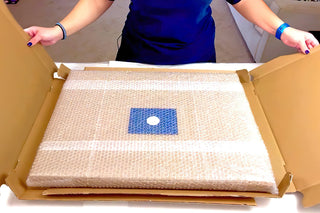
STEP 2 - SHIPPING
We ship your order. We send you an email to track the progress

STEP 3 - DELIVERY
You receive your order. You can also, according to your choice, be delivered to a relay point.
Matte finish
View from behind
Frame (optional)
Nu sitting - Georges d'Espagnat – Captivating introduction
In the vast panorama of art history, certain works emanate a sensuality and delicacy that transcend time. "Nu sitting" by Georges d'Espagnat is a perfect example. This piece, emblematic of the early 20th century, embodies the artistic aspirations of a period when the Impressionist movement had already paved the way for new explorations. The painting, both simple and complex, captures the essence of female beauty while revealing the depth of the human soul. Contemplating this art print, the viewer is immediately transported into a universe where light plays with forms, and where the body becomes a canvas that is both fragile and powerful.
Style and uniqueness of the work
Georges d'Espagnat's style is distinguished by a unique approach to color and light. In "Nu sitting," he uses warm, soft tones that envelop the female figure in an intimate and warm atmosphere. The way he renders the model's skin, almost luminous, demonstrates exceptional mastery of technique. Every brushstroke seems to be a caress, a celebration of the human form. The composition, although classic in its subject, reveals modernity in the way the artist plays with shadows and lights, creating a depth that invites exploration. This art print does not merely depict a nude; it evokes an emotion, a suspended moment in time where beauty and vulnerability meet.
The artist and his influence
Georges d'Espagnat, often less known than his contemporaries, nonetheless left an indelible mark on the art world. Born in 1870, he was influenced by the great masters of his time, such as Pierre Bonnard and Édouard Vuillard, while developing a style that is uniquely his own. His ability to capture the intimacy of female models, often close friends or relatives, testifies to a rare sensitivity. D'Espagnat knew how to combine realism with a touch of poetry, making his works windows into universal emotions. His legacy lies in his capacity to inspire many contemporary artists, who continue to
12,34 €