
Painting Marie Adélaïde de Savoie 1685-1712 Duchess of Burgundy - Pierre Gobert | Art print


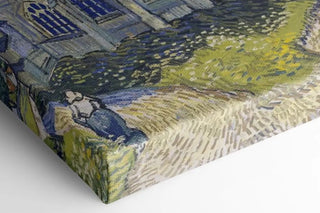
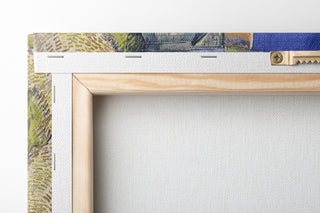
View from behind
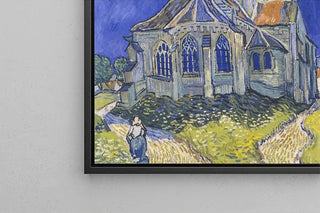
Frame (optional)
Marie Adélaïde de Savoie 1685-1712 Duchess of Burgundy - Pierre Gobert – Captivating Introduction
The painting "Marie Adélaïde de Savoie, 1685-1712, Duchess of Burgundy" by Pierre Gobert is much more than a simple depiction of a historical figure. It embodies the elegance and refinement of an era, that of the early 18th century, marked by aristocratic ways of living. This artwork, created with remarkable precision, immerses us in a world where beauty and power converge. The duchess, granddaughter of Louis XIV, is portrayed in all her splendor, symbolizing a nobility that is both majestic and accessible. Gobert's art, through this portrait, invites us to explore the subtleties of court life, while revealing the personality of his model.
Style and uniqueness of the work
Pierre Gobert's style is distinguished by unparalleled finesse in the treatment of textures and colors. In this portrait, the drapery of the duchess's gown is rendered with a precision that highlights the opulence of the fabrics of the period. The delicate nuances of the skin, almost translucent, testify to a mastered painting technique, where light plays a fundamental role. Gobert manages to capture not only Marie Adélaïde's physical appearance but also the very essence of her personality. Her gaze, both gentle and determined, seems to tell us a story, that of a woman who knew how to combine softness and strength in a male-dominated world. This portrait is a true ode to femininity, where every detail matters, from the sparkling jewel to the carefully chosen background.
The artist and his influence
Pierre Gobert, active at the turn of the 17th and 18th centuries, is an artist whose work stands at the crossroads between baroque and rococo. Trained in the shadow of great masters, he develops a style that is uniquely his own, blending realism and idealization. His work on portraits of the French court has earned him a reputation that endures beyond his own era. Gobert establishes himself as a privileged witness of aristocratic life, capturing the customs and
Painting Marie Adélaïde de Savoie 1685-1712 Duchess of Burgundy - Pierre Gobert | Art print

-10% FROM €95 IN PURCHASES
-15% FROM €195 IN PURCHASES
Regular price
- Unit price
- per
Tax included.
Free shipping
€4.90 / Free shipping on orders over €39
Satisfied or Money Back
Free returns within 30 days
10-year warranty
Our prints are guaranteed for 10 years
Any questions? We are here!
by email to contact@artemlegrand.com
THE STEPS OF YOUR ORDER

STEP 1 - ORDER PLACED
Your order has been confirmed and we are starting production
STEP 2 - SHIPPING
We ship your order. We send you an email to track the progress

STEP 3 - DELIVERY
You receive your order. You can also, according to your choice, be delivered to a relay point.
Matte finish
View from behind
Frame (optional)
Marie Adélaïde de Savoie 1685-1712 Duchess of Burgundy - Pierre Gobert – Captivating Introduction
The painting "Marie Adélaïde de Savoie, 1685-1712, Duchess of Burgundy" by Pierre Gobert is much more than a simple depiction of a historical figure. It embodies the elegance and refinement of an era, that of the early 18th century, marked by aristocratic ways of living. This artwork, created with remarkable precision, immerses us in a world where beauty and power converge. The duchess, granddaughter of Louis XIV, is portrayed in all her splendor, symbolizing a nobility that is both majestic and accessible. Gobert's art, through this portrait, invites us to explore the subtleties of court life, while revealing the personality of his model.
Style and uniqueness of the work
Pierre Gobert's style is distinguished by unparalleled finesse in the treatment of textures and colors. In this portrait, the drapery of the duchess's gown is rendered with a precision that highlights the opulence of the fabrics of the period. The delicate nuances of the skin, almost translucent, testify to a mastered painting technique, where light plays a fundamental role. Gobert manages to capture not only Marie Adélaïde's physical appearance but also the very essence of her personality. Her gaze, both gentle and determined, seems to tell us a story, that of a woman who knew how to combine softness and strength in a male-dominated world. This portrait is a true ode to femininity, where every detail matters, from the sparkling jewel to the carefully chosen background.
The artist and his influence
Pierre Gobert, active at the turn of the 17th and 18th centuries, is an artist whose work stands at the crossroads between baroque and rococo. Trained in the shadow of great masters, he develops a style that is uniquely his own, blending realism and idealization. His work on portraits of the French court has earned him a reputation that endures beyond his own era. Gobert establishes himself as a privileged witness of aristocratic life, capturing the customs and
12,34 €