
Painting Marat assassinated - Jacques Louis David | Art print


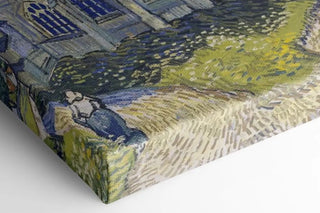
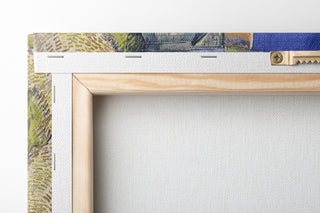
View from behind
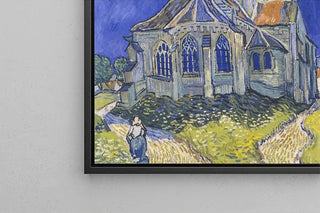
Frame (optional)
The artwork "Marat Assassinated" by Jacques Louis David is a masterpiece of Neoclassicism, a painting that transcends the mere artistic frame to become a powerful symbol of the French Revolution. Painted in 1793, this piece depicts the tragic death of Jean-Paul Marat, one of the revolutionary leaders, stabbed in his bathtub by Charlotte Corday. The intensity of the scene, captured with striking precision, invites the viewer to reflect on sacrifice, politics, and human tragedy. The portrayal of Marat, both martyr and hero, still resonates today, demonstrating the evocative power of art in the face of social upheavals.
Style and uniqueness of the work
Jacques Louis David's style is characterized by formal rigor and balanced composition, elements that are evident in "Marat Assassinated." The color palette, dominated by cool and dark tones, heightens the drama of the scene. Marat, frozen in a deathly posture, is surrounded by a light that seems almost divine, emphasizing his role as a martyr. The simplicity of the bathtub and surrounding objects contrasts with the grandeur of the event, creating an atmosphere that is both intimate and solemn. Every detail, from the blood on the floor to Charlotte Corday's letter, is carefully chosen to reinforce the narrative. The work does not merely depict a historical event; it evokes deep emotions and questions the viewer about issues of violence and justice.
The artist and his influence
Jacques Louis David, an emblematic figure of Neoclassicism, knew how to leave his mark on his era through his ability to combine art and political engagement. Trained at the Royal Academy of Painting and Sculpture, he was a fervent supporter of revolutionary ideals, using his art as a means of propaganda. Through works such as "The Oath of the Horatii" and "The Coronation of Napoleon," David captured the spirit of his time while establishing aesthetic standards that would influence generations of artists. His technique, based on meticulous observation and rigorous composition, paved the way for a
Painting Marat assassinated - Jacques Louis David | Art print

-10% FROM €95 IN PURCHASES
-15% FROM €195 IN PURCHASES
Regular price
- Unit price
- per
Tax included.
Free shipping
€4.90 / Free shipping on orders over €39
Satisfied or Money Back
Free returns within 30 days
10-year warranty
Our prints are guaranteed for 10 years
Any questions? We are here!
by email to contact@artemlegrand.com
THE STEPS OF YOUR ORDER

STEP 1 - ORDER PLACED
Your order has been confirmed and we are starting production
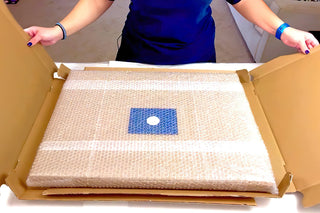
STEP 2 - SHIPPING
We ship your order. We send you an email to track the progress

STEP 3 - DELIVERY
You receive your order. You can also, according to your choice, be delivered to a relay point.
Matte finish
View from behind
Frame (optional)
The artwork "Marat Assassinated" by Jacques Louis David is a masterpiece of Neoclassicism, a painting that transcends the mere artistic frame to become a powerful symbol of the French Revolution. Painted in 1793, this piece depicts the tragic death of Jean-Paul Marat, one of the revolutionary leaders, stabbed in his bathtub by Charlotte Corday. The intensity of the scene, captured with striking precision, invites the viewer to reflect on sacrifice, politics, and human tragedy. The portrayal of Marat, both martyr and hero, still resonates today, demonstrating the evocative power of art in the face of social upheavals.
Style and uniqueness of the work
Jacques Louis David's style is characterized by formal rigor and balanced composition, elements that are evident in "Marat Assassinated." The color palette, dominated by cool and dark tones, heightens the drama of the scene. Marat, frozen in a deathly posture, is surrounded by a light that seems almost divine, emphasizing his role as a martyr. The simplicity of the bathtub and surrounding objects contrasts with the grandeur of the event, creating an atmosphere that is both intimate and solemn. Every detail, from the blood on the floor to Charlotte Corday's letter, is carefully chosen to reinforce the narrative. The work does not merely depict a historical event; it evokes deep emotions and questions the viewer about issues of violence and justice.
The artist and his influence
Jacques Louis David, an emblematic figure of Neoclassicism, knew how to leave his mark on his era through his ability to combine art and political engagement. Trained at the Royal Academy of Painting and Sculpture, he was a fervent supporter of revolutionary ideals, using his art as a means of propaganda. Through works such as "The Oath of the Horatii" and "The Coronation of Napoleon," David captured the spirit of his time while establishing aesthetic standards that would influence generations of artists. His technique, based on meticulous observation and rigorous composition, paved the way for a
12,34 €