
Painting Man with White Tie - Johann Georg Edlinger | Art print


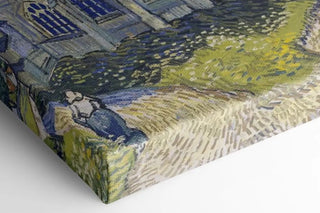
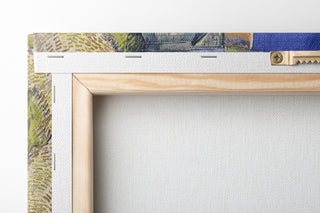
View from behind
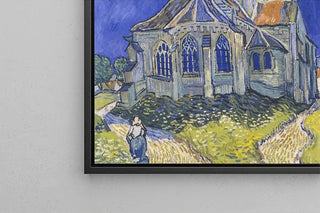
Frame (optional)
Reproduction Homme avec cravate blanche - Johann Georg Edlinger – Captivating introduction
The artwork "Homme avec cravate blanche" by Johann Georg Edlinger presents itself as an open window into a world imbued with refinement and elegance. This portrait, which captures the very essence of 19th-century bourgeoisie, reveals not only the undeniable talent of the artist but also an era where every detail mattered. Through this painting, Edlinger manages to immortalize a personality, an attitude, and a clothing style that transcend time. The finesse of the features, the subtle light illuminating the model's face, and the precision of the garments testify to remarkable technical mastery. This masterpiece invites the viewer to question the identity of this man, his story, and the social context surrounding him.
Style and uniqueness of the work
Edlinger's style is distinguished by a realistic and meticulous approach. Every brushstroke seems to have been thought out to highlight the texture of fabrics, the shine of accessories, and the delicate expression of faces. In "Homme avec cravate blanche," the tie itself becomes a central element, a symbol of status and sophistication. The color palette chosen by the artist evokes an atmosphere that is both warm and elegant, reinforcing the idea of a portrait that is not merely a representation but a true celebration of the individual. The contrasts between shadows and lights create a depth that brings the painting to life, making the character almost tangible. This work does not merely depict a man; it tells a story, that of an era where appearance and savoir-vivre were cardinal values.
The artist and his influence
Johann Georg Edlinger, an Austrian-born painter, managed to carve out a prominent place in the 19th-century artistic landscape. Raised in an environment where art was revered, he developed a keen sense of observation and an ability to capture the nuances of the human soul. His influence extends beyond his works, as he also trained many artists who saw in him a role model to follow. Edlinger was able to incorporate elements of classical tradition while opening up to the innovations of his time, creating a style that
Painting Man with White Tie - Johann Georg Edlinger | Art print

-10% FROM €95 IN PURCHASES
-15% FROM €195 IN PURCHASES
Regular price
- Unit price
- per
Tax included.
Free shipping
€4.90 / Free shipping on orders over €39
Satisfied or Money Back
Free returns within 30 days
10-year warranty
Our prints are guaranteed for 10 years
Any questions? We are here!
by email to contact@artemlegrand.com
THE STEPS OF YOUR ORDER

STEP 1 - ORDER PLACED
Your order has been confirmed and we are starting production
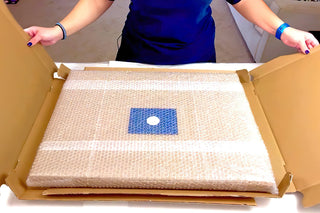
STEP 2 - SHIPPING
We ship your order. We send you an email to track the progress

STEP 3 - DELIVERY
You receive your order. You can also, according to your choice, be delivered to a relay point.
Matte finish
View from behind
Frame (optional)
Reproduction Homme avec cravate blanche - Johann Georg Edlinger – Captivating introduction
The artwork "Homme avec cravate blanche" by Johann Georg Edlinger presents itself as an open window into a world imbued with refinement and elegance. This portrait, which captures the very essence of 19th-century bourgeoisie, reveals not only the undeniable talent of the artist but also an era where every detail mattered. Through this painting, Edlinger manages to immortalize a personality, an attitude, and a clothing style that transcend time. The finesse of the features, the subtle light illuminating the model's face, and the precision of the garments testify to remarkable technical mastery. This masterpiece invites the viewer to question the identity of this man, his story, and the social context surrounding him.
Style and uniqueness of the work
Edlinger's style is distinguished by a realistic and meticulous approach. Every brushstroke seems to have been thought out to highlight the texture of fabrics, the shine of accessories, and the delicate expression of faces. In "Homme avec cravate blanche," the tie itself becomes a central element, a symbol of status and sophistication. The color palette chosen by the artist evokes an atmosphere that is both warm and elegant, reinforcing the idea of a portrait that is not merely a representation but a true celebration of the individual. The contrasts between shadows and lights create a depth that brings the painting to life, making the character almost tangible. This work does not merely depict a man; it tells a story, that of an era where appearance and savoir-vivre were cardinal values.
The artist and his influence
Johann Georg Edlinger, an Austrian-born painter, managed to carve out a prominent place in the 19th-century artistic landscape. Raised in an environment where art was revered, he developed a keen sense of observation and an ability to capture the nuances of the human soul. His influence extends beyond his works, as he also trained many artists who saw in him a role model to follow. Edlinger was able to incorporate elements of classical tradition while opening up to the innovations of his time, creating a style that
12,34 €