
Painting M. Jan Bernd Schaep 1633-1666 - Jürgen Ovens | Art print


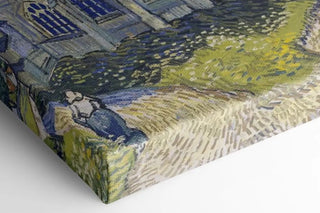
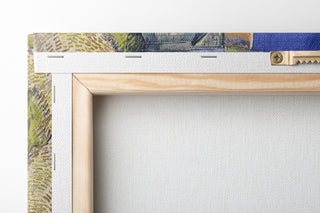
View from behind
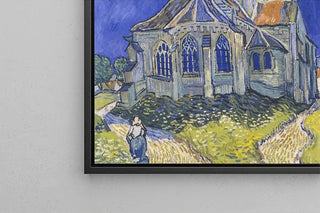
Frame (optional)
The art print of the work "M. Jan Bernd Schaep 1633-1666" by Jürgen Ovens immerses us in a universe where portraiture becomes a reflection of the soul. This piece, emblematic of 17th-century Dutch art, invites us to explore not only the refined technique of the artist but also the subtleties of human representation. Through this painting, Ovens manages to capture the very essence of his subject, a man whose gaze seems to tell a story far beyond the simple image. In this work, every detail, from the slight smile to the folds of the robe, is an invitation to delve into the intimacy of a historical character, prompting us to reflect on the passage of time and memory.
Style and uniqueness of the work
Jürgen Ovens's style is distinguished by an impressive mastery of light and shadow, an essential element of baroque painting. In "M. Jan Bernd Schaep 1633-1666," light plays a crucial role, illuminating the face of the subject while creating a striking contrast with the dark background. This chiaroscuro technique, which highlights the features of the character, enhances the emotion conveyed by the painting. The colors, rich and nuanced, demonstrate a keen sense of observation and an ability to render the texture of materials, whether the velvet of the robe or human skin. The composition, meanwhile, is carefully balanced, with each element arranged to guide the viewer's gaze toward the face of the protagonist. It is within this harmony that the uniqueness of the work resides, a visual alchemy that transcends simple portraiture to offer a profound aesthetic experience.
The artist and his influence
Jürgen Ovens, a Danish-born artist, established himself in the Dutch artistic landscape of the 17th century. Trained in the workshop of great masters, he developed a personal style that combines tradition and innovation. His ability to capture the psychology of his subjects had a significant influence on his contemporaries and on portrait painting in general. Ovens was not only a skilled portraitist but also an observer of society.
Painting M. Jan Bernd Schaep 1633-1666 - Jürgen Ovens | Art print

-10% FROM €95 IN PURCHASES
-15% FROM €195 IN PURCHASES
Regular price
- Unit price
- per
Tax included.
Free shipping
€4.90 / Free shipping on orders over €39
Satisfied or Money Back
Free returns within 30 days
10-year warranty
Our prints are guaranteed for 10 years
Any questions? We are here!
by email to contact@artemlegrand.com
THE STEPS OF YOUR ORDER
STEP 1 - ORDER PLACED
Your order has been confirmed and we are starting production
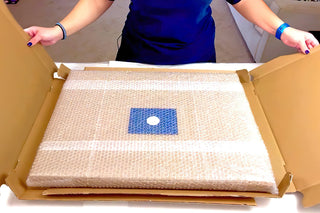
STEP 2 - SHIPPING
We ship your order. We send you an email to track the progress

STEP 3 - DELIVERY
You receive your order. You can also, according to your choice, be delivered to a relay point.
Matte finish
View from behind
Frame (optional)
The art print of the work "M. Jan Bernd Schaep 1633-1666" by Jürgen Ovens immerses us in a universe where portraiture becomes a reflection of the soul. This piece, emblematic of 17th-century Dutch art, invites us to explore not only the refined technique of the artist but also the subtleties of human representation. Through this painting, Ovens manages to capture the very essence of his subject, a man whose gaze seems to tell a story far beyond the simple image. In this work, every detail, from the slight smile to the folds of the robe, is an invitation to delve into the intimacy of a historical character, prompting us to reflect on the passage of time and memory.
Style and uniqueness of the work
Jürgen Ovens's style is distinguished by an impressive mastery of light and shadow, an essential element of baroque painting. In "M. Jan Bernd Schaep 1633-1666," light plays a crucial role, illuminating the face of the subject while creating a striking contrast with the dark background. This chiaroscuro technique, which highlights the features of the character, enhances the emotion conveyed by the painting. The colors, rich and nuanced, demonstrate a keen sense of observation and an ability to render the texture of materials, whether the velvet of the robe or human skin. The composition, meanwhile, is carefully balanced, with each element arranged to guide the viewer's gaze toward the face of the protagonist. It is within this harmony that the uniqueness of the work resides, a visual alchemy that transcends simple portraiture to offer a profound aesthetic experience.
The artist and his influence
Jürgen Ovens, a Danish-born artist, established himself in the Dutch artistic landscape of the 17th century. Trained in the workshop of great masters, he developed a personal style that combines tradition and innovation. His ability to capture the psychology of his subjects had a significant influence on his contemporaries and on portrait painting in general. Ovens was not only a skilled portraitist but also an observer of society.
12,34 €