
Painting L'escalier de la résidence londonienne du peintre - Pieter Christoffel Wonder


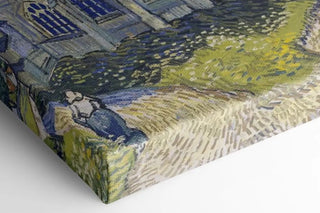
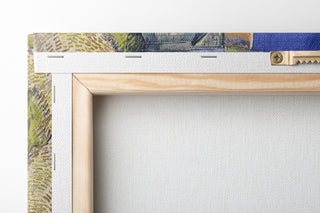
View from behind
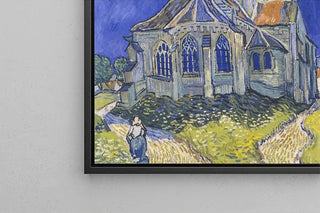
Frame (optional)
Art print of Pieter Christoffel Wonder’s captivating introduction to the London residence staircase
The canvas "L'escalier de la résidence londonienne du peintre" by Pieter Christoffel Wonder is a work that invites contemplation, revealing a universe rich in detail and emotion. This painting, capturing the essence of a moment frozen in time, transports the viewer to the heart of an intimate private space. The artist, through his mastery of light and shadow, manages to create an atmosphere that is both warm and mysterious. The stairs, symbols of transition and movement, become the focal point of a visual narrative that sparks curiosity and reflection. The piece, while rooted in meticulous realism, evokes a subtle poetry that enchants anyone who lingers on it.
Style and uniqueness of the work
Pieter Christoffel Wonder's style is characterized by striking realism, where every detail is carefully crafted. In "L'escalier de la résidence londonienne du peintre," the artist employs a palette of warm colors that give the scene a welcoming ambiance. Shades of brown, beige, and gold intertwine delicately, creating a play of light that illuminates the staircase steps. The composition is skillfully orchestrated, guiding the viewer's gaze through the different levels of the space. The characters, although present, seem almost secondary, as if they are witnesses to a larger scene. This approach allows the work to transcend a simple portrait of an interior, becoming a reflection on daily life, solitude, and the beauty of fleeting moments.
The artist and his influence
Pieter Christoffel Wonder, a Dutch painter of the 17th century, is often recognized for his ability to capture scenes of everyday life with rare emotional depth. Influenced by the masters of chiaroscuro, he developed a style that is uniquely his own, blending realism with a touch of idealism. His works, often centered on interiors, reveal a particular sensitivity to intimate atmospheres, where light plays a crucial role. Wonder was also a keen observer of his time, incorporating elements
Painting L'escalier de la résidence londonienne du peintre - Pieter Christoffel Wonder

-10% FROM €95 IN PURCHASES
-15% FROM €195 IN PURCHASES
Regular price
- Unit price
- per
Tax included.
Free shipping
€4.90 / Free shipping on orders over €39
Satisfied or Money Back
Free returns within 30 days
10-year warranty
Our prints are guaranteed for 10 years
Any questions? We are here!
by email to contact@artemlegrand.com
THE STEPS OF YOUR ORDER

STEP 1 - ORDER PLACED
Your order has been confirmed and we are starting production
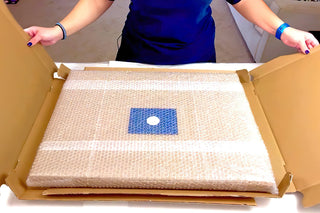
STEP 2 - SHIPPING
We ship your order. We send you an email to track the progress

STEP 3 - DELIVERY
You receive your order. You can also, according to your choice, be delivered to a relay point.
Matte finish
View from behind
Frame (optional)
Art print of Pieter Christoffel Wonder’s captivating introduction to the London residence staircase
The canvas "L'escalier de la résidence londonienne du peintre" by Pieter Christoffel Wonder is a work that invites contemplation, revealing a universe rich in detail and emotion. This painting, capturing the essence of a moment frozen in time, transports the viewer to the heart of an intimate private space. The artist, through his mastery of light and shadow, manages to create an atmosphere that is both warm and mysterious. The stairs, symbols of transition and movement, become the focal point of a visual narrative that sparks curiosity and reflection. The piece, while rooted in meticulous realism, evokes a subtle poetry that enchants anyone who lingers on it.
Style and uniqueness of the work
Pieter Christoffel Wonder's style is characterized by striking realism, where every detail is carefully crafted. In "L'escalier de la résidence londonienne du peintre," the artist employs a palette of warm colors that give the scene a welcoming ambiance. Shades of brown, beige, and gold intertwine delicately, creating a play of light that illuminates the staircase steps. The composition is skillfully orchestrated, guiding the viewer's gaze through the different levels of the space. The characters, although present, seem almost secondary, as if they are witnesses to a larger scene. This approach allows the work to transcend a simple portrait of an interior, becoming a reflection on daily life, solitude, and the beauty of fleeting moments.
The artist and his influence
Pieter Christoffel Wonder, a Dutch painter of the 17th century, is often recognized for his ability to capture scenes of everyday life with rare emotional depth. Influenced by the masters of chiaroscuro, he developed a style that is uniquely his own, blending realism with a touch of idealism. His works, often centered on interiors, reveal a particular sensitivity to intimate atmospheres, where light plays a crucial role. Wonder was also a keen observer of his time, incorporating elements
12,34 €