
Painting Léandre taking leave of Hero before crossing the Hellespont by swimming - William Hamilton | Art print


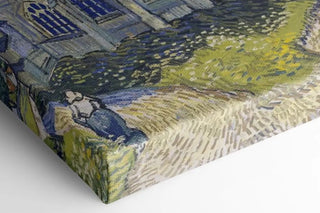
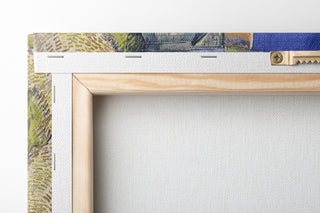
View from behind
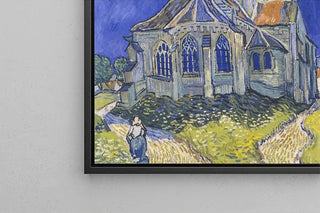
Frame (optional)
In the rich and diverse panorama of art history, some works stand out for their ability to capture moments of pure emotion and tell timeless stories. "Léandre prenant congé de Héro avant de traverser l'Hellespont à la nage" by William Hamilton is undoubtedly one of these works. This painting, which evokes a legend of tragic love, transports us to a world where desire and sacrifice intertwine. Through the depiction of this crucial moment, Hamilton invites us to contemplate the depth of human feelings, while immersing us in an atmosphere filled with romance and melancholy. The scene, both simple and laden with symbolism, encourages reflection on universal themes of love, separation, and aspiration.
Style and uniqueness of the work
William Hamilton's style is characterized by finesse of execution and meticulous attention to detail, which are evident in every element of "Léandre prenant congé de Héro avant de traverser l'Hellespont à la nage". The composition of the piece is carefully balanced, with figures that seem to come alive under the viewer's gaze. The expressions of the characters, especially that of Héro, reveal palpable emotion, while Léandre's posture evokes both determination and hesitation. The color palette used by Hamilton, oscillating between soft tones and darker shades, enhances the dramatic atmosphere of the scene. Every brushstroke appears to tell a story, and each exchanged look between the protagonists is charged with meaning. This ability to fuse technique and emotion makes this work a remarkable example of neoclassical art, where formal beauty combines with profound humanity.
The artist and his influence
William Hamilton, a Scottish painter of the 18th century, is often recognized for his talent in depicting mythological and historical scenes. His work, although less well-known than that of some of his contemporaries, has nonetheless left a significant mark in the art world. Influenced by the great masters of the Renaissance and Baroque, Hamilton was able to develop
Painting Léandre taking leave of Hero before crossing the Hellespont by swimming - William Hamilton | Art print

-10% FROM €95 IN PURCHASES
-15% FROM €195 IN PURCHASES
Regular price
- Unit price
- per
Tax included.
Free shipping
€4.90 / Free shipping on orders over €39
Satisfied or Money Back
Free returns within 30 days
10-year warranty
Our prints are guaranteed for 10 years
Any questions? We are here!
by email to contact@artemlegrand.com
THE STEPS OF YOUR ORDER

STEP 1 - ORDER PLACED
Your order has been confirmed and we are starting production
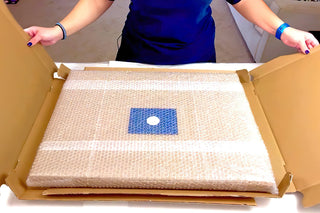
STEP 2 - SHIPPING
We ship your order. We send you an email to track the progress

STEP 3 - DELIVERY
You receive your order. You can also, according to your choice, be delivered to a relay point.
Matte finish
View from behind
Frame (optional)
In the rich and diverse panorama of art history, some works stand out for their ability to capture moments of pure emotion and tell timeless stories. "Léandre prenant congé de Héro avant de traverser l'Hellespont à la nage" by William Hamilton is undoubtedly one of these works. This painting, which evokes a legend of tragic love, transports us to a world where desire and sacrifice intertwine. Through the depiction of this crucial moment, Hamilton invites us to contemplate the depth of human feelings, while immersing us in an atmosphere filled with romance and melancholy. The scene, both simple and laden with symbolism, encourages reflection on universal themes of love, separation, and aspiration.
Style and uniqueness of the work
William Hamilton's style is characterized by finesse of execution and meticulous attention to detail, which are evident in every element of "Léandre prenant congé de Héro avant de traverser l'Hellespont à la nage". The composition of the piece is carefully balanced, with figures that seem to come alive under the viewer's gaze. The expressions of the characters, especially that of Héro, reveal palpable emotion, while Léandre's posture evokes both determination and hesitation. The color palette used by Hamilton, oscillating between soft tones and darker shades, enhances the dramatic atmosphere of the scene. Every brushstroke appears to tell a story, and each exchanged look between the protagonists is charged with meaning. This ability to fuse technique and emotion makes this work a remarkable example of neoclassical art, where formal beauty combines with profound humanity.
The artist and his influence
William Hamilton, a Scottish painter of the 18th century, is often recognized for his talent in depicting mythological and historical scenes. His work, although less well-known than that of some of his contemporaries, has nonetheless left a significant mark in the art world. Influenced by the great masters of the Renaissance and Baroque, Hamilton was able to develop
12,34 €