
Painting Kievit Vanellus vanellus - Anselmus Botius de Boodt | Art print


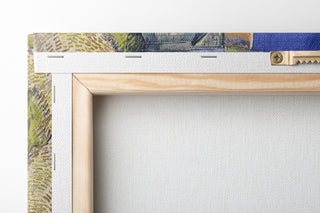
View from behind
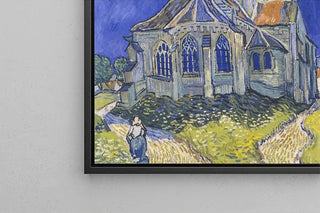
Frame (optional)
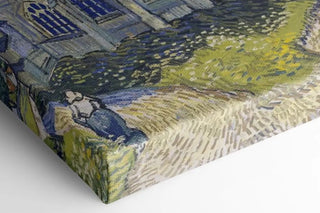
Kievit Vanellus vanellus - Anselmus Botius de Boodt art print
In the vast panorama of art history, certain works stand out for their ability to capture the very essence of a moment, an emotion, or a place. "Kievit Vanellus vanellus - Anselmus Botius de Boodt" is one of those creations that, through its delicate and poetic representation, transports us to the heart of nature. This piece, while revealing the beauty of the lapwing, invites us to contemplate the finesse of details and the depth of colors. By immersing oneself in this art print, the viewer is not only a witness to an animal scene but also to a reflection on the harmony between man and nature.
Style and uniqueness of the work
The style of Anselmus Botius de Boodt is characterized by meticulous precision and particular attention to detail. In "Kievit Vanellus vanellus," each feather of the lapwing is rendered with such accuracy that it seems to quiver under the breath of the wind. The color palette, subtly chosen, evokes the nuances of a spring landscape, where the tender green of the meadows blends with the blue of the sky. This art print does not merely depict a bird; it captures the fleeting moment of a wingbeat, a curious gaze, a life in full effervescence. The composition, skillfully orchestrated, plays with lines and shapes to guide the viewer’s gaze, inviting exploration of every corner of this lively scene. Thus, the art print becomes an open window to a world where natural beauty is celebrated in all its splendor.
The artist and his influence
Anselmus Botius de Boodt, an emblematic figure of his time, knew how to leave a mark on art history through his innovative approach and passion for nature. Raised in a context where science and art intersected, he leveraged this synergy to create works that transcend simple representations. His interest in ornithology, coupled with a sharpened artistic sensibility, allowed him to bring life to subjects often neglected by his contemporaries. The influence
Painting Kievit Vanellus vanellus - Anselmus Botius de Boodt | Art print

-10% FROM €95 IN PURCHASES
-15% FROM €195 IN PURCHASES
Regular price
- Unit price
- per
Free shipping
€4.90 / Free shipping on orders over €39
Satisfied or Money Back
Free returns within 30 days
10-year warranty
Our prints are guaranteed for 10 years
Any questions? We are here!
by email to contact@artemlegrand.com
THE STEPS OF YOUR ORDER

STEP 1 - ORDER PLACED
Your order has been confirmed and we are starting production
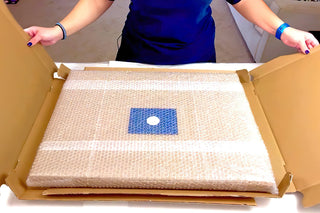
STEP 2 - SHIPPING
We ship your order. We send you an email to track the progress

STEP 3 - DELIVERY
You receive your order. You can also, according to your choice, be delivered to a relay point.
Matte finish
View from behind
Frame (optional)
Kievit Vanellus vanellus - Anselmus Botius de Boodt art print
In the vast panorama of art history, certain works stand out for their ability to capture the very essence of a moment, an emotion, or a place. "Kievit Vanellus vanellus - Anselmus Botius de Boodt" is one of those creations that, through its delicate and poetic representation, transports us to the heart of nature. This piece, while revealing the beauty of the lapwing, invites us to contemplate the finesse of details and the depth of colors. By immersing oneself in this art print, the viewer is not only a witness to an animal scene but also to a reflection on the harmony between man and nature.
Style and uniqueness of the work
The style of Anselmus Botius de Boodt is characterized by meticulous precision and particular attention to detail. In "Kievit Vanellus vanellus," each feather of the lapwing is rendered with such accuracy that it seems to quiver under the breath of the wind. The color palette, subtly chosen, evokes the nuances of a spring landscape, where the tender green of the meadows blends with the blue of the sky. This art print does not merely depict a bird; it captures the fleeting moment of a wingbeat, a curious gaze, a life in full effervescence. The composition, skillfully orchestrated, plays with lines and shapes to guide the viewer’s gaze, inviting exploration of every corner of this lively scene. Thus, the art print becomes an open window to a world where natural beauty is celebrated in all its splendor.
The artist and his influence
Anselmus Botius de Boodt, an emblematic figure of his time, knew how to leave a mark on art history through his innovative approach and passion for nature. Raised in a context where science and art intersected, he leveraged this synergy to create works that transcend simple representations. His interest in ornithology, coupled with a sharpened artistic sensibility, allowed him to bring life to subjects often neglected by his contemporaries. The influence