
Art print James Lenox 1800–1880 - Sir Francis Grant


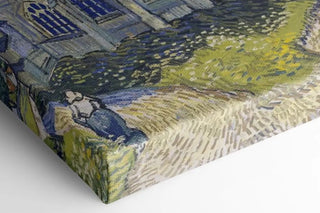
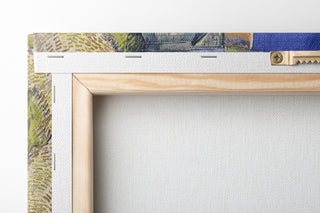
View from behind
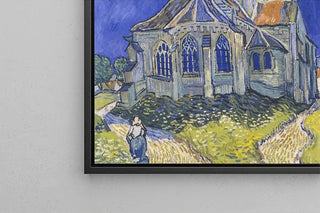
Frame (optional)
The art print "James Lenox 1800–1880" by Sir Francis Grant is an iconic piece that captures the essence of an era while paying tribute to a man whose influence extended far beyond his time. Observing this portrait, the viewer is immediately immersed in the fascinating world of the 19th century, a period marked by profound cultural and social transformations. Grant, with his skill in immortalizing the faces of high society, offers us a penetrating look into the personality of James Lenox, a philanthropist and art collector whose legacy continues to enrich the artistic world. This artwork is not merely a physical representation but a true window into the soul of a man whose journey deserves to be explored.
Style and uniqueness of the work
Sir Francis Grant's style is distinguished by its striking realism, a characteristic that allows him to capture the nuances of human life with rare emotional depth. In "James Lenox 1800–1880", every detail, from the folds of the costume to the subtle expressions on the face, demonstrates unparalleled technical mastery. Grant manages to create an intimate atmosphere, where the viewer feels almost in the presence of the subject. The carefully chosen color palette evokes timeless elegance, while the balanced composition gives the artwork visual harmony that draws the eye. This portrait transcends mere stylistic exercise to become an exploration of identity and character, revealing the complexity of a man whose role in art history is undeniable.
The artist and his influence
Sir Francis Grant, born in Scotland, established himself as one of the most prominent portraitists of his time. Trained at the Edinburgh Academy of Fine Arts, he evolved within a rich artistic environment, influenced by the great masters of the past while developing his own visual language. His work was widely recognized by his contemporaries, and he was even appointed president of the Royal Scottish Academy. Grant captured the spirit of his era, and his portraits are often considered valuable witnesses of Victorian society. In
Art print James Lenox 1800–1880 - Sir Francis Grant

-10% FROM €95 IN PURCHASES
-15% FROM €195 IN PURCHASES
Regular price
- Unit price
- per
Tax included.
Free shipping
€4.90 / Free shipping on orders over €39
Satisfied or Money Back
Free returns within 30 days
10-year warranty
Our prints are guaranteed for 10 years
Any questions? We are here!
by email to contact@artemlegrand.com
THE STEPS OF YOUR ORDER

STEP 1 - ORDER PLACED
Your order has been confirmed and we are starting production
STEP 2 - SHIPPING
We ship your order. We send you an email to track the progress

STEP 3 - DELIVERY
You receive your order. You can also, according to your choice, be delivered to a relay point.
Matte finish
View from behind
Frame (optional)
The art print "James Lenox 1800–1880" by Sir Francis Grant is an iconic piece that captures the essence of an era while paying tribute to a man whose influence extended far beyond his time. Observing this portrait, the viewer is immediately immersed in the fascinating world of the 19th century, a period marked by profound cultural and social transformations. Grant, with his skill in immortalizing the faces of high society, offers us a penetrating look into the personality of James Lenox, a philanthropist and art collector whose legacy continues to enrich the artistic world. This artwork is not merely a physical representation but a true window into the soul of a man whose journey deserves to be explored.
Style and uniqueness of the work
Sir Francis Grant's style is distinguished by its striking realism, a characteristic that allows him to capture the nuances of human life with rare emotional depth. In "James Lenox 1800–1880", every detail, from the folds of the costume to the subtle expressions on the face, demonstrates unparalleled technical mastery. Grant manages to create an intimate atmosphere, where the viewer feels almost in the presence of the subject. The carefully chosen color palette evokes timeless elegance, while the balanced composition gives the artwork visual harmony that draws the eye. This portrait transcends mere stylistic exercise to become an exploration of identity and character, revealing the complexity of a man whose role in art history is undeniable.
The artist and his influence
Sir Francis Grant, born in Scotland, established himself as one of the most prominent portraitists of his time. Trained at the Edinburgh Academy of Fine Arts, he evolved within a rich artistic environment, influenced by the great masters of the past while developing his own visual language. His work was widely recognized by his contemporaries, and he was even appointed president of the Royal Scottish Academy. Grant captured the spirit of his era, and his portraits are often considered valuable witnesses of Victorian society. In
12,34 €