
Painting Head of a Man - Vincent van Gogh | Art print Source: Tableau Tête d'homme - Vincent van Gogh | Reproduction


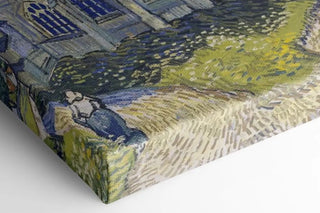
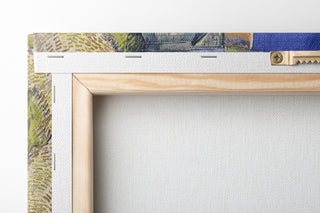
View from behind
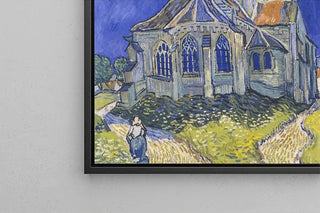
Frame (optional)
Vincent van Gogh’s “Head of a Man” is a captivating and intriguing artwork that draws in anyone who studies it. Painted in 1885, this canvas reflects a pivotal period in the artist’s career, marked by an intense quest for identity and expression. Van Gogh, still in the midst of his artistic development, explores the depths of the human soul through the portrait of this man, whose gaze seems to carry the weight of the world. Although less famous than his renowned sunflowers or starry landscapes, this piece reveals the emotional power characteristic of Van Gogh’s work. It is an invitation to delve into the turbulent and vibrant universe of the artist, where each brushstroke tells a story.
Style and uniqueness of the work
The style of “Head of a Man” is emblematic of Van Gogh’s formative period, during which he absorbed influences from realism and post-impressionism. The dark colors and accentuated shadows give this portrait a rare psychological depth. The facial features, both expressive and raw, demonstrate a growing mastery of technique. Van Gogh employs bold, almost frenetic brushstrokes to capture the very essence of his subject. This stylistic choice, far from being trivial, allows for the expression of a humanity that is both vulnerable and strong. The composition, centered on the face, invites the viewer to establish an intimate connection with the model, to feel his emotions, and to question his story. Thus, this work stands out not only for its technique but also for the depth of its message.
The artist and his influence
Vincent van Gogh, an iconic figure of modern art, left an indelible mark on the art world. Born in the Netherlands in 1853, he experienced a tumultuous career, marked by personal struggles and periods of intense creativity. His unique vision of the world, nourished by his life experiences and travels, led to a reinvention of pictorial language. Van Gogh transcended the conventions of his time, paving the way for movements such as Fauvism and expressionism.
Painting Head of a Man - Vincent van Gogh | Art print Source: Tableau Tête d'homme - Vincent van Gogh | Reproduction

-10% FROM €95 IN PURCHASES
-15% FROM €195 IN PURCHASES
Regular price
- Unit price
- per
Tax included.
Free shipping
€4.90 / Free shipping on orders over €39
Satisfied or Money Back
Free returns within 30 days
10-year warranty
Our prints are guaranteed for 10 years
Any questions? We are here!
by email to contact@artemlegrand.com
THE STEPS OF YOUR ORDER

STEP 1 - ORDER PLACED
Your order has been confirmed and we are starting production
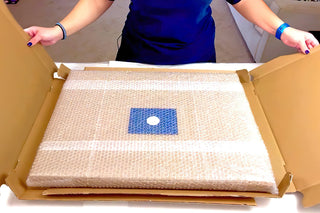
STEP 2 - SHIPPING
We ship your order. We send you an email to track the progress

STEP 3 - DELIVERY
You receive your order. You can also, according to your choice, be delivered to a relay point.
Matte finish
View from behind
Frame (optional)
Vincent van Gogh’s “Head of a Man” is a captivating and intriguing artwork that draws in anyone who studies it. Painted in 1885, this canvas reflects a pivotal period in the artist’s career, marked by an intense quest for identity and expression. Van Gogh, still in the midst of his artistic development, explores the depths of the human soul through the portrait of this man, whose gaze seems to carry the weight of the world. Although less famous than his renowned sunflowers or starry landscapes, this piece reveals the emotional power characteristic of Van Gogh’s work. It is an invitation to delve into the turbulent and vibrant universe of the artist, where each brushstroke tells a story.
Style and uniqueness of the work
The style of “Head of a Man” is emblematic of Van Gogh’s formative period, during which he absorbed influences from realism and post-impressionism. The dark colors and accentuated shadows give this portrait a rare psychological depth. The facial features, both expressive and raw, demonstrate a growing mastery of technique. Van Gogh employs bold, almost frenetic brushstrokes to capture the very essence of his subject. This stylistic choice, far from being trivial, allows for the expression of a humanity that is both vulnerable and strong. The composition, centered on the face, invites the viewer to establish an intimate connection with the model, to feel his emotions, and to question his story. Thus, this work stands out not only for its technique but also for the depth of its message.
The artist and his influence
Vincent van Gogh, an iconic figure of modern art, left an indelible mark on the art world. Born in the Netherlands in 1853, he experienced a tumultuous career, marked by personal struggles and periods of intense creativity. His unique vision of the world, nourished by his life experiences and travels, led to a reinvention of pictorial language. Van Gogh transcended the conventions of his time, paving the way for movements such as Fauvism and expressionism.
12,34 €