
Art print of Figures in a Courtyard Behind a House - Pieter de Hooch


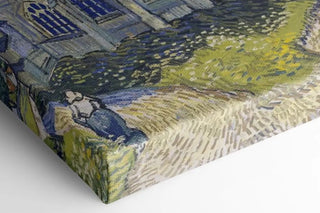
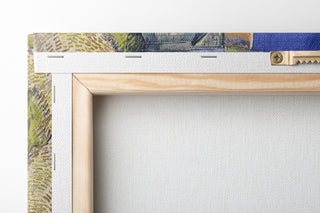
View from behind
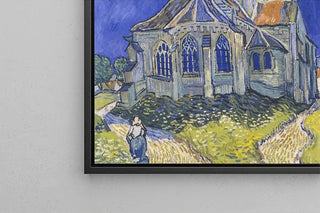
Frame (optional)
In the fascinating world of 17th-century Dutch painting, Pieter de Hooch's "Characters in a Courtyard Behind a House" stands out for its intimate atmosphere and harmonious composition. This canvas, which evokes daily life in Amsterdam, transports us to a suspended moment where time seems to stand still. The characters, although frozen in their daily routines, exude a vitality that invites contemplation. By observing this art print, the viewer is immersed in a world where every detail tells a story, revealing the subtleties of domestic life and human interactions.
Style and uniqueness of the work
Pieter de Hooch's work is characterized by a unique style that combines technical precision with sensitivity. In "Characters in a Courtyard Behind a House," the artist skillfully plays with light and shadow, creating a warm and welcoming ambiance. The interplay of light filtering through windows and doors adds an almost poetic dimension to the scene. The perspective is carefully studied, guiding the viewer's gaze through the courtyard while highlighting the architectural details of the house. The colors, soft and natural, reinforce this peaceful atmosphere, while the characters, dressed in typical period clothing, seem engaged in simple yet meaningful activities. This painting is an ode to domestic life, where every gesture, every glance, contributes to the visual storytelling.
The artist and his influence
Pieter de Hooch, a contemporary of Vermeer, is often regarded as one of the masters of genre painting. His work is marked by meticulous attention to detail and a capacity to capture daily life with rare authenticity. Influenced by the masters of his time, he developed a personal style that is uniquely his own, focusing on interiors and scenes of domestic life. De Hooch was also a pioneer in the use of light to create atmospheres, an element that profoundly influenced his contemporaries and subsequent generations. Exploring his works reveals that his influence extends beyond his era, inspiring many artists to explore
Art print of Figures in a Courtyard Behind a House - Pieter de Hooch

-10% FROM €95 IN PURCHASES
-15% FROM €195 IN PURCHASES
Regular price
- Unit price
- per
Tax included.
Free shipping
€4.90 / Free shipping on orders over €39
Satisfied or Money Back
Free returns within 30 days
10-year warranty
Our prints are guaranteed for 10 years
Any questions? We are here!
by email to contact@artemlegrand.com
THE STEPS OF YOUR ORDER

STEP 1 - ORDER PLACED
Your order has been confirmed and we are starting production
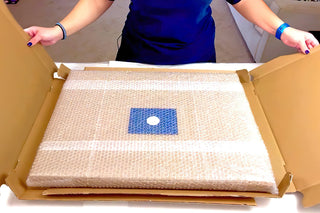
STEP 2 - SHIPPING
We ship your order. We send you an email to track the progress

STEP 3 - DELIVERY
You receive your order. You can also, according to your choice, be delivered to a relay point.
Matte finish
View from behind
Frame (optional)
In the fascinating world of 17th-century Dutch painting, Pieter de Hooch's "Characters in a Courtyard Behind a House" stands out for its intimate atmosphere and harmonious composition. This canvas, which evokes daily life in Amsterdam, transports us to a suspended moment where time seems to stand still. The characters, although frozen in their daily routines, exude a vitality that invites contemplation. By observing this art print, the viewer is immersed in a world where every detail tells a story, revealing the subtleties of domestic life and human interactions.
Style and uniqueness of the work
Pieter de Hooch's work is characterized by a unique style that combines technical precision with sensitivity. In "Characters in a Courtyard Behind a House," the artist skillfully plays with light and shadow, creating a warm and welcoming ambiance. The interplay of light filtering through windows and doors adds an almost poetic dimension to the scene. The perspective is carefully studied, guiding the viewer's gaze through the courtyard while highlighting the architectural details of the house. The colors, soft and natural, reinforce this peaceful atmosphere, while the characters, dressed in typical period clothing, seem engaged in simple yet meaningful activities. This painting is an ode to domestic life, where every gesture, every glance, contributes to the visual storytelling.
The artist and his influence
Pieter de Hooch, a contemporary of Vermeer, is often regarded as one of the masters of genre painting. His work is marked by meticulous attention to detail and a capacity to capture daily life with rare authenticity. Influenced by the masters of his time, he developed a personal style that is uniquely his own, focusing on interiors and scenes of domestic life. De Hooch was also a pioneer in the use of light to create atmospheres, an element that profoundly influenced his contemporaries and subsequent generations. Exploring his works reveals that his influence extends beyond his era, inspiring many artists to explore
12,34 €