
Painting Head of a bearded man - Hippolyte Flandrin | Art print Source: Tableau Tête d'homme barbu - Hippolyte Flandrin | Reproduction


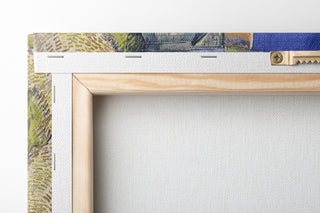
View from behind
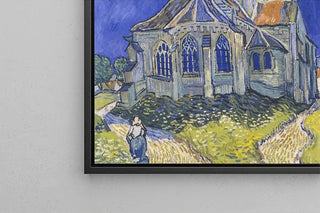
Frame (optional)
Reproduction Tête d'homme barbu - Hippolyte Flandrin – Engaging introduction
The "Tête d'homme barbu" by Hippolyte Flandrin is a work that invites contemplation and wonder. This portrait, imbued with rare delicacy and depth, captures the very essence of human personality through the intense and expressive gaze of its subject. Approaching this piece, the viewer is immediately transported into a universe where beauty and reflection coexist harmoniously. Flandrin, master of the portrait, manages to transcend the simple exercise of representation to offer a true emotional experience. The finesse of the features, the richness of the color nuances, and the subtle expression of the soul make this work a must-see in art history.
Style and uniqueness of the work
The style of the "Tête d'homme barbu" is distinguished by its ability to blend realism and idealism. Flandrin, influenced by the great masters of the Renaissance, uses a painting technique that highlights textures and volumes. Each brushstroke appears charged with particular care, revealing even the tiniest details of the face. Light plays a crucial role in this work, emphasizing shadows and highlights that shape the face of the subject. This approach gives the entire piece an almost sculptural dimension, where the tangible presence of the depicted man is felt. The color palette, both soft and rich, creates an intimate atmosphere conducive to reflection. In sum, this work is a celebration of human beauty, where each element is carefully orchestrated to create a captivating visual harmony.
The artist and his influence
Hippolyte Flandrin, an emblematic figure of the 19th century, is often considered a precursor to the realist movement. His artistic journey, marked by classical training, allows him to explore new avenues while remaining rooted in traditional painting. His ability to capture the human soul through his portraits grants him a prominent place in the pantheon of great artists. Flandrin does not merely depict figures; he seeks to reveal their essence, to tell their story through a simple gaze or facial expression. His influence is felt across generations
Painting Head of a bearded man - Hippolyte Flandrin | Art print Source: Tableau Tête d'homme barbu - Hippolyte Flandrin | Reproduction

-10% FROM €95 IN PURCHASES
-15% FROM €195 IN PURCHASES
Regular price
- Unit price
- per
Tax included.
Free shipping
€4.90 / Free shipping on orders over €39
Satisfied or Money Back
Free returns within 30 days
10-year warranty
Our prints are guaranteed for 10 years
Any questions? We are here!
by email to contact@artemlegrand.com
THE STEPS OF YOUR ORDER

STEP 1 - ORDER PLACED
Your order has been confirmed and we are starting production
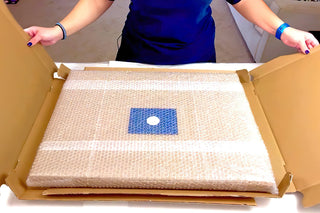
STEP 2 - SHIPPING
We ship your order. We send you an email to track the progress

STEP 3 - DELIVERY
You receive your order. You can also, according to your choice, be delivered to a relay point.
Matte finish
View from behind
Frame (optional)
Reproduction Tête d'homme barbu - Hippolyte Flandrin – Engaging introduction
The "Tête d'homme barbu" by Hippolyte Flandrin is a work that invites contemplation and wonder. This portrait, imbued with rare delicacy and depth, captures the very essence of human personality through the intense and expressive gaze of its subject. Approaching this piece, the viewer is immediately transported into a universe where beauty and reflection coexist harmoniously. Flandrin, master of the portrait, manages to transcend the simple exercise of representation to offer a true emotional experience. The finesse of the features, the richness of the color nuances, and the subtle expression of the soul make this work a must-see in art history.
Style and uniqueness of the work
The style of the "Tête d'homme barbu" is distinguished by its ability to blend realism and idealism. Flandrin, influenced by the great masters of the Renaissance, uses a painting technique that highlights textures and volumes. Each brushstroke appears charged with particular care, revealing even the tiniest details of the face. Light plays a crucial role in this work, emphasizing shadows and highlights that shape the face of the subject. This approach gives the entire piece an almost sculptural dimension, where the tangible presence of the depicted man is felt. The color palette, both soft and rich, creates an intimate atmosphere conducive to reflection. In sum, this work is a celebration of human beauty, where each element is carefully orchestrated to create a captivating visual harmony.
The artist and his influence
Hippolyte Flandrin, an emblematic figure of the 19th century, is often considered a precursor to the realist movement. His artistic journey, marked by classical training, allows him to explore new avenues while remaining rooted in traditional painting. His ability to capture the human soul through his portraits grants him a prominent place in the pantheon of great artists. Flandrin does not merely depict figures; he seeks to reveal their essence, to tell their story through a simple gaze or facial expression. His influence is felt across generations
12,34 €