
Painting L'allée de bouleaux dans le jardin de Wannsee à l'est - Max Liebermann | Art print


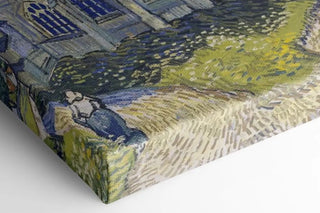
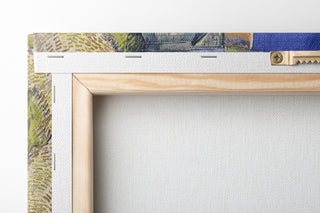
View from behind
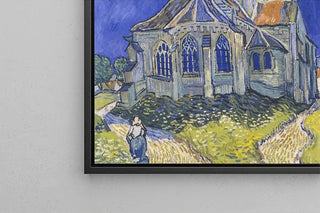
Frame (optional)
In the landscape of German impressionist art, the artwork "L'allée de bouleaux dans le jardin de Wannsee à l'est" by Max Liebermann stands out for its ability to capture light and nature in a way that evokes profound serenity. This canvas, painted in 1909, transports us to the heart of a lush garden, where birch trees, with their tall trunks and delicate foliage, stand majestically, inviting the viewer to a contemplative walk. Liebermann, as a master of color and light, succeeds in creating an almost tangible atmosphere, where each brushstroke seems to vibrate under the effect of the sun. This painting, a true ode to nature, reminds us of the ephemeral beauty of the landscapes that surround us.
Style and uniqueness of the work
Liebermann's work is characterized by a unique approach that combines realism and impressionism. In "L'allée de bouleaux dans le jardin de Wannsee à l'est," the painter uses vivid colors and subtle contrasts to bring his subject to life. The shades of green in the foliage blend with touches of golden light, creating a play of shadows and highlights that energizes the scene. The composition is carefully balanced, with the birch trees arranged to guide the eye across the painting, thus inviting visual exploration. This distinctive style, blending precision and emotion, allows the observer to feel the tranquility of the garden while being immersed in the beauty of nature. Liebermann manages to transform a simple landscape into a sensory experience, where each element contributes to a harmonious whole.
The artist and his influence
Max Liebermann, an emblematic figure of impressionism in Germany, played a crucial role in the evolution of art at the turn of the 20th century. Influenced by French masters such as Monet and Degas, he developed a style that is uniquely his own, rooted in reality while ascending toward abstraction. His commitment to representing everyday life and natural landscapes paved the way for many contemporary artists. Liebermann was also
Painting L'allée de bouleaux dans le jardin de Wannsee à l'est - Max Liebermann | Art print

-10% FROM €95 IN PURCHASES
-15% FROM €195 IN PURCHASES
Regular price
- Unit price
- per
Tax included.
Free shipping
€4.90 / Free shipping on orders over €39
Satisfied or Money Back
Free returns within 30 days
10-year warranty
Our prints are guaranteed for 10 years
Any questions? We are here!
by email to contact@artemlegrand.com
THE STEPS OF YOUR ORDER

STEP 1 - ORDER PLACED
Your order has been confirmed and we are starting production

STEP 2 - SHIPPING
We ship your order. We send you an email to track the progress

STEP 3 - DELIVERY
You receive your order. You can also, according to your choice, be delivered to a relay point.
Matte finish
View from behind
Frame (optional)
In the landscape of German impressionist art, the artwork "L'allée de bouleaux dans le jardin de Wannsee à l'est" by Max Liebermann stands out for its ability to capture light and nature in a way that evokes profound serenity. This canvas, painted in 1909, transports us to the heart of a lush garden, where birch trees, with their tall trunks and delicate foliage, stand majestically, inviting the viewer to a contemplative walk. Liebermann, as a master of color and light, succeeds in creating an almost tangible atmosphere, where each brushstroke seems to vibrate under the effect of the sun. This painting, a true ode to nature, reminds us of the ephemeral beauty of the landscapes that surround us.
Style and uniqueness of the work
Liebermann's work is characterized by a unique approach that combines realism and impressionism. In "L'allée de bouleaux dans le jardin de Wannsee à l'est," the painter uses vivid colors and subtle contrasts to bring his subject to life. The shades of green in the foliage blend with touches of golden light, creating a play of shadows and highlights that energizes the scene. The composition is carefully balanced, with the birch trees arranged to guide the eye across the painting, thus inviting visual exploration. This distinctive style, blending precision and emotion, allows the observer to feel the tranquility of the garden while being immersed in the beauty of nature. Liebermann manages to transform a simple landscape into a sensory experience, where each element contributes to a harmonious whole.
The artist and his influence
Max Liebermann, an emblematic figure of impressionism in Germany, played a crucial role in the evolution of art at the turn of the 20th century. Influenced by French masters such as Monet and Degas, he developed a style that is uniquely his own, rooted in reality while ascending toward abstraction. His commitment to representing everyday life and natural landscapes paved the way for many contemporary artists. Liebermann was also
12,34 €