
Painting of a woman playing the theorbo-lute and a rider - Gerard ter Borch | Art print


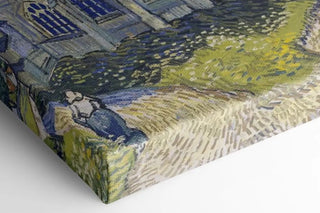
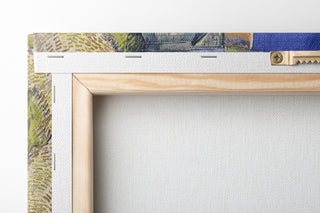
View from behind
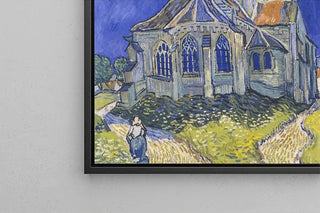
Frame (optional)
In the fascinating world of 17th-century Dutch painting, the artwork "A woman playing the theorbo-lute and a cavalier" by Gerard ter Borch stands out for its delicacy and intimacy. This scene, where music and conversation intertwine, transports us to a suspended moment, capturing the very essence of the Baroque era. The soft light bathing the characters, along with the meticulous details of their costumes, invites the viewer to immerse themselves in a convivial and refined atmosphere. The piece does more than depict a simple interaction; it evokes a story, a dialogue between art and life, where each element contributes to creating a visual and narrative harmony.
Style and uniqueness of the work
Gerard ter Borch's style is characterized by an exceptional mastery of textures and colors. In "A woman playing the theorbo-lute and a cavalier," the artist uses gentle tones and subtle nuances to bring his characters to life. The fabrics of the clothing, finely rendered, seem almost tangible, while the light plays a crucial role, highlighting the delicate features of the woman and the elegance of the cavalier. The composition is carefully balanced, with each figure occupying a precise place in space, reinforcing the idea of harmonious interaction. Ter Borch excels in capturing moments of everyday life, and this work perfectly illustrates his talent for immortalizing moments of grace and beauty.
The artist and his influence
Gerard ter Borch, born in 1617 in Zwolle, is one of the masters of Dutch genre painting. His artistic journey, marked by various influences, led him to develop a unique style that combines realism and sensitivity. Ter Borch established himself in the artistic circles of his time, notably through his portraits and scenes of daily life, which reflect the customs and values of Dutch society. His work has had a lasting influence on many artists, both contemporaries and later generations, who admired his ability to capture human emotion through seemingly simple scenes. The finesse
Painting of a woman playing the theorbo-lute and a rider - Gerard ter Borch | Art print

-10% FROM €95 IN PURCHASES
-15% FROM €195 IN PURCHASES
Regular price
- Unit price
- per
Tax included.
Free shipping
€4.90 / Free shipping on orders over €39
Satisfied or Money Back
Free returns within 30 days
10-year warranty
Our prints are guaranteed for 10 years
Any questions? We are here!
by email to contact@artemlegrand.com
THE STEPS OF YOUR ORDER

STEP 1 - ORDER PLACED
Your order has been confirmed and we are starting production
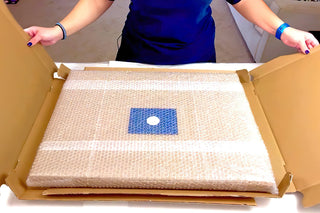
STEP 2 - SHIPPING
We ship your order. We send you an email to track the progress

STEP 3 - DELIVERY
You receive your order. You can also, according to your choice, be delivered to a relay point.
Matte finish
View from behind
Frame (optional)
In the fascinating world of 17th-century Dutch painting, the artwork "A woman playing the theorbo-lute and a cavalier" by Gerard ter Borch stands out for its delicacy and intimacy. This scene, where music and conversation intertwine, transports us to a suspended moment, capturing the very essence of the Baroque era. The soft light bathing the characters, along with the meticulous details of their costumes, invites the viewer to immerse themselves in a convivial and refined atmosphere. The piece does more than depict a simple interaction; it evokes a story, a dialogue between art and life, where each element contributes to creating a visual and narrative harmony.
Style and uniqueness of the work
Gerard ter Borch's style is characterized by an exceptional mastery of textures and colors. In "A woman playing the theorbo-lute and a cavalier," the artist uses gentle tones and subtle nuances to bring his characters to life. The fabrics of the clothing, finely rendered, seem almost tangible, while the light plays a crucial role, highlighting the delicate features of the woman and the elegance of the cavalier. The composition is carefully balanced, with each figure occupying a precise place in space, reinforcing the idea of harmonious interaction. Ter Borch excels in capturing moments of everyday life, and this work perfectly illustrates his talent for immortalizing moments of grace and beauty.
The artist and his influence
Gerard ter Borch, born in 1617 in Zwolle, is one of the masters of Dutch genre painting. His artistic journey, marked by various influences, led him to develop a unique style that combines realism and sensitivity. Ter Borch established himself in the artistic circles of his time, notably through his portraits and scenes of daily life, which reflect the customs and values of Dutch society. His work has had a lasting influence on many artists, both contemporaries and later generations, who admired his ability to capture human emotion through seemingly simple scenes. The finesse
12,34 €